
A new trend is forming online: people are looking for ways to get off their phones. Whether you call it a digital detox, logging off, or touching grass, marketers are considering how to bridge their digital strategies to real-life experiences, and what that means for measurement.
“The best thing to do online is to find things to do offline,” said Lee Brown, Pinterest’s chief business officer. Pinterest sees the trend forming in real time: users are researching activities, like how to host a good barbecue, or play mahjong. After some digging, they’re wanting to recreate the hobbies and parties they’ve pinned and collected online. More and more — and especially among Gen Z — we’re valuing in-person, meaningful experiences; less doomscrolling, more doing. According to Brown, Pinterest searches for phone-free ideas are up 113%. “They’re literally, actively seeking out what can I be doing without my phone.”
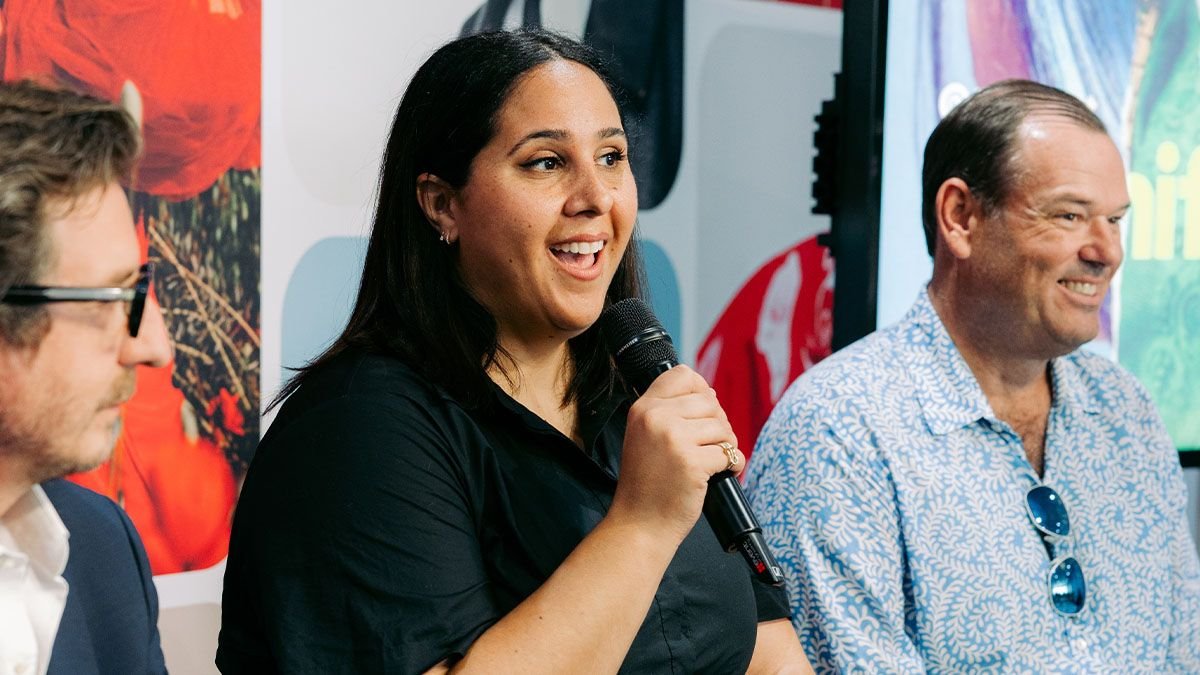
This was the topic of discussion at the Vogue Business x Pinterest brunch at Cannes Lions, titled “From Attention to Intention: The Changing Face of Digital Consumption”. On Wednesday, June 24, during the festival, Brown was joined by Meena Anvary, CMO of Banana Republic, and Charles Georges-Picot, CEO of Publicis Groupe’s global luxury practice, for a panel discussion moderated by Vogue Business executive editor Hilary Milnes. The speakers compared observations around digital fatigue and the importance of in-person connection during a sit-down brunch on Pinterest Beach.
Panelists Charles Georges-Picot, Meena Anvary and Lee Brown. Photo: Cesare Piaser
“People are buying experiences more than products,” said Georges-Picot. “We’re living more of a digital life, so they’re trying to counter that with IRL experiences. Luxury is more than just products.” In-person moments and high-touch customer service feels more elevated, particularly for luxury clients, and leaves a lasting impression on customers and audiences, who then carry the memory of that experience into their digital worlds — because, as Georges-Picot pointed out, it’s not like we’re all swearing off our devices. We’re just wanting to look up from them a bit more, and meet in-person, as well as discover more interesting content that can be discussed offline.
“People still go on social, it’s just that the way they consume is slightly different. They like to have private space to discuss. They send DMs, they share content,” said Georges-Picot. “So, for brands, the discussions we have with them is, you need to have content that is a bit more interesting. It’s not just about bombarding people with images every five seconds. It’s about what content can you create that is meaningful that people will engage with and share with their friends.”
How that translates into a marketing strategy when so much acquisition happens online is playing out across brands. For Banana Republic, it’s about striking both chords simultaneously — digital and real life — in order to make the most of both sides of the customer journey.
