

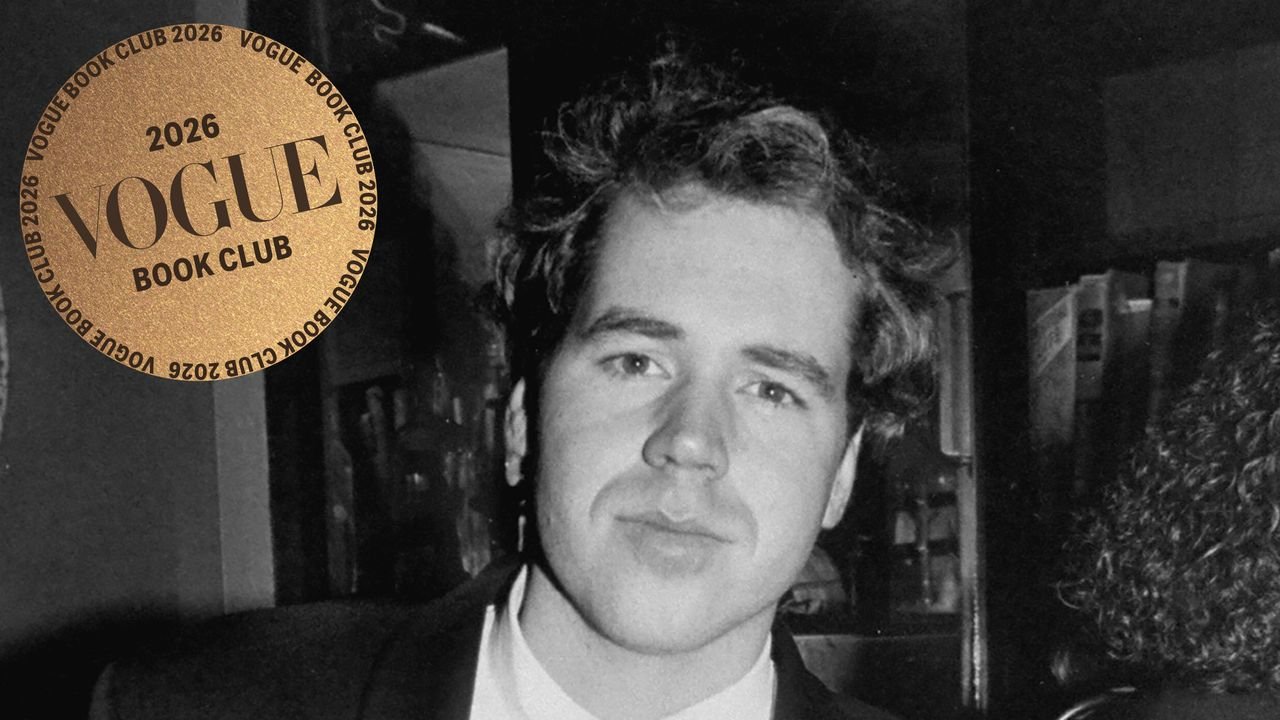
When I emailed Bret Easton Ellis that Vogue had picked his first novel, Less Than Zero, for the third installment of its book club he told me, politely, please don’t expect an interview. “I just stopped two or three years back from…exhibiting myself,” he wrote. I pressed him and he demurred again. “I’m just done after 40 years of interviews. That’s all. It’s not a hostile stance.” But the next sentence was this, as if said in the same breath: “Of course I can talk to you over the phone about Less Than Zero. I can break my own rules once or twice a year, I suppose.”
Less Than Zero exerts a totemic pull—seemingly even on its author. I read it far too young—I think I was 14—and all the sex and drugs and the disconcerting lack of feeling, the purposeless driving around an ominous L.A., the culminating violence and horror have never left me. I had not read anything like it and wouldn’t until I got around to the incantatory, deliberate sentences of Joan Didion—another writer fascinated by Los Angeles darkness and dread. Didion left her mark on Ellis when he was a teenager, when he first read Play It As It Lays, Slouching Towards Bethlehem, and The White Album. He was also devoted to Ernest Hemingway too in those years and stayed up all night reading In Our Time and The Sun Also Rises. “I was stealing from Hemingway and Joan Didion and I guess Raymond Chandler,” Ellis said about his early attempts at fiction: diary-like narratives about him and his LA friends.
These would serve as a prelude to Less Than Zero, his novel about his 1980s LA milieu—shopping malls, multiplexes, parties, New Wave songs on the radio. He finished a draft as an undergraduate at Bennington College, in Vermont, having struck upon a framing device of his protagonist, Clay, home from an East Coast college for Christmas break, falling back in with his old gang: dissipated friends like Julien and Blair and Trent and others. The story, such as it is, spools out over four weeks with a mood pitched somewhere between numbness and horror. The manuscript was quickly bought by Simon & Schuster, became a bestseller when it came out, and Ellis, just 21, was a literary phenomenon.
In the following interview, which has been edited and condensed for clarity, I asked Ellis to go back to those earliest years of his writing career and we started by talking about the time after Less Than Zero was published. When he was living in Manhattan and hanging out with other writers of his generation, like Jay McInerney and Tama Janowitz and assorted friends from college.
Bret Easton Ellis: I really did try to follow a nine-to-five writing schedule that mirrored friends who had actual jobs. I realized, Oh, everyone’s at work today. So I’m going to write and then I’ll see them later. I was very social at night and so I kept my writing to the day. That’s still true—except I just am not writing anything right now.
Vogue: How do you do when you don’t have a project going?
Not well! [Laughs.] I really don’t like it. I mean, it’s not, like, a disaster. It’s not like, you know, my life ends—but I feel adrift without being anchored in a book. And books happen when they happen. It’s not something you can force, and I’ve realized over the years that unless you’re feeling the book, you’re not gonna write it. My agent has said, “Come on, write a new novel. You live in LA. All this crazy shit has happened. There’s a bunch of fires and shit.” And I can’t do that.
