

Whenever I feel sluggish, puffy, or as though I could do with a full-system reboot, I know what to do: a lymphatic drainage massage. Thirty minutes of rhythmic sweeping has an incredibly reliable effect. I leave feeling lighter, more energised and looking considerably more toned than I actually am.
It’s easy to see why the treatment has become such a popular wellness offering. The lymphatic system is one of the body’s key transport and immune networks, responsible for moving excess fluid away from tissues, absorbing fats from the digestive system, and transporting infection-fighting immune cells around the body. Unlike the circulatory system, however, it doesn’t have a pump of its own. Meaning that lymph relies on muscle contractions, breathing, and movement to keep it flowing.
“Healthy lymphatic circulation helps maintain fluid balance, supports immune function, and encourages the efficient movement of excess fluid and metabolic waste away from tissues,” explains Ada Ooi, integrative Chinese medicine clinician and founder of 001 London. That’s where manual lymphatic drainage comes in. Unlike the enthusiastic kneading associated with a deep-tissue massage, manual lymphatic drainage massage is deliberately light, using gentle, directional movements to encourage lymph towards functioning lymph nodes.
For people living with lymphoedema, it can form part of a broader treatment plan alongside compression, exercise and skincare. For the rest of us, it’s simply a way of giving our lymph fluid a helping hand.
But while massage may still be the gold standard, it isn’t the only way to encourage lymphatic flow. Here are seven of the simplest ways to ramp up your lymphatic drainage.
Take an (intentional) walk
“Lymphatic walking” is increasingly appearing on social media, usually involving exaggerated arm swings, carefully timed breathing and the sort of marching stride that makes a lunchtime stroll look like a form of military training. It isn’t a recognized clinical modality, but its basic premise is sound: walking contracts the muscles of the feet, calves and legs, helping to move both blood and lymph upwards.
“Beyond manual lymphatic drainage, walking is one of the modalities with the strongest physiological rationale,” says lymphatic drainage specialist Flavia Morellato. But there’s no need to overhaul your gait. A brisk walk with a natural arm swing is enough. When desk-bound, ankle pumps, heel raises, and periodically walking around the room offer a less conspicuous version of the same idea.
Breathe into your diaphragm
Deep breathing is perhaps the most underrated lymph-supporting practice, largely because it doesn’t require a subscription, a device, or for you to actually buy into anything.
The diaphragm sits close to the body’s central lymphatic pathways. As it moves down on an inhale and rises on an exhale, the change in pressure between the chest and abdomen helps fluid travel through the trunk. “The main drainage area for the lymph is the upper chest area,” says lymphatic drainage therapist Elaine Taggart. “This means that deep diaphragmatic breathing is also great for keeping everything moving.”
Try inhaling gently through the nose, allowing the abdomen and lower ribs to expand, before taking a longer, unforced exhale. Five slow breaths before a walk or workout is a good place to begin.
Go swimming
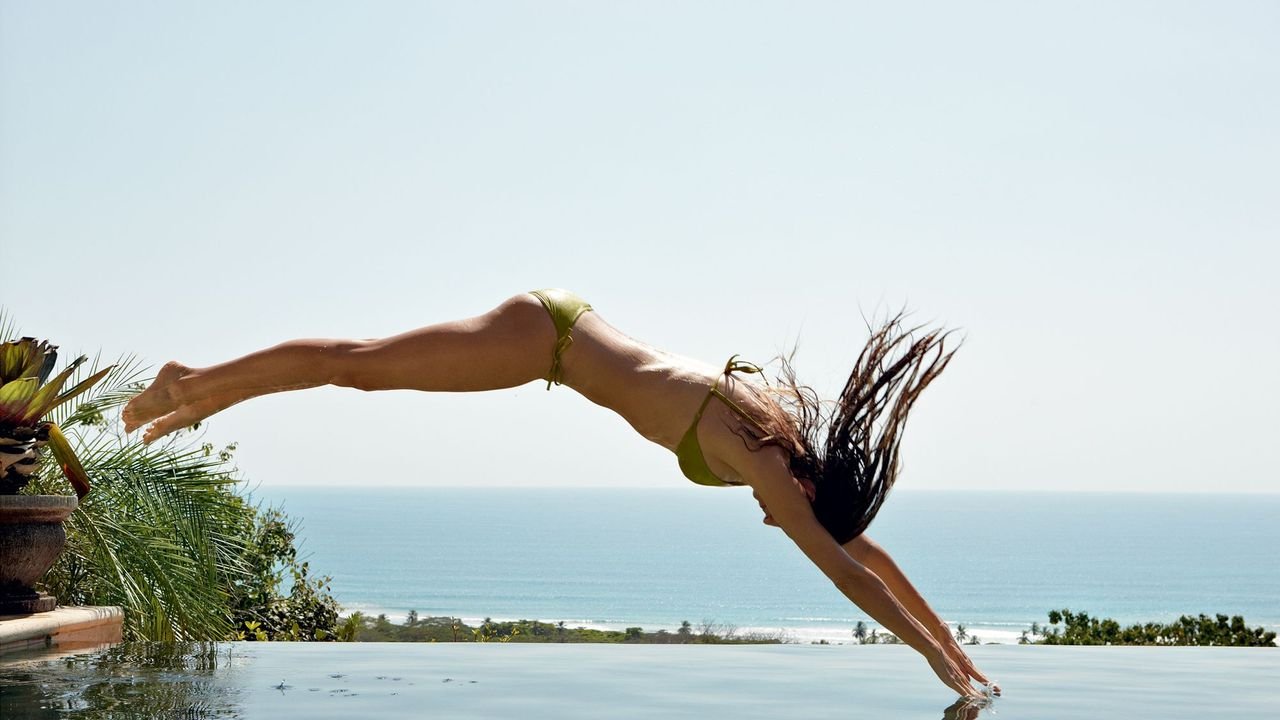
Swimming combines several lymph-friendly mechanisms without feeling remotely medicinal. The muscles repeatedly contract, breathing becomes deeper, and the surrounding water applies gentle, even pressure to the body.
“When you consider all the muscles that move when swimming, as well as the gentle pressure from the water as the body glides through it, offering a gentle compression effect, this is why swimming is excellent exercise for keeping the lymphatic system moving,” says Taggart.
