

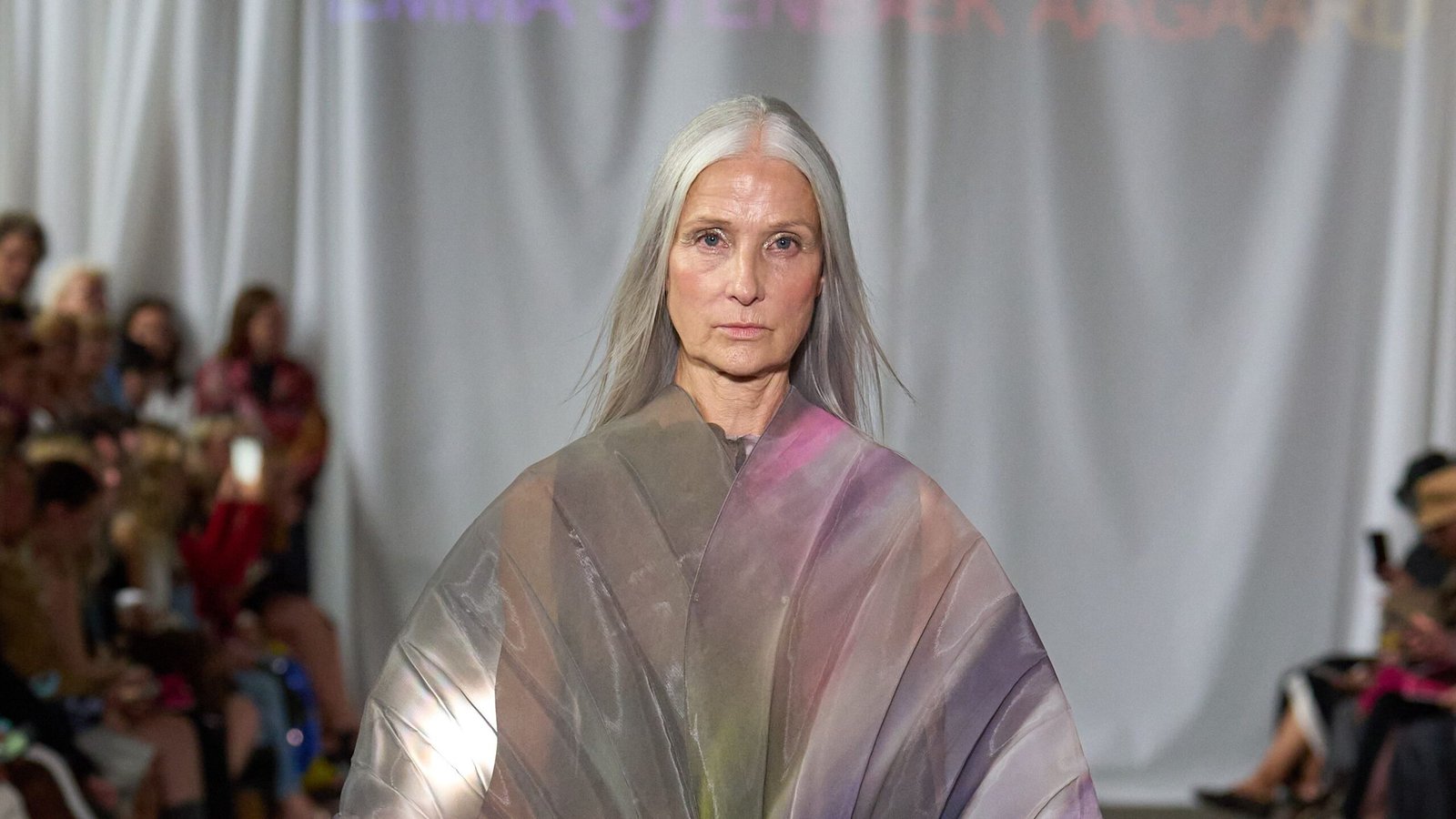
“Fundamentally, they are all passionate about taking their definition of what makes for true value and turning it into clothing—and, incidentally, they are not afraid of color this year either.” So said assistant professor Marcus Aminaka Wilmont of the Royal Danish Academy class of 2026 unique. An appetite for joyous shades was also present in the recent menswear collections; applied by seasoned designers or students, the effect is uplifting and extroverted.
Geometry informed a number of the student collections. David Sierstad developed a no-waste way of making clothes based on squares and rectangles. Emma Stenbæk Aagaard built her collection around the circle; the use of curved folds and pleating gave a slinky-like movement to some of her pieces. Shurong Coa wrapped foam around the form to create a snail-like mobile home for the body. In her exploration of childhood, Yu Lin Eain translated the folding technique used to make a paper fortune teller into fabric.
Masculinity is the topic du jour, and it centered the collections of three male members of this graduating class. For the three of them, the transition from boyhood to adulthood was associated with a transition from country to city. To these dichotomies Likas Viering added a third: hand versus machine. One pair of his sweatpants, he explained on Instagram, had “over 400 laser cut flowers in 4 sizes, arranged in a degradé pattern which was set by hand and attached with rivets.” Viering showed these somewhat Cecilie Bahnsen-esque pull-ons with a poetic draped knot top.
Nicolaj Gotthelf (who interned with Duran Lantink) imagined a country kid dreaming of far away subcultural worlds; he linked his use of upcycled materials to a sense of nostalgia. Heritage was Nis Kongsgaard’s preoccupation; his menswear collection referenced historic Danish textiles and some of the garments were made using local materials. Though Konsgaard wrote that his graduate thesis was “the result of a continuous search for sensuous ties to Earth and my kin, just as the world seems on the cusp of unravelling,” these poetic clothes had a sense of wholeness; their wearability alone was incentive to find ways forward.
