

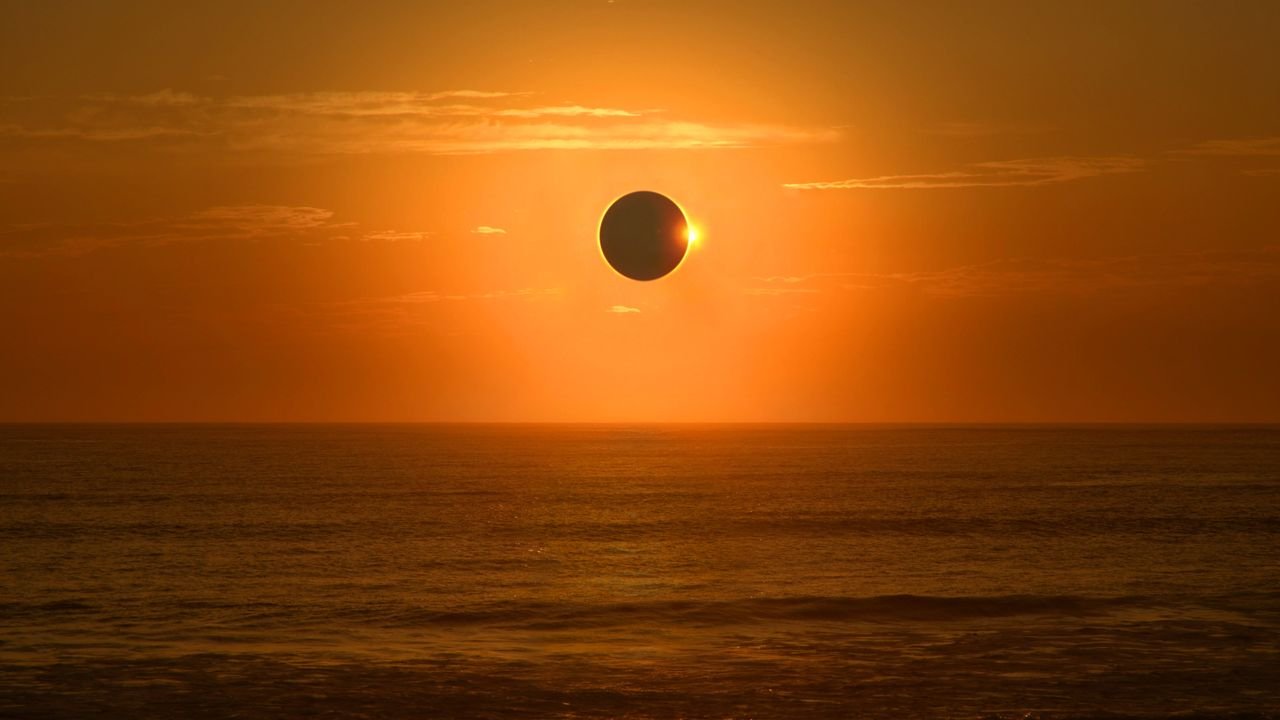
As continental Europe prepares for its first total solar eclipse in decades, all eyes are on Spain. Between August 2026 and January 2028, three solar eclipses, including two total eclipses, will cross the Iberian Peninsula, turning the country into one of the world’s top destinations for astrotourism.
Following North America’s widely watched total eclipse in 2024, interest in eclipse chasing has exploded. Lodging searches along the path of totality for the August 12, 2026 eclipse are up 245% year over year, according to Expedia Group. Spain is anticipated to welcome millions of foreign visitors during the celestial event.
It’s easy to understand the obsession. For many, the awe-inspiring feeling of totality, when the moon completely blocks the sun, isn’t just a visual spectacle but a full-body sensory experience. “You can feel the totality,” says Pedro García Lario, an astronomer at the European Space Agency (ESA) and a member of the Scientific Advisory Committee for the Eclipse Trio. “The temperature drops by a few degrees, there’s a cool breeze, and the birds stop singing for just a few moments before everything goes back to normal again. It’s not unusual for people to get goosebumps or start crying.”
The August 2026 eclipse has a rare combination of factors that make it extra compelling for travelers. It falls at sunset during the height of summer and coincides with the Perseid meteor shower, which could turn the sky into a dazzling display of shooting stars for an unforgettable second act.
It’s also the first time a total solar eclipse has been visible from mainland Spain and the Balearic Islands in more than 120 years. Cities like Valencia, Bilbao, Zaragoza and A Coruña, as well as islands such as Ibiza, Mallorca and Menorca, will fall within the path of totality, while Barcelona and Madrid will only see a partial eclipse. However, the difference between totality and even seeing 99% of an eclipse is “like night and day,” says García Lario. During totality, the glowing white halo of the solar corona, the outermost layer of the sun’s atmosphere, becomes visible to the naked eye (for the few moments when it’s safe to remove your eclipse glasses) and some of the brightest stars emerge.
Although the path of totality will stretch from Galicia in northwestern Spain to the Balearic Islands, only select locations will offer the right combination of a clear western horizon and favorable viewing conditions. Climate change has added another layer of uncertainty, with rising temperatures and wildfires further impacting local communities and summer travel plans. For those who find the right spot, the reward will be “100 seconds that you’ll remember for the rest of your life,” says García Lario.
To make the experience even more memorable, hotels and resorts across the path are designing eclipse-themed stays. Nobu Hotel Ibiza Bay is leaning into the White Island’s growing reputation as a wellness destination with its Beyond the Sun retreat, which includes guided hikes to secluded viewpoints during the eclipse and the following night’s Perseid meteor shower.
A sunset hike at Nobu Hotel Ibiza Bay.
Photo: Courtesy of Nobu Hotel Ibiza Bay
