

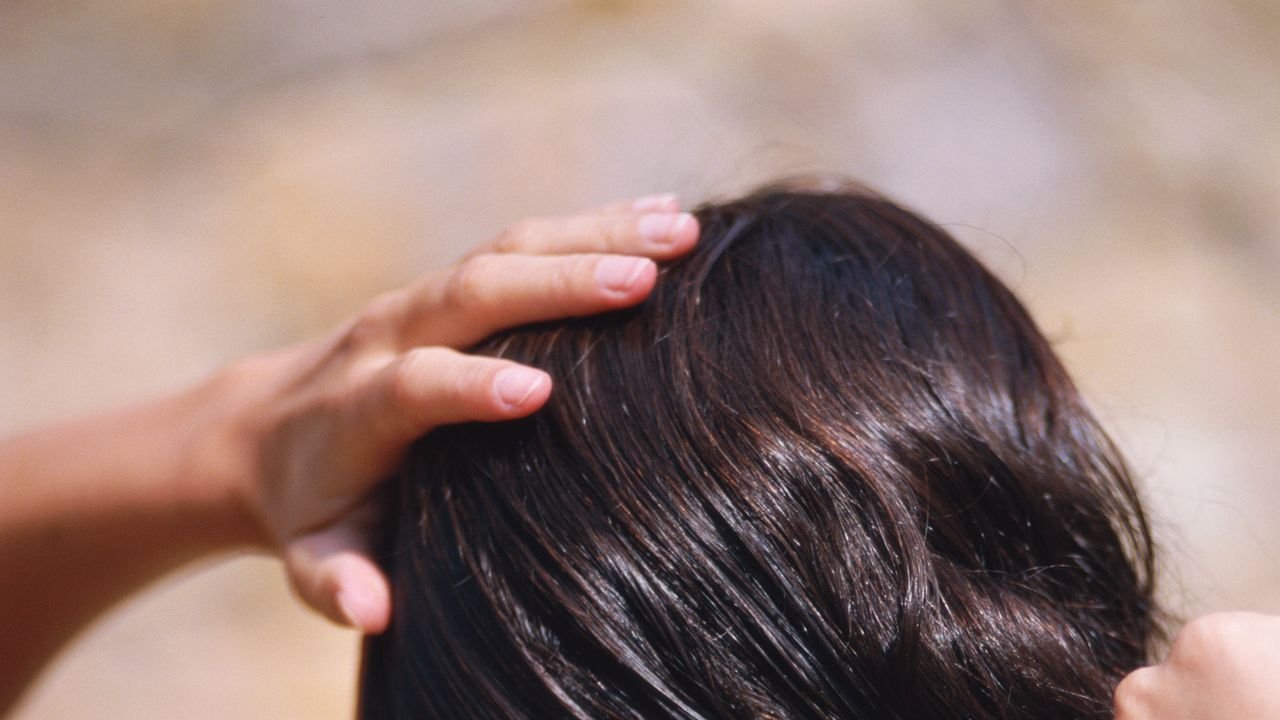
Washing your hair may feel like a straightforward task—rinse, shampoo, rinse, condition, rinse again—but the way you clean your scalp can dramatically change the appearance of your hair. You can even target your routine with goals in mind (Italian style washing focuses on strength!).
Recently, I learned about the Chinese philosophy behind washing your hair. Chinese philospher Confucius said “Our bodies—to every hair and bit of skin—are received by us from our parents, and we must not presume to injure or wound them.” This concept has been carried through the centuries. Even more, hair is associated with good fortune, which is why there’s a tradition of not washing your hair during the Chinese New Year to avoid rinsing luck away.
With all of this context, it’s no surprise that Chinese women have a fabulously lengthy hair care routine. We walk you through it, with the goal of visibly healthier, longer, shinier, and softer-to-the-touch hair, below.
some of their hair care practices have piqued our curiosity.
Among them is one that stands out in particular: the Chinese head spa, a technique practiced in Chinese beauty salons that makes us rethink the steps we all take for granted when washing our hair. This method combines acupressure massages, herbal infusions, and a steam bath or waterfall to promote circulation and relaxation, while focusing on cleansing and moisturizing the hair and scalp.
The result? A hair-washing ritual unlike anything we’re used to, where the goal is to achieve visibly healthier, longer, shinier, and softer-to-the-touch hair. That’s why we’re sharing how you can incorporate it into your routine in six simple steps.
The 5-Step Chinese Technique for Washing Your Hair
Dry brushing
The pre-wash process is just as important as the wash itself. The Chinese technique suggests carefully dry-brushing the scalp with a soft-bristled brush to remove product buildup and anything else that has accumulated since you’re last wash (dead skin cells, sweat, ect). This can also help with detangling your hair while it’s still dry, which will cause less breakage.
The key is to do this gently, without applying too much pressure that could cause harm.
Use lukewarm water
Although the second step seems obvious, the key is in the details: wet your hair with lukewarm water—not scalding hot!—and thoroughly saturate. Paying attention to the water temperature is essential, and while many people may think cold water is the best option, it’s recommended to use a mild, comfortable temperature.
Warm water helps remove excess oil and makes it easier to clean the scalp, while avoiding water that’s too hot helps prevent dryness and irritation.
Apply shampoo, twice
One of the essential steps in this technique is how you shampoo. The product should be concentrated at the roots and on the scalp, which ensures a deep cleanse without unnecessarily drying out the ends.
To wash your hair, work shampoo through the roots with a massaging technique. Take a few moments to really massage your scalp with your fingertips using circular motions (and be wary of scratching with nails). This turns cleansing into a moment of pure relaxation while the massage helps stimulate blood circulation in the scalp, promoting hair growth.
Repeat this step twice: the first wash will help remove excess oil and residue from hair products, while the second will provide a deeper cleanse. Don’t forget to rinse with warm water when you’re finished.
Chinese herbal treatment at the roots
Although experts have long recommended applying conditioners from the mid-lengths to the ends, there are tonics and treatments specifically designed for the scalp. Traditional Chinese medicine particularly values ingredients such as ginseng and ginger, which are used in various formulations—from oils to conditioners—for hair care, offering benefits such as promoting hair growth, delaying the appearance of gray hair, preventing hair loss, and strengthening the hair.
