
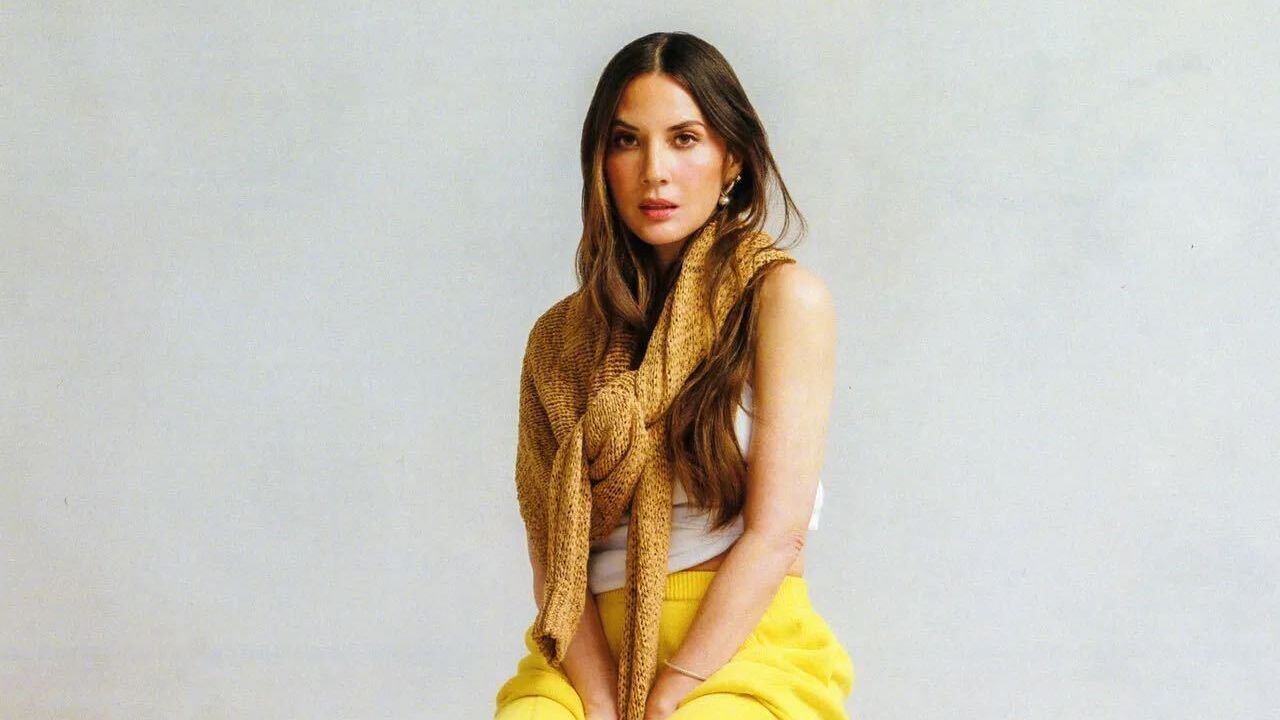
The inaugural season of Allure Perspectives will explore one of the most controversial and medically researched parts of a woman’s body: breasts. Through expert interviews, personal stories, and historical context, the podcast series, hosted by editor in chief Jessica Cruel, will examine how breasts intersect with beauty, health, identity, sexuality, and culture. In our first episode, Cruel talks with actress Olivia Munn about her experience with breast cancer. Subscribe wherever you get your podcasts for new episodes every week.
At age 41, Olivia Munn gave birth to her son Malcolm. Less than a year and a half later, in April 2023, she learned she had postpartum breast cancer, which refers to breast cancer diagnosed within five to 10 years after giving birth.
Since then, Munn has been open about her health journey on social media. “When I was diagnosed with breast cancer, whenever I felt lost or unsure, I would search online for women who had gone through [it],” she shared with Allure editor in chief Jessica Cruel on the first episode of the Perspectives podcast. “I was looking for hope [and] guidance through their stories.” Now she’s on the other side of a treatment plan that involved five surgeries, including ones that put her into menopause.
Munn says that being postpartum, becoming a mother, and having breast cancer are the three most significant moments in her life. In the premiere episode of the podcast, she opens up about some of the hardest parts of each.
On having postpartum anxiety
After her son was born, Munn struggled with postpartum anxiety, especially financial anxiety since she hadn’t been able to work as an actor for months leading up to and after giving birth. “I was ready for depression,” she says. “I had heard about that all over the place for years.” But it wasn’t until she was a few months postpartum that she learned there was a name for extreme anxious feelings she was having. “The floor went out from under me,” Munn says. “I was just falling and falling and falling.”
On breastfeeding expectations vs. reality
Munn recounts seeing photos of women breastfeeding online: tired and perhaps wearing adult diapers but ultimately “they still look amazing.” While Malcolm latched right away, Munn says she had a really hard time producing milk despite seeing lactation consultants, hydrating, meditating, and doing everything else that is supposed to help. She was also surrounded by people who insisted that “breast is best,” so Munn continued to try to breastfeed—until she realized her son just wasn’t eating enough. “We got him onto formula,” she says. “He thrived after that.”
On her unexpected breast cancer diagnosis
Munn says she’s been so open about her breast cancer journey because she had been going through life assuming she wasn’t at risk for the disease. “I was doing all the right things,” she says. “And yet I had an aggressive form of cancer.” Munn’s annual mammogram showed no signs of disease, and she also had a clear ultrasound a month before she was ultimately diagnosed with multifocal, multiquadrant, bilateral luminal B, ER+/PR+/HER2- breast cancer via MRI.
Her ob-gyn, Thaïs Aliabadi, MD, had ordered the additional imaging—despite the previous tests being clear—after Munn scored a 37.3% on the Tyrer-Cuzick risk model, which is an assessment tool used to estimate lifestyle breast cancer risk. She’s now working with Senator Mark Kelly of Arizona on a bill “so that we can hopefully get every doctor in our country to make it part of their standard of care,” Munn says.
