

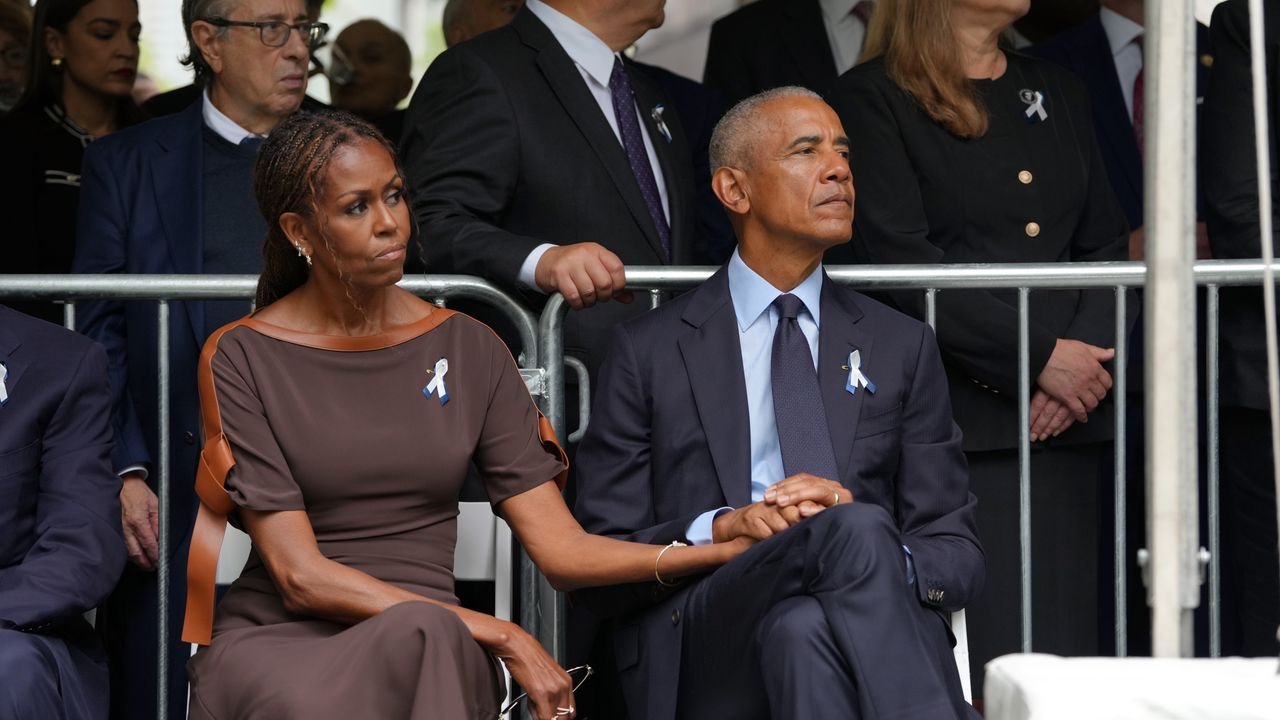
Some 200 miles north, four former First Ladies were present. Michelle Obama joined Barack Obama at the National September 11 Memorial in Lower Manhattan. She chose a different silhouette: a floor-length brown jersey Ferragamo gown, its fluid shape offset by twisted tan leather detailing at the sleeves. Silver jewelry and a memorial pin completed the look, while her braided hair was gathered into a low, loose plait. If Trump’s tailoring projected restraint through structure, Obama’s did so through softness. Brown, rather than black, gave the look a quiet warmth, while the column-like silhouette felt both solemn and recognizably her.
Even in moments that call for restraint, Obama is able to represent the core tenets of her personal style. Throughout and beyond her years in the White House, she has consistently used fashion as a platform for Black designers, while also returning to an elongated, fluid silhouette that feels her own.
Photo: Getty Images
Photo: Getty Images
She was joined in New York by three other former first ladies, each similarly filtering the occasion through her own established style codes. Jill Biden chose a tailored navy suit, complementing husband and former President Joe Biden’s black suit and blue tie. Hillary Clinton opted for black, wearing a collarless jacket over a tunic with braided sleeve detailing and cigarette pants. Laura Bush, meanwhile, subtly matched George W. Bush in navy, choosing a boatneck top and pencil skirt with flats and a long beaded necklace.
Together, the women offered a reminder of an enduring aspect of First Lady style: that the role does not entirely disappear when the presidency ends. Long after leaving the White House, former First Ladies continue to appear at inaugurations, public figure funerals, memorials, and other moments when the country gathers to mark something larger than politics. Their clothes, inevitably, remain part of the picture.
