
Rickenbach had a similar impression based on her experiment with entering fake patient information into the platform. “The responses were just too quick,” she says. In fact, more than a few of these telehealth companies clearly state that the chat feature on their site is AI-powered.
Kersh says she gets “dozens of messages every day, and I’d say a couple times a month it’s somebody asking for help with their dose.” When that happens, she says, she encourages them to contact the prescribing provider directly. “I’m extremely careful not to give individualized dosing advice online,” she adds.
That brings us to the potential legal risk for creators who are ultimately helping lead people to a medical decision. “This is no longer lifestyle content. This is something completely different,” says Rickenbach, who, in addition to being a lawyer, is the founder of the beauty brand Solsoller, where she often works with influencers to promote its products. “Once a creator is being compensated to direct consumers toward a product, especially a high-risk regulated product like GLP-1, that content starts to look more like commercial speech than personal storytelling.”
Commercial speech does not have the same level of First Amendment protection as other types of speech, especially if it is misleading. While the telehealth company may be likely to have liability in the case of injury, Rickenbach doesn’t think the affiliate marketers would necessarily be totally exempt. “The creator is not just creating awareness,” she says. “In many cases, the creator is helping drive the transaction.”
Kersh says she’s not aware of any legal protections provided to creators in the affiliate program she is a part of. “It’s important to clarify that I don’t provide or prescribe medication or make medical decisions for anyone,” she says.
Kersh is also well aware that job security in the affiliate market is tenuous at best. “I’m going to just ride this until it’s done,” she says. “This is not my forever plan.” She’s continuing in school to become a nurse practitioner and hopes the affiliate money will keep her afloat, at least through graduation. Once she has her new degree, she’d love to do “something in the real world,” either continuing to help with weight management or fertility, a field she worked in earlier in her career.
Perhaps the most concerning outcome of this gray market era is how it makes taking a drug that can have serious side effects seem like a casual, no-risk wellness strategy. “I left my social media agency when they tried to get me a brand deal with a GLP-1 vendor,” Meghan says. “It’s nefarious as fuck. Now we’re just tossing the term GLP-1 around, hoping that a girl who has the start of an eating disorder sees it and is like, ‘Great, this is going to make it so that I no longer want to eat a Crumbl cookie.’”
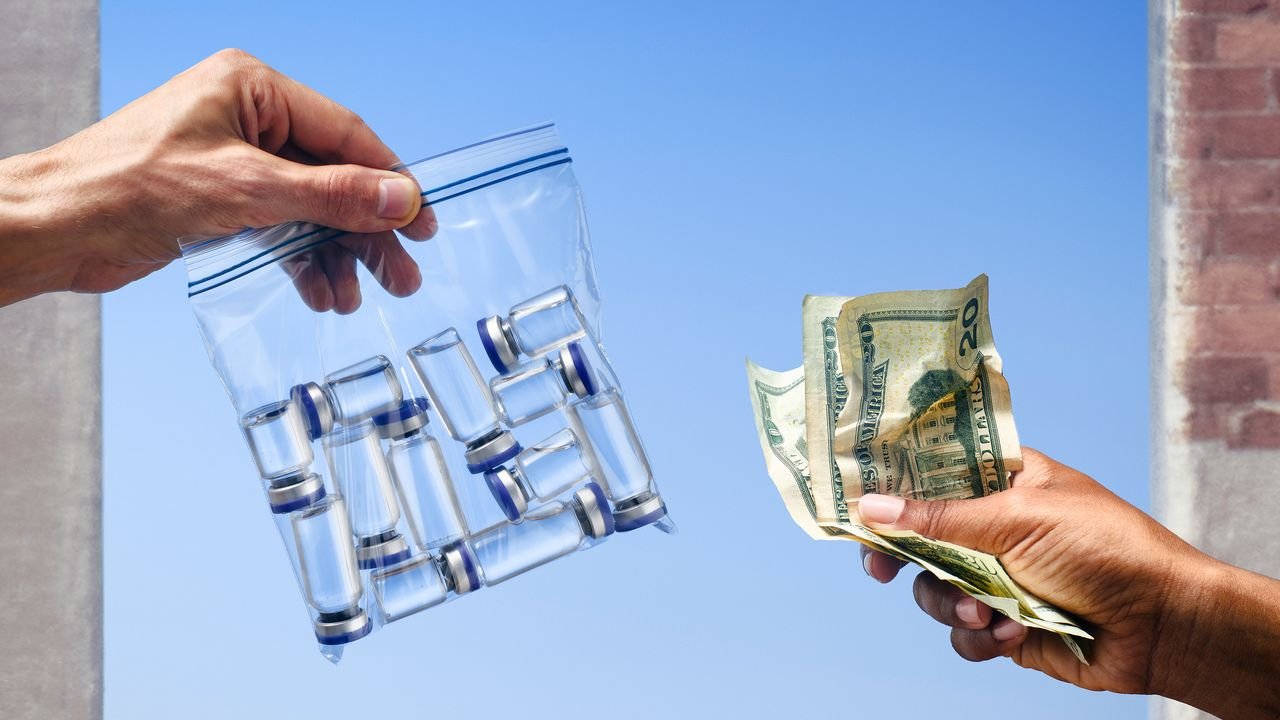
This over-the-counterfication of prescription drugs is nothing new. Anyone who’s been to college likely has or knows someone who has bought someone else’s prescribed Adderall to get through finals. It’s not even the first time for weight loss meds: Phentermine (the popular weight loss drug of fen-phen lawsuit fame) had its own version of a gray market moment during its peak popularity in the 1990s, despite being a controlled substance that’s regulated by the DEA. Dr. Anekwe recalls a former employer telling her that, back then, they’d hear about “a lot of shady doctors’ office situations” selling the drug directly to patients. “Whenever there’s a market for something, there’s always going to be people that want to make money off of it in whatever way that they can.”
