

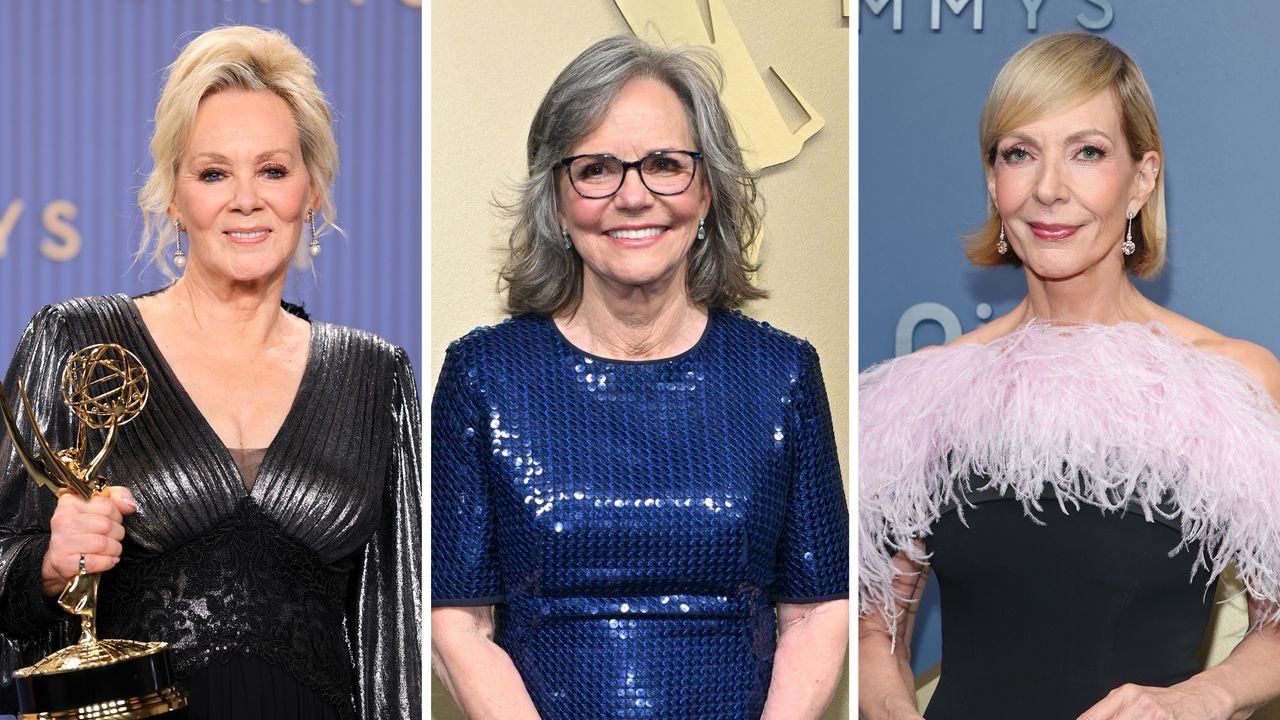
Not long ago, I wrote a story about the delightful recognition that at the 2025 Golden Globes ceremony, Old Lady Energy was in vibrant display. (Sixteen women between 50 and 70 were nominated for awards.) An old lady myself, it never occurred to me that calling out women who happen to be thriving in their abundant maturity might be offensive. It sadly was, to many commenters who hadn’t considered that thinking the term “old lady” is an insult is actually insulting to old ladies like me. I suggested they would do well to meet a few of the old ladies I know—the old ladies who are backpacking solo around the world, writing best-selling novels, starting their own million-dollar businesses, grandmothering their grandchildren—to learn that people of all ages, whether eight or 80, have value. What’s ageist is believing the word “old” the worst kind of insult.
Well, yesterday’s Emmy Awards ceremony has validated and supported the growing power of what we all might be proud to call Old Lady Energy. Four of the five winners in the female acting categories—Sally Field, 79; Jean Smart, 75; Allison Janney, 66; and Rhea Seehorn, 54 were either very muchly or slightly over 50. One of the actresses awarded at the Creative Arts Emmy Awards last week? Julie Andrews, ripe and creative at 90. The average age of last night’s winners was 63. And the entire glittering evening was hosted by 62-year-old Mariska Hargitay—“America’s sweetheart sex cop” she joked before shimmying in and out of a dozen different gowns, and almost as many hairstyles, over the next three hours. (While we’re doing math, the youngest female actor to win an Emmy this year was Shailene Woodley at 34. She took home the award for best guest actress in a drama at the Creative Arts Emmys last week.)
If numbers don’t lie… are Hollywood and the streaming platforms actually beginning to release the stale notion that middle-aged and older women aren’t drained of their creative juices after menopause? Research from as recently as 2019 noted that older women are often relegated to supporting roles on screen, or are consistently portrayed as grumpy, frumpy, or senile. Sally Field, backstage, when she was asked what was next after her win for her role in Remarkably Bright Creatures, said,” It’s very hard to find projects for old women.” In fact, juicy roles may still be the exception rather than the rule.
Might it be proof that because they can no longer hue to the increasingly unrealistic ideals of Hollywood youthful beauty, their individualism is a refreshing relief?
