

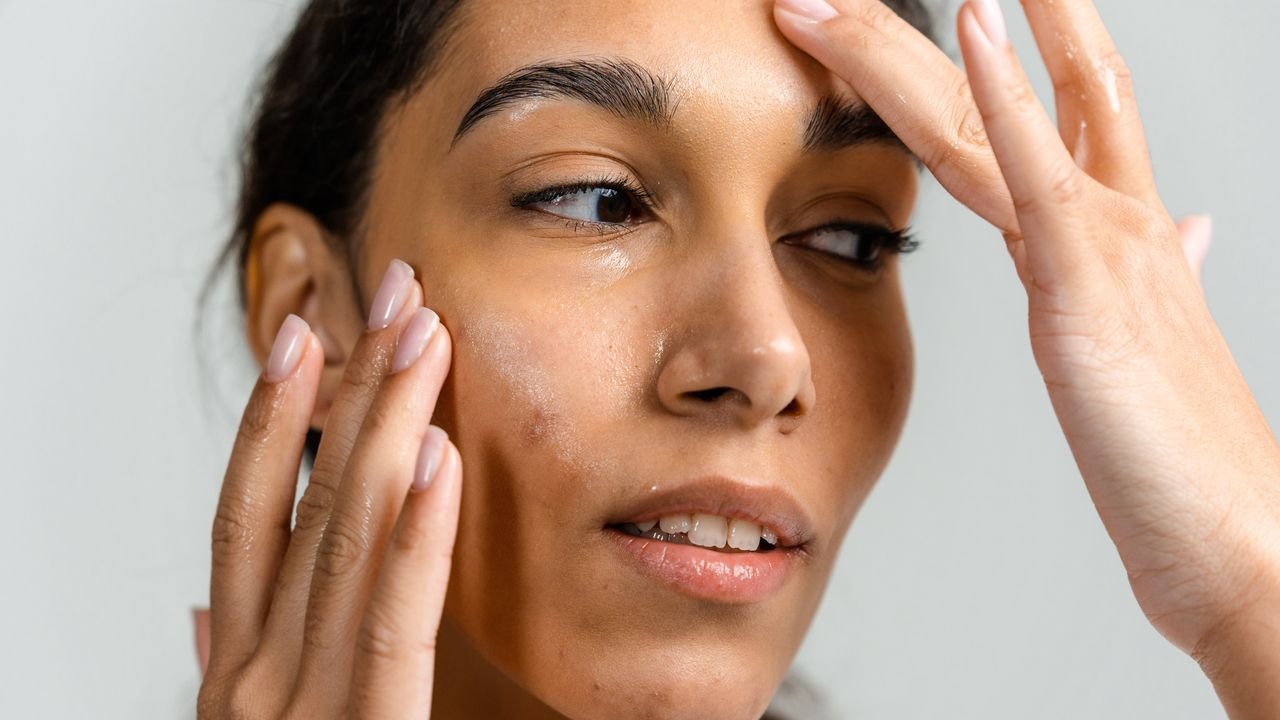
Nearly 32 million Americans have eczema, with the most common type being atopic dermatitis. The condition can cause patches of dry, scaly, and extremely itchy skin—and for some people, treating it can come with another skin concern: milia.
Milia are tiny, hard, keratin-filled bumps that are white, yellow, or skin-colored and tend to pop up around the eyes and on the cheeks. There are a few different types, but people with inflammatory skin conditions like eczema can experience what’s known as secondary, or traumatic, milia, says Dara Spearman, MD, a board-certified dermatologist in Fort Wayne, Indiana. For these folks milia develop when the chronic inflammation associated with their condition weakens the skin barrier and affects the way it sheds dead skin cells, causing keratin to become trapped beneath the surface. Long-term use of strong topical steroids to treat eczema can also impact skin-cell turnover and lead to thinner skin, fueling the issue, says Dr. Spearman. “Thinner skin can be more prone to keratin becoming trapped under the surface, causing secondary milium,” she notes. Occlusive ingredients like petroleum jelly and shea butter—often used to soothe the dryness brought on by atopic dermatitis—are yet another potential contributor to milia formation when applied in excess or on areas prone to these bumps.
This can make treating eczema and milia at the same time a tricky balancing act—especially for aging people with darker skin tones, Dr. Spearman says. “As we age our skin loses moisture, and melanin-rich skin often has lower levels of lipids called ceramides, so this group tends to moisturize more. But when you use heavy oils or creams on the skin, you can form milia.”
So if you’re dealing with milia and eczema simultaneously, what should you do? Below are doctor-approved tips for treating both conditions at the same time.
Meet the experts:
Keeping eczema flares at bay
The first step in your journey to clearing up your skin should be to get your eczema under control. Preventing eczema flares allows your skin barrier to stabilize and creates the best environment for secondary milia to clear up.
Medication can be a huge help, but if you’re also experiencing milia, ask your dermatologist to re-evaluate your treatment routine. If you’re currently prescribed a topical steroid, for example, your provider may be able to switch you to a milder option. Depending on the severity of your condition, a less potent formula can still be strong enough to decrease the inflammation fueling your eczema, especially when paired with other lifestyle changes, says Dr. Spearman, adding that “there are also some newer nonsteroidal anti-inflammatory creams that can treat the eczema without thinning the skin or causing milia.”
Tweaks to your routine, like using a humidifier during the drier months and limiting time in the shower, are also helpful, since dry air and long, hot showers can suck moisture out of your skin and make eczema worse, she notes.
Christina Lee Chung, MD, a board-certified dermatologist in Philadelphia, agrees that preserving moisture is vital. “Shower for five minutes or less—just jump in and jump out,” she advises. She also stresses to her patients that it’s better for their skin’s moisture levels to stick with lukewarm water and shower just once a day or even every other day, if possible.
What you use to suds up matters too. “I always tell patients that if you want to use an antibacterial soap in hot spots like the groin or armpits, that’s fine. But on the rest of your body, use a non-antibacterial cleanser so you don’t strip extra moisture,” says Dr. Spearman, noting that she particularly likes Dove body wash. The brand’s Soothing Relief wash is formulated with colloidal oatmeal, which moisturizes and helps soothe itching. Plus, the product carries the National Eczema Association’s Seal of Acceptance, so you can feel confident it won’t aggravate your skin.
