

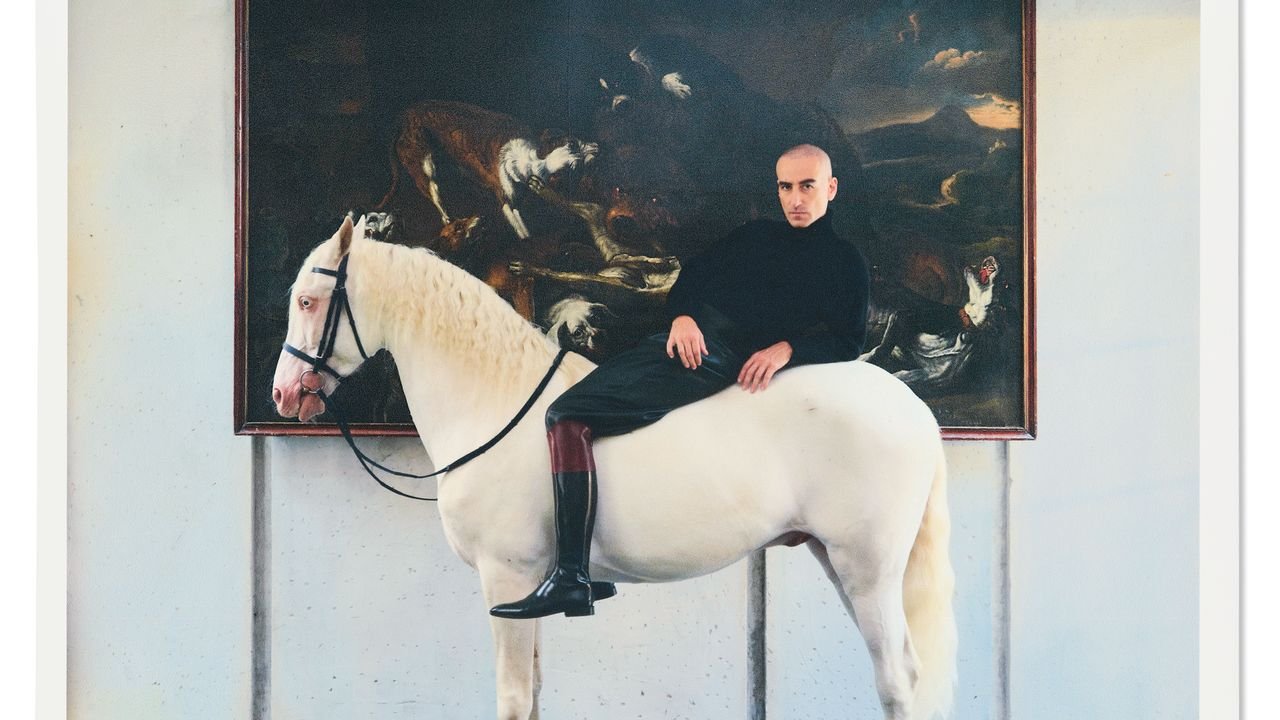
The people moving through the building belong to what Risso calls three overlapping constellations: the Makers, the External Makers, and the Muses. The Makers are the Bureau’s daily inhabitants, while External Makers include artisans and craftspeople like Seguso. The distinctions are porous. “What matters,” he says, “is mastering techniques.”
Risso’s circle also includes the artists, musicians, and friends he calls the Muses—among them Tagiuri, Flaminia Veronesi, Piero Golia, and Dozie Kanu. There is no audition process for the Bureau. Collaborators tend to emerge organically—from friendships, nights out, or simply spending enough time with someone to discover what they secretly dream of making. Risso resists programming those encounters too carefully. Instead, a shared curiosity often leads to a simple question: “What if we made something together?”
Commercially, the Bureau will sell directly to consumers, either by appointment in the Milan space or online. Alongside a core of seasonless pieces—from knitwear, shirts, jackets, and trousers to shoes, bags, and small leather goods—there will be changing monthly releases. One-of-a-kind and more elaborate objects, including silverware, vases, and ceramics, will be made-to-order. Clients will be informed of releases by newsletter, but, as Risso stresses, the Bureau is open to anyone who discovers it.
Model Roxane Plaza.Photographed by Niko Giovannoni. Vogue, November 2026.
Musician Lauren Auder.Photographed by Niko Giovannoni. Vogue, November 2026.
Among the Bureau’s historical references is Claes Oldenburg’s The Store, the radical early-1960s project in which he displayed and sold his sculptures in a storefront as if they were everyday merchandise. “We wanted to imagine another relationship between the maker and the audience—one that feels more direct, more intimate, and more personal,” Risso explains. That spirit of discovery carries into the Bureau Library, conceived as a living archive that changes several times each year.
We keep climbing. On a small mezzanine, three intimate rooms feel suddenly removed from the scale of the building. (One is what Risso calls the Boat Room, a wood-wrapped tribute to his childhood and the idea of refuge.) Further upstairs is the Cantine, “where we come together every day for breakfast, lunch, and dinner,” Risso says. “It is the communal heart of the Bureau.” It opens onto a secret garden, surrounded by tall trees and covered in a striped mosaic.
