

Housed on the third floor of Parton’s SongTeller Hotel in downtown Nashville, the museum officially opens its doors on September 29. To celebrate the grand opening, Seaver spoke exclusively with Vogue about the exhibit and her aunt’s enduring legacy.
Vogue: Tell me a little bit about Dolly’s wedding dress. What was it like to stumble onto such a special item?
Rebecca Seaver: Well, not only did we find her dress, but we found the veil that she wore that day. We found the Bible that she carried instead of a flower bouquet, and we also found this really beautiful letter from the pastor who married them. At the time, her record label was afraid that if she got married, she would become a wife and stay at home. But Dolly did what she wanted to do. [Laughs.] She got married in Ringgold, Georgia, just across the state line, so it wouldn’t be in any of the newspapers in Tennessee. And so the letter we found basically said, “You’re not members of my church, so I haven’t had time to counsel you about marriage. But here are some pieces of advice I would like to give you for a happy, long-lasting marriage.”
There was also a special photo strip you found, right?
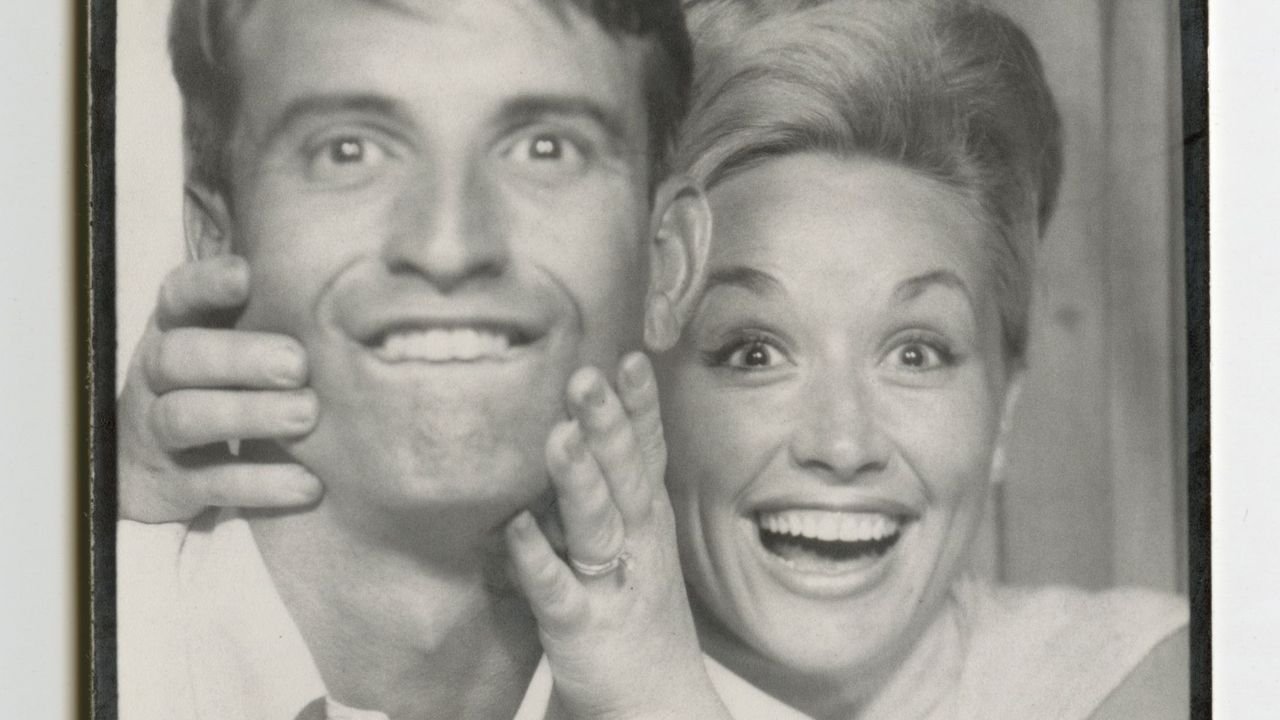
Yes. So when we found Carl’s trunk, or the “time capsule,” as we call it, there were lots of pictures in there. One of them is a photo strip that no one’s ever seen before. Dolly had not even seen it since it was taken, so she was absolutely floored when we found it. It’s just a perfect example of their relationship. People haven’t seen many photos of Carl, and they don’t really know much about him other than what [Dolly’s] said over the years, so I think to see this really goofy side of him, and how happy she looks—her smile has never been brighter than it is in this photo—is so sweet.
How did you first get involved with the Dolly Archive?
Well, my favorite place in Dolly’s house was the closet. I always loved to play there, and being a nosy little kid, I knew everything that was in there because I went through it all. Judy [Ogle, Dolly’s childhood friend] was like an aunt to me, and she always made a point to save the little things and big things. She and Dolly’s sisters—my mom and my aunt Rachel—didn’t think of themselves as part of an archive team, they were just taking care of their sister and best friend. I started working with Judy and Steve Summers, and at some point I decided we needed to take all of the wonderful things we had and preserve them—not just physically, but digitally, too.
The museum is set to be the largest exhibit of Dolly’s life anywhere. With a career as expansive as hers, how do you even begin to approach laying it all out?
Dolly was so specific about the story of her life, and she wanted to make sure that it was told with integrity and with heart, so the museum is set up in two parts. The first part is an immersive walkthrough of her life. You start the night she was born in a wintery cabin, and people will get to walk in and hear from her about her family. Then you’ll see moments like her and Carl meeting when she first got to Nashville—that was one of the most important moments in her life. Then, from there, we go on to tell the stories that we knew the fans would want to see.
