

How to maintain volume
Next, you can look at your actual hair volume. If mom passed down her finer strands, there are ways of inflating and boosting what you’ve got to fakethickness, which is where styling and cuts come in.
Here are some pro-recommended ways for how to get thicker hair…
Style mindfully
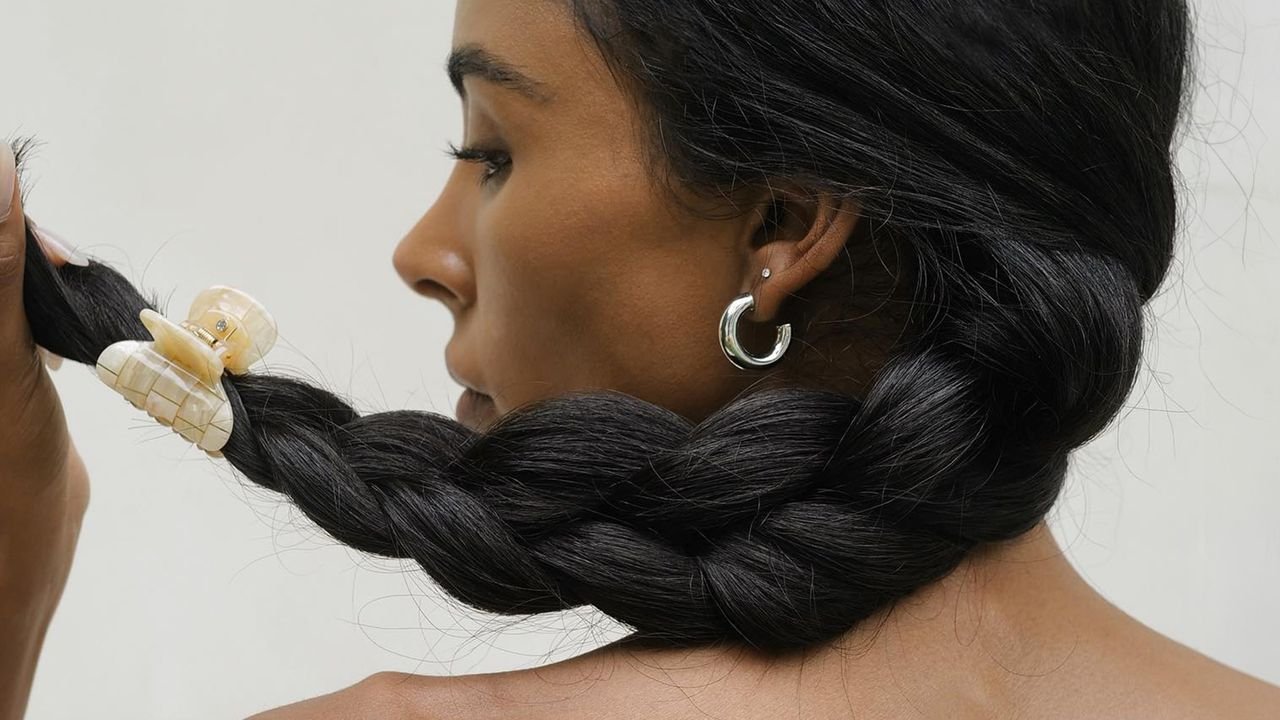
Traction alopecia (aka hair loss that happens when you style your hair too tightly) and product build-up can impede healthy hair growth, so it’s important to style mindfully. “From a styling perspective, we can avoid techniques that can put strain and injury on our follicles to avoid the possibility of thinning or even scarring on the scalp surface,” says Teresa Richardson, a trichologist at Fulham Scalp & Hair Clinic. “Avoid extensions, tight braids and ponytail hairstyles, weaves, or wigs if you really want to reduce tension and avoid the thinning and breakage which, if left untreated, can lead to traction alopecia.”
Likewise, brush gently. “Brushes with long, flexible plastic prongs are best,” Kingsley says. “Boar-bristle brushes can scratch both the hair and scalp and cause substantial accumulative damage.” Just be sure, if you’re using heavy styling sprays and products, that you deep-clean those brushes regularly.
A haircut, Cavalcante says, can make all the difference, too. “I always tell clients that sometimes the right shape matters more than another product. Blunt cuts, soft layers in the right places, and adding movement around the face can instantly create the illusion of fullness,” he says. That, paired with lifting the roots during your styling routine by blow-drying your hair upside down can pump up the volume.
Keep it clean.
If your scalp is covered in dirt, excess oil, and debris, it’s going to make it really hard to get your follicles to do their job — we know we can’t concentrate on being productive if there’s dirty laundry strewn all over the floor. “Keeping your scalp comfortable and clean is so important as this creates a healthy scalp environment, allowing your hair follicles to produce and grow healthy hair at an optimum rate,” says Richardson. “We would recommend washing your hair at least once a week and more frequently if your hair gets greasy or itchy quicker.”
