
In November 1922, archaeologist Howard Carter descended a limestone passage in Egypt’s Valley of the Kings. Holding a flame up in the darkness, he peered through a small hole chiseled into a sealed door. When asked if he could see anything, Carter famously replied, “Yes, wonderful things.”
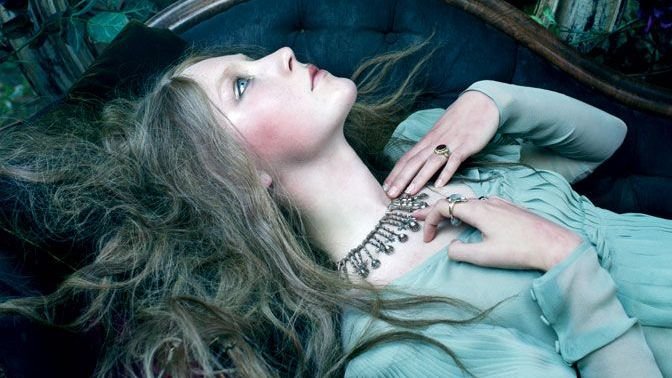
More than one hundred objects were discovered within the linen bandages of King Tutankhamun’s mummy, including an abundance of amulets that Carter declared were “intended to protect against injury on that journey in the underworld.” Scarabs, serpents, vultures, lunar ornaments, ancient gods like Horus and Anubis carved from gold and lapis lazuli—all strategically placed on various points along the body.
Over 3,300 years later, these kinds of symbolic objects aren’t relics from a bygone era—rather, they play an ongoing role in our spiritual landscape.
Somewhat ironically, just look to TikTok for proof. Which, as Vogue Business reported, has over 9 million videos under the #WitchTok hashtag. It doesn’t stop there, of course. The profusion of tarot, crystals, astrology, talismans, and other permutations of spirituality has all drifted mainstream in recent years. “I think the core of authentic spiritual work is rooted in a thread that has always existed,” explains tarot reader Cory Sargeant Boehr. “But the way we engage with those practices naturally evolves alongside society.”
My curiosity around amulets and talismans is something of a contradiction. On one hand, I am staunchly skeptical of the metaphysical. But I can neither resist it. I am utterly obsessed with rituals (as a child, I would trace the Sign of the Cross on my chest because I was fascinated with the sacramental gesture—I was not catholic). And yet, if someone earnestly explores the merits of the zodiac or crystal healing at a dinner party, my inner cynic awakens.
But as it pertains to protective objects, I am somehow spiritedly on board.
Photo: High Light Rituals
