

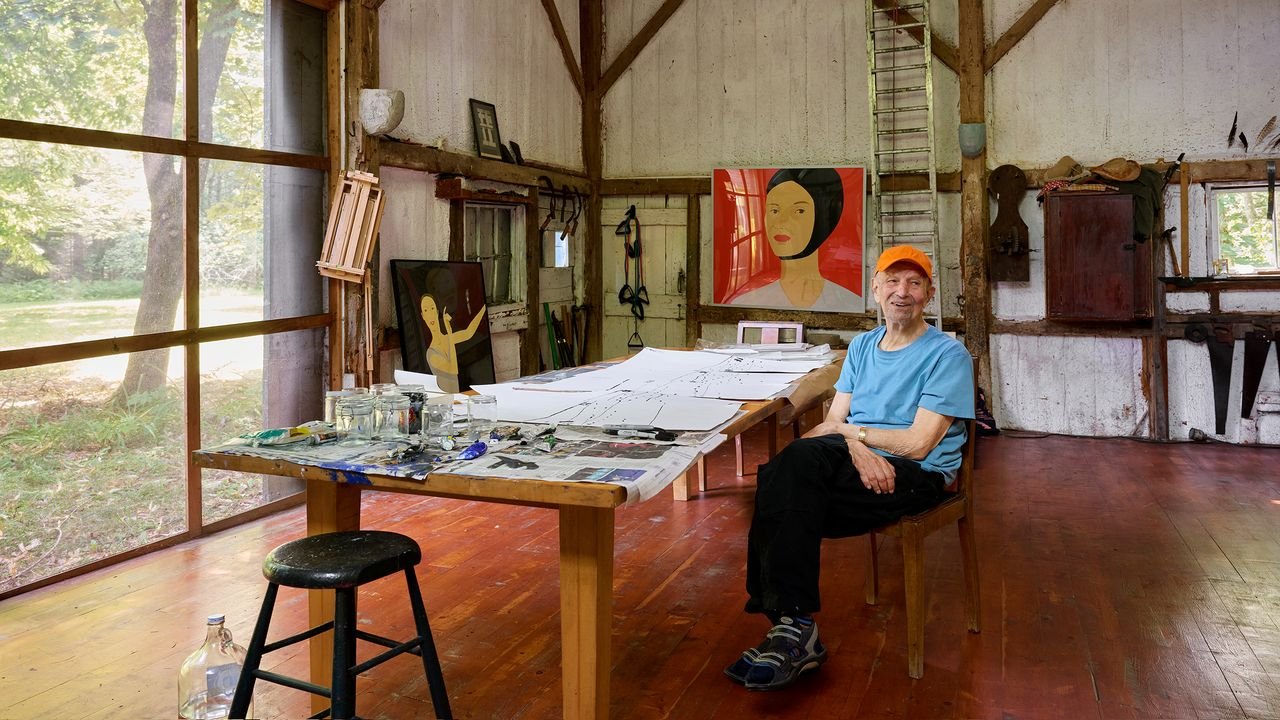
“The past couple of years have been the biggest production of my life,” Alex tells me. “I did 150 paintings. Good size.” He has been painting pictures of the beach—dark, compressed images, very different from all those verdant green Maine canvases. He’s in his late period. Like late de Kooning, the picture plane has been emptied of people, just Alex and his canvases. He first made his mark by ignoring emotion, character, mood. He paints the surface, outside appearances.
“This winter I didn’t care if I ever did another painting,” he continues. “I was inspired by a Monet in The Metropolitan Museum.” He’s talking about The Met’s very large 1919 Monet, Water Lilies. “I had a show with water paintings in Venice. I don’t think people got them. They love looking at them, but they don’t understand what they’re about. Water has three properties: weight, transparency, and motion. They viewed the paintings as illustrations of water, but no one understood what I was doing.”
What he was doing, of course, was not standing still. Moving forward. He’s curious, forever reinventing himself and learning more about what he loves most—making a new picture, surprising himself, every time. I’m struck by his persistence, his singularity. His career has shifted in many ways, yet it stays the same—flowers and trees and landscapes and people and, especially, Ada.
