

For reality TV regular Dorinda Medley, who plays Loni and worked mostly with Glenn Close, taking on a scripted role was a chance to try something new. “All these little steps in your life move you a little closer to who you are,” she said. “For so many years I was Dorinda someone.” She ticked off the surnames she’d gone by and the roles she’d played offscreen. “Mother, wife, widow. Now, for the first time, I’m just Dorinda. There’s incredible freedom in that.” Medley, in an embellished Gucci dress that she jokingly called “very casual,” already had a pitch for her next collaboration with Murphy. How about setting American Horror Story at Blue Stone Manor, her home in the Berkshires?
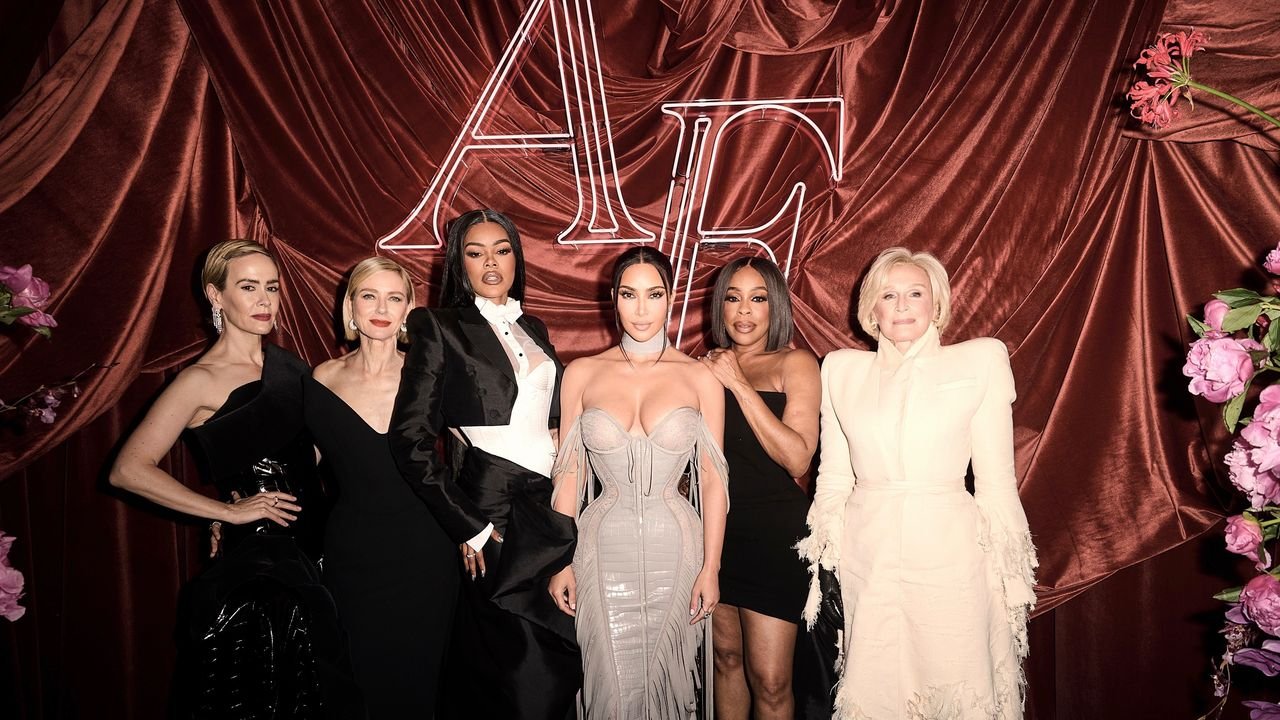
“We rarely get a chance to rock together. We’re always working,” Hemingway, the director, said. He was looking forward to a chance to “hang out, have a cocktail, even do a little two-step, and just laugh.” And at Crane Club nearby, there was ample opportunity for all four. Around the red velvet-draped dining room, servers made the rounds with truffle arancini and caesar salads, a giant ice sculpture of the show’s initials presided over the raw bar, and the DJ was good enough to make you forget it was a school night.
If the carving station said wedding reception, the cocktail menu said divorce. Bartenders whipped up drinks named Contested Assets, with habanero-spiked mezcal number, and Alimony, which came with gin, vodka, vermouth, sake, and a little cucumber. Taylor had a special order in mind. “I need a real big margarita,” she told Vogue. Her favorite? “Passionfruit. Sugar rim. There—you’ve got sugar, spice, and everything nice,” she said, dancing as she delivered the recipe.
For a cast that had reserved tables ringing the room, they sure spent little time in their seats. And who could blame them? Ash Hodgkinson was doing magic tricks for a knot of guests, while Murphy, in ochre-tinted aviators, made duck faces for the camera with Paulson. When the DJ put on “Plain Jane,” there was Nash-Betts, dancing with her girls. “I love those moments,” Hemingway had said. “That’s living.”
As for any flak the show had received, Anna Delvey, who knows a thing or two about mixed press and courthouse fashion, had a thought. “It says a lot about people, how they take it,” she explained—stating that some people “are too serious about it.” In her view, anyone busy cataloging the show’s excesses was liable to miss the joke. “They obviously know what they’re doing,” she said of the silliness.
