

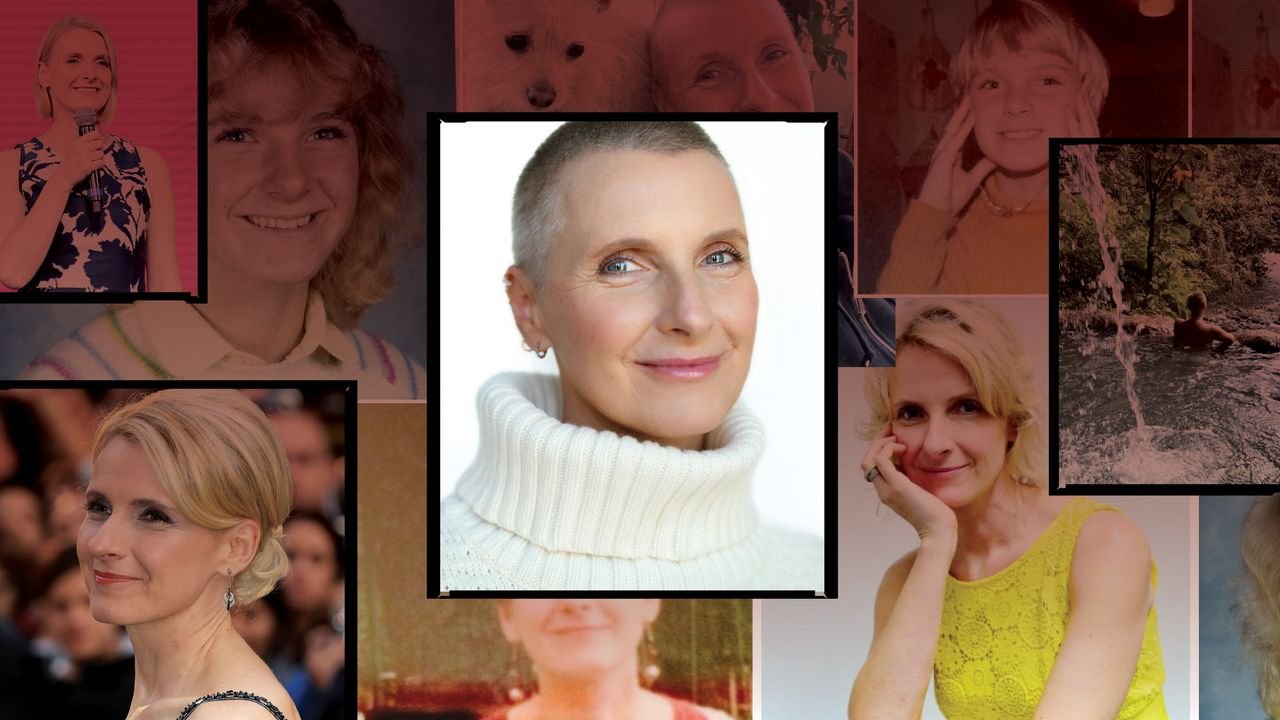
There’s one thing you could say for sure about the writer Elizabeth Gilbert, whose best-selling memoir—you might remember Eat, Pray, Love?—brought her international fame, a popular movie (in which she was played by Julia Roberts, and her Bali-love-interest-and-future-husband by Javier Bardem), and a sizable fortune. I’ll get to that one thing you could say in a moment.
Twenty years ago, Eat, Pray, Love chronicled Gilbert’s post-divorce search for meaning over the course of a year spent in Italy, India, and Indonesia. It sold over 12 million copies and became something of a vade mecum for 30-something women. (Magazine history sidenote: A genesis of the book was an essay Gilbert wrote for Allure in 2003, “The Road to Rapture,” about abandoning her life to find beauty within herself.) Gilbert’s new memoir, All the Way to the River, documents a very different chapter of her life, which involved a passionate love affair gone very wrong, then very right, then very sad, and a thorough recalibration of her spiritual livelihood.
The story in a (supersize) nutshell: Gilbert fell deeply in love with Rayya Elias, her hairstylist-turned-best-friend, who described herself as “an ex-junkie, ex-felon, postpunk, glamour-bitch dyke,” and who was all of those things, but also a talented stylist, musician, storyteller, filmmaker, and in Gilbert’s estimation, a kind of sorceress, as well. When Elias is diagnosed with terminal liver and pancreatic cancer, Gilbert declares her love and leaves her marriage to be with her. An alcohol and heroin addict in recovery, Elias begins using again but, refusing to let drugs get in the way of their soul-match, Gilbert persists in supporting her beloved through her descent deeper into addiction.
As you can imagine, conditions go from bad to worse to so much worse, until Gilbert is forced to confront her own addiction—to love and sex—which allows her, finally, to let go of her old attachment to Elias and learn to love her in a healthier way. The lovers reconcile. Elias dies.
It’s a story as old as time—unlikely lovers meet, lovers surmount terrible obstacles, one of them dies. But this survivor goes on to find—even celebrate—a new way to flourish going forward. In Gilbert’s raw telling, the journey is compulsively readable. So, here’s the one thing you can say without reservation about Liz Gilbert: She never does anything 100%. She does, in fact, do everything 1,000%.
