

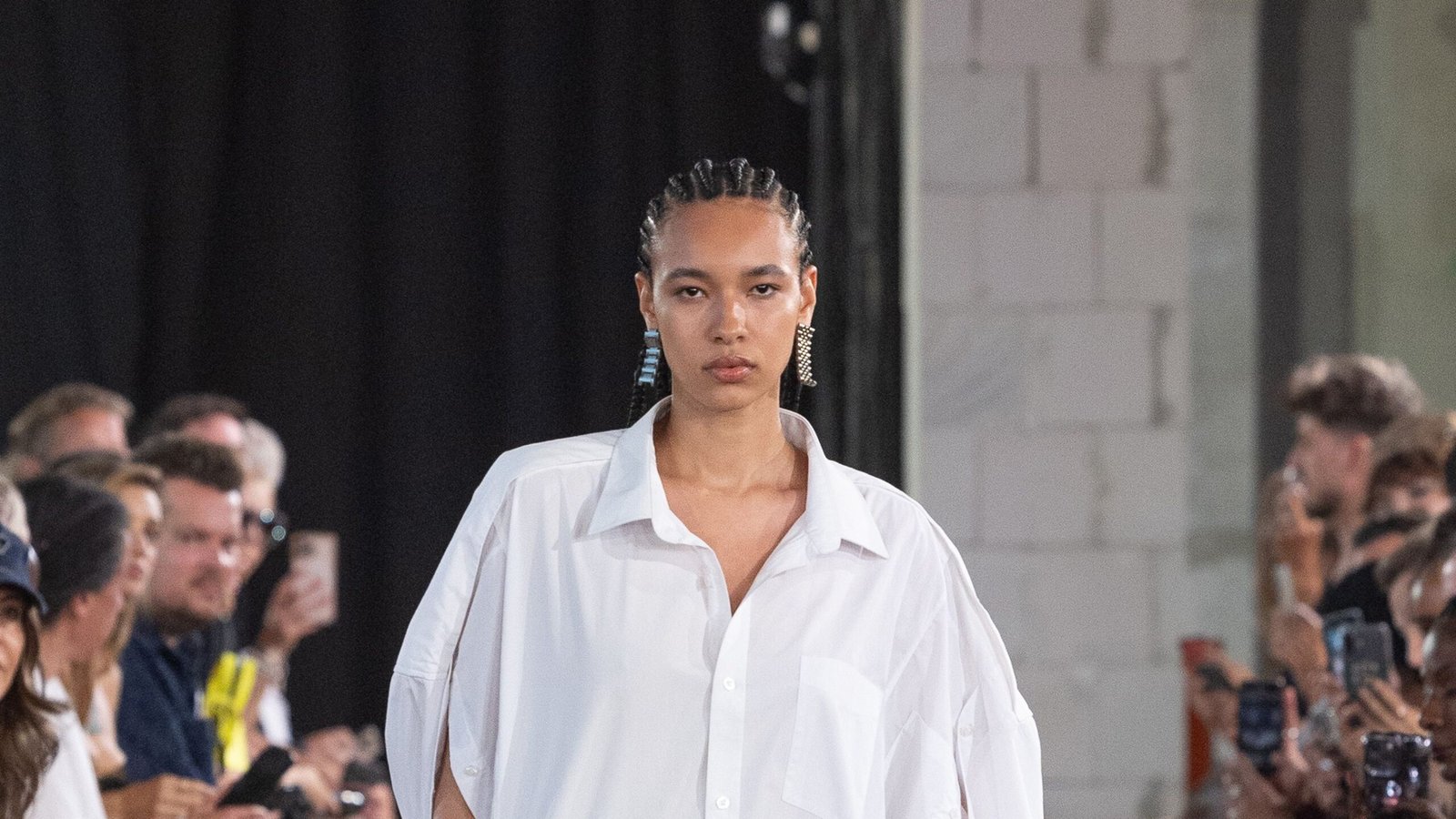
“Bobby! Bobby! Bobby!” There was quite the rapturous roar coming from backstage as everyone filed out after the Buzigahill show. The Bobby being feted was designer Bobby Kolade, the man behind the Kampala-based womenswear and menswear label Buzigahill. This was one of those shows where everything is pitch perfect, and not just because the clothes were terrific (they really were): a sharp, minimalistic silhouette worked around abbreviated patch-worked dresses; uniform-like, short-sleeved jackets; shorts and pants that fusec tailoring with boxer short-shirred waistbands; and sweatshirts in graphic configurations of different brightly colored patches. It’s also because Kolade makes clothes with heart and soul, as well as a clear-minded sense of purpose. “Buzigahill is zero waste,” he said backstage when things had (kind of) quieted down. “We don’t ever throw any textiles away when we upcycle. And this collection started with us experimenting with the leftovers.”
Kolade’s four-year-old label harnesses the secondhand clothing from the US, Europe, and beyond that has been brought into Uganda via the U.A.E. He buys what has been discarded and taken away to be dealt with elsewhere and reimagines it into Buzigahill. Kolade then takes such quotidian materials as shirting, khakis, denim, and hoodies, and totally re-envisions them far beyond their origins. In doing so, he has created a system of working to not only support a sound production model for the label, but also a philosophy that challenges inequity and disempowerment now, and historically, through the exertion of colonialist rule across Africa.
For this collection, on his mind were two cultural titans who embodied the feeling of freedom that began to percolate in Africa in the 1960s, as nations worked to gain independence after colonial rule. Kolade thought of Kenneth Kaunda, who served as Zambia’s first president when the country became independent in 1964, and who was known for wearing his Kaunda suits, with their short-sleeved, chest-pocketed jackets, a look Kolade paid homage to with his collection. “One of the reasons we were thinking about the suit,” he said, “was because the current president of Kenya had been wearing it, and it had become a trend amongst Kenyan ministers to wear it. Then the country’s parliament banned in favor of the colonial three-piece suit, which is extremely sad because this is 2026, and it was refreshing to see an African leader take on this historic garment.”
The other person on his mind was Uganda’s first female lawyer, Princess Elizabeth Bagaaya, who went on to serve as the country’s justice minister. To add to her accolades: She was also super stylish, and her pared back, short look of the 1960s reverberated through this collection, notably with the two patchwork dresses that opened the show. “The shapes of those were simple, because with all the patchwork going on—which takes weeks to do—you can’t be all-out,” Kolade said. “You know, you’ve got to keep it chic.”
