
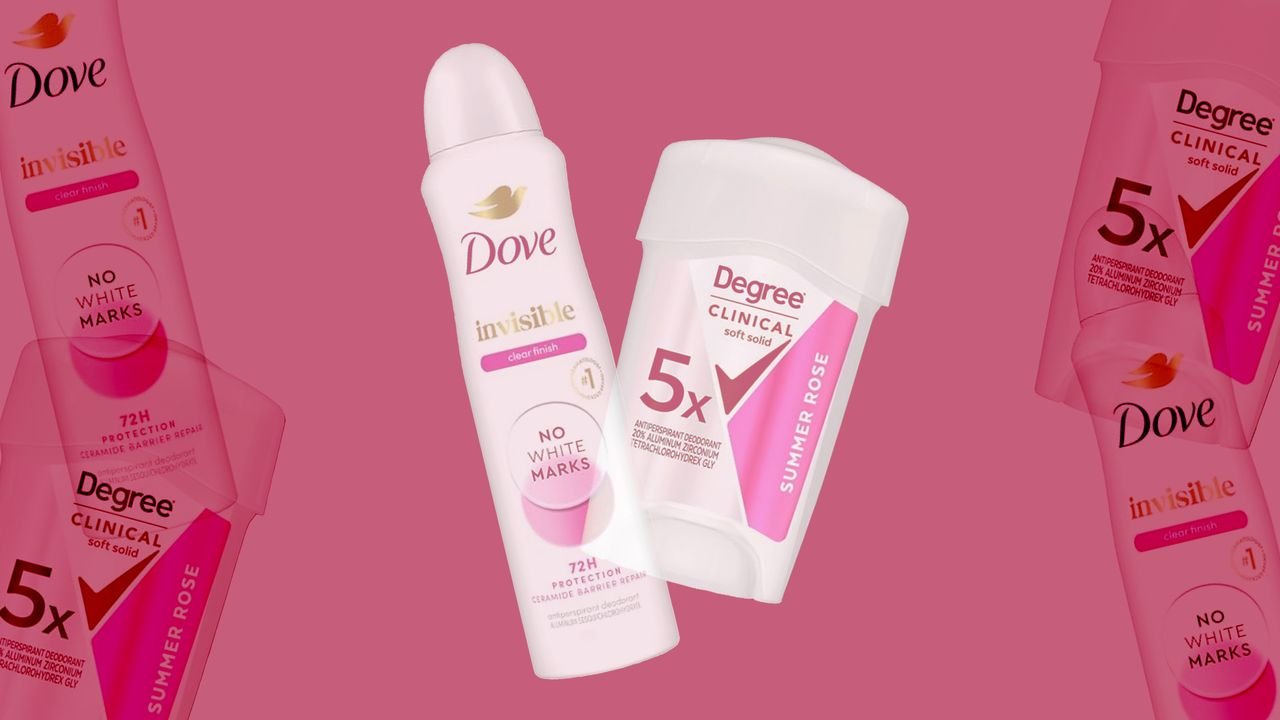
Why we love it: ICYMI, hyperhidrosis is the medical term for excessive sweating—and the perfect target for Certain Dri’s Prescription Strength Clinical Antiperspirant, according to Dr. Miller. Its aluminum chloride-based formula offers highly effective sweat protection for up to 72 hours. One thing to note: While this unscented, clinical-strength antiperspirant works wonders at stopping sweat and odor-causing bacteria, it can be irritating for individuals with sensitive skin.
Frequently Asked Questions
What are antiperspirants?
“Traditional antiperspirants do not decrease sweating, but rather block sweat from reaching the skin’s surface,” says Joshua Zeichner, MD, a board-certified dermatologist in New York City. The various versions of aluminum compounds you may find as the active ingredient in antiperspirants are what do the sweat-blocking.
These include aluminum chlorohydrate, aluminium zirconium, aluminum chloride, and aluminum zirconium tetrachlorohydrex gly, which serve a unified purpose. “All aluminum ingredients in antiperspirant products work to control wetness by forming a temporary plug within the sweat gland,” cosmetic chemist Ron Robinson tells Allure.
They function similarly, but to slightly varying degrees of efficacy. Aluminum zirconium tetrachlorohydrex gly, for example, forms a more stable plug in the sweat glands than other compounds, so it’s most commonly found in clinical-strength antiperspirants, Dr. Tassavor says. Other aluminum compounds are still effective, but are considered less potent—that’s why they’re more likely to appear in standard-strength products.
What are deodorants?
Not all deodorants are antiperspirants, but most antiperspirants are deodorants. Deodorant is considered a cosmetic because, as Shereene Idriss, MD, a board-certified dermatologist based in New York City, previously explained, it’s formulated with antimicrobial agents to inhibit the growth of microorganisms in the armpits.
But sweat itself isn’t what makes you stink. “Odor is released when bacteria come into contact with the thicker, milkier substance produced by apocrine glands in our armpits and groin,” she added—feet and butts included. While dermatologists say daily bathing is critical to combatting body odor, deodorant can still be very useful. “It is helpful to use deodorant in the areas of skin-on-skin contact, like under heavier breasts or stomach, to prevent skin maceration during high humid seasons or to prevent skin irritation from friction,” Julie E. Russak, MD, a board-certified dermatologist at Mount Sinai Hospital in NYC, told Allure.
Are aluminum deodorants safe?
The safety of aluminum as an antiperspirant ingredient has been called into question by clean beauty advocates and natural ingredient enthusiasts. Some believe aluminum can contribute to the development of diseases like breast cancer and Alzheimer’s, but there isn’t enough scientific evidence to support those claims.
“We rely on studies done on thousands of women to see if there are links to breast cancer and the suspected culprit,” Sarah Cate, MD, a board-certified breast surgeon and an assistant professor of surgery and breast cancer specialist at Mount Sinai in New York City, told Allure. Ultimately, no one has developed breast cancer as a result of using antiperspirants.
Moreover, the Alzheimer’s Association says the link between aluminum and the neurodegenerative disease is a myth and that “studies have failed to confirm any role for aluminum in causing Alzheimer’s.” So, while opting for aluminum-free or natural deodorant has its benefits (especially for people with easily irritated skin), aluminum-based antiperspirants are your best bet for true odor-blocking, wetness-quashing effects.
What is the most effective underarm antiperspirant?
The most effective antiperspirant for you depends on how much you sweat and your personal skin concerns, Dr. Tassavor says. It may take some trial and error to find what active ingredient (and what concentration of it) works best to manage your sweat. Stronger actives like aluminum zirconium tetrachlorohydrex gly may be more likely to cause irritation because “they create a more substantial blockage within the sweat ducts,” Dr. Tassavor explains. He adds that higher concentrations of any active ingredients can also increase your risk of irritation. Then, you’ll need to factor in how your underarms tolerate fragrances and other added ingredients. Finally, you should take your preferred texture into consideration, so applying the product is as enjoyable as possible.
Why am I still sweating even after using antiperspirant?
Good news: Your pits probably aren’t doomed. It’s likely that you aren’t using it at the right time. “Antiperspirants are most effective when applied at bedtime when sweat glands are the least active,” Dr. Dommasch says. She explains that excess moisture, be it sweat or water from the shower, can dilute the product and make it less effective.
It’s also possible that your antiperspirant of choice isn’t strong enough, Dr. Tassavor says. Look for a clinical-strength formula or one with a higher concentration of active ingredients. If switching doesn’t help, he recommends talking to a dermatologist. They can help you find the right treatment for you, like prescription-strength antiperspirants, oral medications, or Botox injections.
What is the best deodorant for hidradenitis suppurativa?
Hidradenitis suppurativa is a painful, inflammatory skin condition that causes boil-like sores in your sweat glands. It’s exacerbated by excess moisture and friction, so keeping the area dry with an over-the-counter antiperspirant can make the symptoms less severe and help you get some relief, Dr. Tassavor says. Look for one with a gentle formula made without fragrances or essential oils, Dr. Dommasch says. “These [ingredients] can contribute to irritation and sometimes allergic reactions, which may worsen hidradenitis suppurativa,” she explains. If you don’t see any improvements, talk to a dermatologist about treatment options.
Meet the experts
- Erica Dommasch, MD, a board-certified dermatologist based in New York City
- Jason Miller, MD, a board-certified dermatologist based in Freehold, New Jersey
- Michael Tassavor, MD, MS, a board-certified dermatologist based in New York and New Jersey
How we test and review products
When Allure tests a product, our editors look at it from every angle in an effort to best serve you. We review ingredients, scrutinize brand claims, and, when necessary, examine peer-reviewed scientific and medical studies. In addition to testing each and every product that’s included in each and every review, we rely on experts who shape their fields, including dermatology, cosmetic chemistry, and medicine, to help us vet the ingredients and formulas.
For our list of the best deodorants with antiperspirants, we considered each product’s performance across five primary categories: product ingredients and efficacy, packaging, fragrance, texture, and product wear. Every product was determined to have excelled in each category by our editorial team, which is composed of in-house writers and editors as well as contributors—along with special consideration from dermatologists. To learn more information on our reporting and testing processes, read our complete reviews process and methodology page.
Our staff and testers
A beauty product is a personal purchase. You might be searching for a face cream to address persistent dryness or a new nail product to add to your Sunday self-care routine; you may simply be browsing around for the latest launches to hit the hair market. No matter what you seek or your individual needs and concerns, Allure wants to ensure that you love anything we recommend in our stories. We believe that having a diverse team of writers and editors—in addition to the wide range of outside testers and industry experts we regularly call upon—is essential to reaching that goal.
After all, can we really say a skin-care product is the “best” for people over 50 if the only testers we’ve solicited opinions from folks who have yet to hit 30? Can we honestly deem a high-end diffuser worthy of your hard-earned cash if it’s never been tested on curls? We’re proud that our staff spans a wide range of ages, skin tones, hair textures, genders, and backgrounds, which means that we are able to fairly assess any beauty product that comes into the beauty closet.
