
With a sticky (that’s a good thing, promise) texture that helps makeup stay in place, “e.l.f. Power Grip Primer is an amazing, effective drugstore option,” Walmsley says. “It’s so grippy, and it contains hyaluronic acid that plumps and hydrates, leaving a dewy finish.” The hydrating primer—easy to find at drugstores and on Amazon—also provides unexpected benefits for a makeup look. “Pigment has enhanced color payoff after applying this primer,” Walmsley says. “It really makes color pop.” Pro tip: For a more brightening formula, opt for the e.l.f. Power Grip Primer + 4% Niacinamide.
Frequently asked questions
What benefits do primers provide for older skin types?
“As skin matures, it naturally loses moisture, collagen, and elasticity, making it more prone to dryness, fine lines, and uneven texture,” Walmsley says. “A well-formulated primer creates a smoother, more hydrated canvas for makeup while helping skin look hydrated and adding grip throughout the day.” Primers can also target specific skincare concerns, she notes. “For mature skin, I like to look for products that hydrate and plump, smooth fine lines and wrinkles, create a soft and radiant finish, and provide skincare benefits.”
What to look for in a primer for older skin
“Mature skin benefits most from formulas that combine valuable skincare properties with lightweight coverage, priming skin for makeup by creating a comfortable and long-lasting base,” Walmsley says. She adds that the best primer for mature skin may also contain any of the following ingredients:
- Hyaluronic Acid, which attracts and retains moisture to hydrate and plump the skin.
- Squalane, which nourishes and softens while reinforcing the skin’s moisture barrier.
- Ceramides to help to strengthen the skin barrier and lock in hydration.
- Peptides to support firmer, smoother-looking skin over time.
- Niacinamide to improve skin texture, brighten the complexion, and help support the skin barrier.
- Vitamin E and Antioxidants help to protect against environmental stressors while conditioning the skin.
Finally, she says, “Choose primers that offer a natural, radiant, or satin finish rather than a flat-matte finish.” Meanwhile, she says that the best foundations to pair with primers have lightweight textures and radiant finishes.
How to apply primer on older skin
“Applying primer correctly can make a significant difference in how your makeup looks and wears,” says Walmsley. Her first rule of thumb: “A little goes a long way. Less is often more on mature skin, and layering gradually creates a fresh, natural finish that enhances the complexion. Too much makeup primer can cause foundation or concealer to pill, slide, or separate throughout the day.” After moisturizer and sunblock have completely absorbed, Walmsley says to use thin, even layers of one of the best makeup primers to create the most natural-looking finish. “Focus on areas with texture, oil, and visible pores using fingertips to pat the product on gently,” she says. “Let the primer set completely before moving on to foundation.”
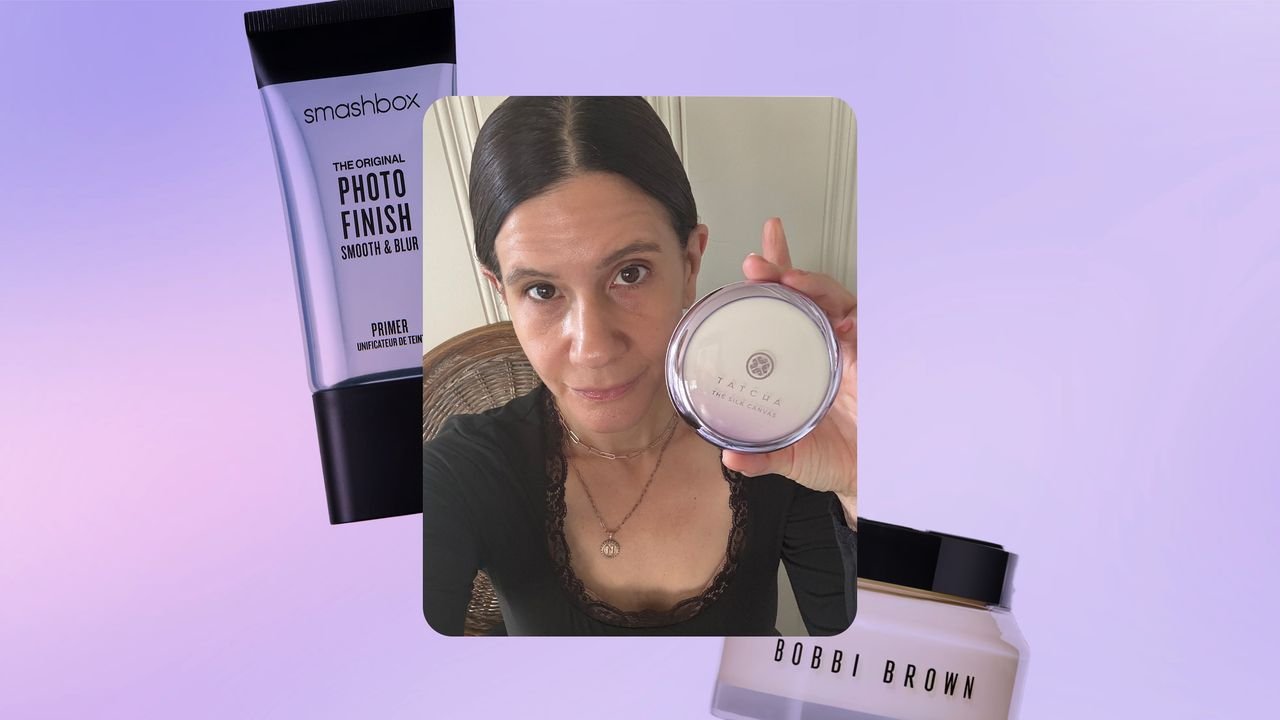
While evaluating the best primers for older skin, Glamour editors and contributors sampled a range of formulas, reporting back on the face primer’s ingredients, texture, and efficacy in making skin and makeup look smooth and fresh. We also sought out more targeted formulas that can help with common aging concerns, including fine lines and large pores, and sought expert guidance and makeup tips from the pros below:
- Amanda Gabbard is a pro makeup artist and aesthetician based in New York City
- Nicole Walmsley is a pro makeup artist based in Los Angeles
- Mezhgan Hussainy is a pro makeup artist and a founding partner of Product Society
- Elaina Badro is a makeup artist and brand founder based in Los Angeles
