

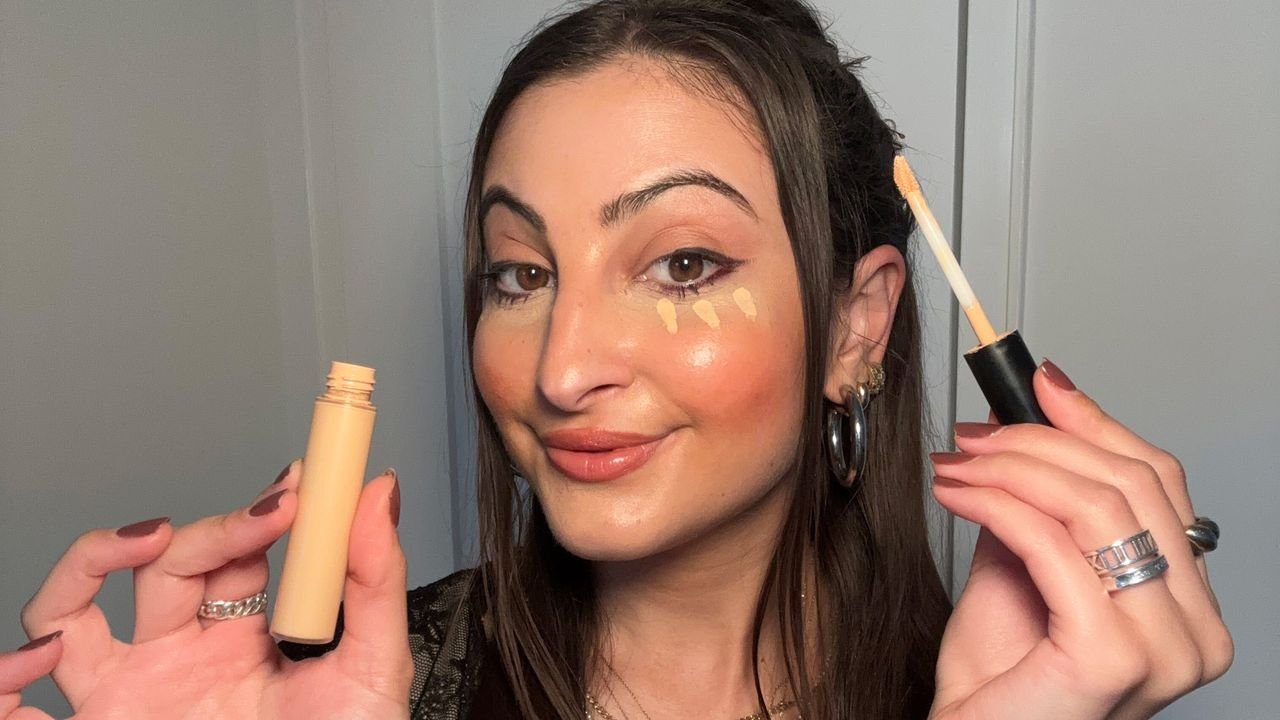
If you do typically apply your foundation first, Spickard says that this might offer you more coverage. “My logic here is, your foundation is going to do a lot of work in getting you coverage and then you can go in and boost it with concealer,” he notes.
While it may take some trial and error to figure out your ideal technique, the good news is that there isn’t a wrong answer. “There truly is no single rule,” Tanno says. “Your routine should flex to the textures and finishes you are using.”
How to apply concealer for beginners
Whether you’re totally new to using concealer, or you haven’t been happy with the results of your typical method, everyone can benefit from going back to basics. For absolute beginners, Quynh advises trying liquid concealer first. “Liquid concealers are more forgiving and easier to blend, and you can experiment with layering for the perfect amount of coverage,” she says. When learning to layer, makeup artist Daniel Martin says to start light, then build up to the desired coverage level: “It’s harder to remove concealer if you’ve applied too much.”
Martin advises easing in slowly. “Unless you’re a pro, dot the concealer where you want to provide the coverage, and tap with your ring finger until you’ve reached the coverage you want,” he says.
Once you’ve gotten a feel for the product, you can experiment with using brushes rather than your fingers, which Mai says will give more control over your product placement. Mai also emphasizes that both beginners and pros should tailor their concealer techniques to the areas they want to cover.
How to conceal redness in the undereye area
The under eye area might also appear red due to seasonal allergies or dryness, and if this is the case, the makeup artists we spoke with recommend using a green color corrector prior to applying foundation and concealer to neutralize the hue. Start with tapping on a green concealer, followed by a full-coverage one that matches your skin tone for best results. Setting is important in keeping this area crease-free all day too, so that redness doesn’t peek through. This is where setting powder comes in. “My trick is to always use an oil-absorbing setting powder after you apply your concealer,” says Laura Geller, founder of Laura Geller Beauty. “Makeup tends to come off the nose area more quickly, especially for me around allergy season. So you want to make sure the concealer is properly set in place to keep any redness hidden throughout the day.”
How to cover dark circles on mature skin types
Kelly Zhang, a makeup artist based in LA, shares that as we get older, skin naturally loses collagen and oil, especially on your undereye circles. “That means thicker, high-coverage concealers tend to settle into fine lines and emphasize texture,” she says. Instead of opting for a matte formula, look for hydrating concealers with hyaluronic acid or ceramides that will layer onto skin smoothly and keep it hydrated throughout the day, without clinging to lines.
If you have mature skin, you can follow the same steps above for applying concealer onto dark circles, but the artists warn to not use too much product for best results. “Concealer is heavier than foundation, so when it’s over-applied it looks cakey,” says Zhang. TL;DR: Less is more if you’re applying undereye concealer to crepey skin texture.
Does concealer expire?
Because we’re often using such a small amount of concealer at a time, you might suddenly realize you’ve been using the same tube for… years? This won’t kill you, but it also means you may not be getting the results that you originally did. “Over a long period of time, some concealers will start to break down and may darken or appear discolored, or even separated,” says cosmetic chemist Jim Hammer. “Or the product may begin to dry up. It might not smell right or it might feel oily, or grainy, or have other issues.” All are signs it’s time for a fresh start.
