

Frequently asked questions
What are the different types of hair brushes for fine hair?
There are several types of brushes that work well for fine hair, depending on your texture and styling needs. Detangling brushes have flexible, spaced-out teeth that work through knots with less pulling, while boar-bristle brushes smooth strands and distribute natural oils. Paddle brushes cover more surface area for everyday brushing, round brushes create tension and lift during blowouts, and vented brushes allow hot air to circulate for faster drying. For waves and curls, curl-defining brushes separate and shape the hair when styling it wet.
How to choose a brush for fine hair
Because fine strands are more prone to breakage, prioritize softness and flexibility over stiff bristles that can tug or snag. “Brushes with softer bristles are generally better for fine hair because they won’t cause as much breakage as a harder bristle,” says Spino. Hairstylist Annagjid “Kee” Taylor recommends flexible bristles or widely spaced teeth, which “glide through your hair without ripping or causing unnecessary breakage.” Also consider when and how you’ll use the brush—including wet versus dry hair and whether you’re detangling, blow-drying, or styling curls. And remember that fine refers to strand diameter, not texture, so straight, wavy, and curly fine hair may require different designs.
Should you brush fine hair a certain way to minimize damage?
Yep—to avoid tugging on delicate strands, “you want to start brushing out the ends and slowly work up to detangle without tugging too much,” says Spino. She also recommends brushing before washing to distribute natural oils, gently stimulate the scalp, and make hair easier to detangle after shampooing, when fine strands can be especially vulnerable to breakage.
What brushes should you not use on fine hair?
Avoid brushes with very stiff or sharp bristles that tug, snag, or scrape the scalp, as well as designs with seams or rough edges that can catch delicate strands. A brush should have enough flexibility to move through tangles without forcing through them. When blow-drying, be mindful of excessive tension and heat, which can put additional stress on fine hair.
How we tested the best hairbrushes for fine hair
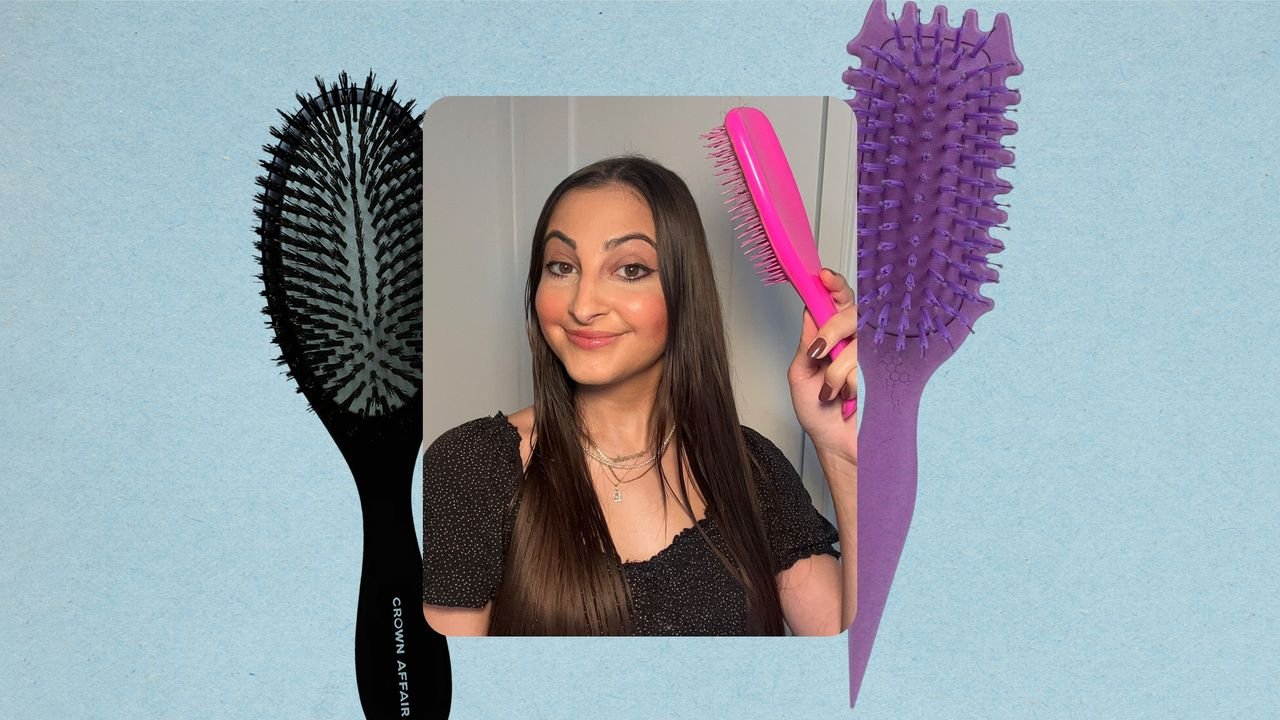
Four Glamour editors and contributors with fine hair of different lengths and textures tested 12 top-selling hairbrushes, narrowing them down to the five standouts above. We tried boar-bristle, nylon, flexible detangling, paddle, round, and curl-styling brushes as part of our regular routines, using them on wet or dry hair for detangling, smoothing, blow-drying, and curl styling. We evaluated snagging, pulling, and hair fallout, along with each brush’s ability to smooth frizz, add shine and volume, or enhance curl shape. We also considered ease of use, versatility, lightness of body, durability, and price point, prioritizing brushes that delivered noticeable results while remaining gentle on fine strands.
