

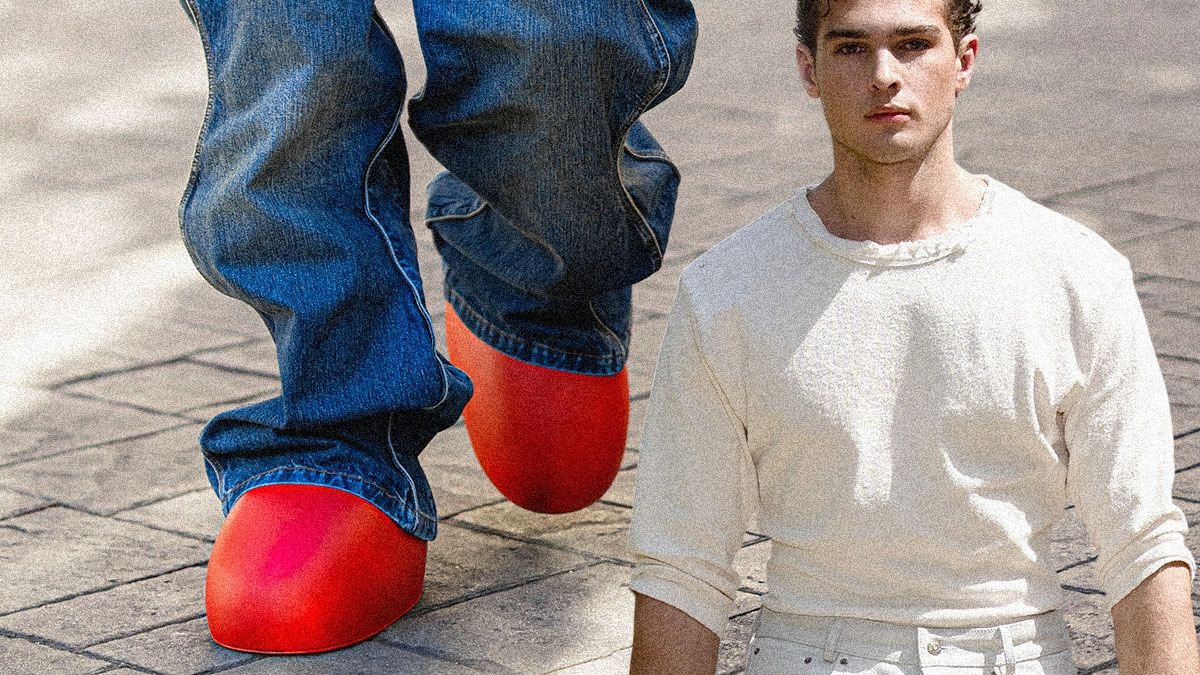
While some of the collective’s projects have elicited fierce reactions — most notably, Our Cow Angus, in which Mschf bought a real cow and sold tokens representing 1,200 burgers and four leather bags, leaving buyers to decide whether to sacrifice their purchases to save Angus from slaughter — Whaley’s wasn’t trying to make people angry just for clicks. “The Angus thing was really interesting, because people would get upset, but it’s sort of like, you’re pointing one finger out and three fingers back at yourself. Are you mad at us, or are you mad at the system of which you are a part?” he says.
Mschf could have written a think piece about the industrial agricultural complex; instead, the Angus project turned the argument into something people could interact with and influence. “The things that we put out, there’s a two-way interaction, versus us just broadcasting our point of view and you have to deal with it in the comments,” he says.
After all, there’s a difference between being provocative in a way that challenges people or opens up a conversation, and provoking them simply for the sake of it (and for the residual engagement and impression it will generate). “It’s very easy to get trapped in the superficial short-term game, so it’s just sort of like a self-perpetuating cycle of rage and misery. That’s why nobody wants to be online anymore,” explains Whaley. “The internet kind of sucks. Nobody’s having a good time. The adults are pissed. The kids are pissed.”
So what happens when everyone is rage-baiting? In an attention economy where brands still need to be seen, is provoking outrage really the only way to make people look? Could fashion create desire through curiosity rather than controversy, or give people something to care about rather than simply something to get angry about?
How rage bait became all the rage
Rage bait may be a distinctly 21st century term, but the commercial logic behind it is centuries old. Cyberethnographer and author of upcoming book In Defence of Being-On-Line Ruby Justice Thelot traces its roots to the rise of mass media in the 19th century, when cheap, sensational entertainment emerged to serve a rapidly expanding audience — from Britain’s penny dreadfuls, which were cheaply produced, sensational fiction sold for a penny, to the scandalous and often politically provocative Grub Street pamphlets.
What has changed, Thelot argues, is the technology delivering that content and, with it, the number of things competing for our attention. Fashion’s audience has expanded dramatically, and the way we encounter it has been transformed by social media and the feed. “In the ’90s, a spread in a magazine allowed you to tell a story,” says Thelot. “Now, the image that you spend thousands of dollars making is right next to an amazing comedian, a funny cat video, and your best friend’s engagement. You’re competing against so many things that people feel the need to shock in order to capture that attention.”
There’s another problem with chasing the broadest possible audience, wherein the people generating the most noise around fashion online are not necessarily reaching the people buying the clothes. “The world we live in — the world of social media, the world of video, the world of mass communication — does not predispose people to contemplation. It is the opposite. The current luxury fashion consumer is simply not wired to think about fashion in any sustained way,” says Eugene Rabkin, founder of Stylezeitgeist and author of the upcoming book Torn: Fashion and Postmodernism.
