

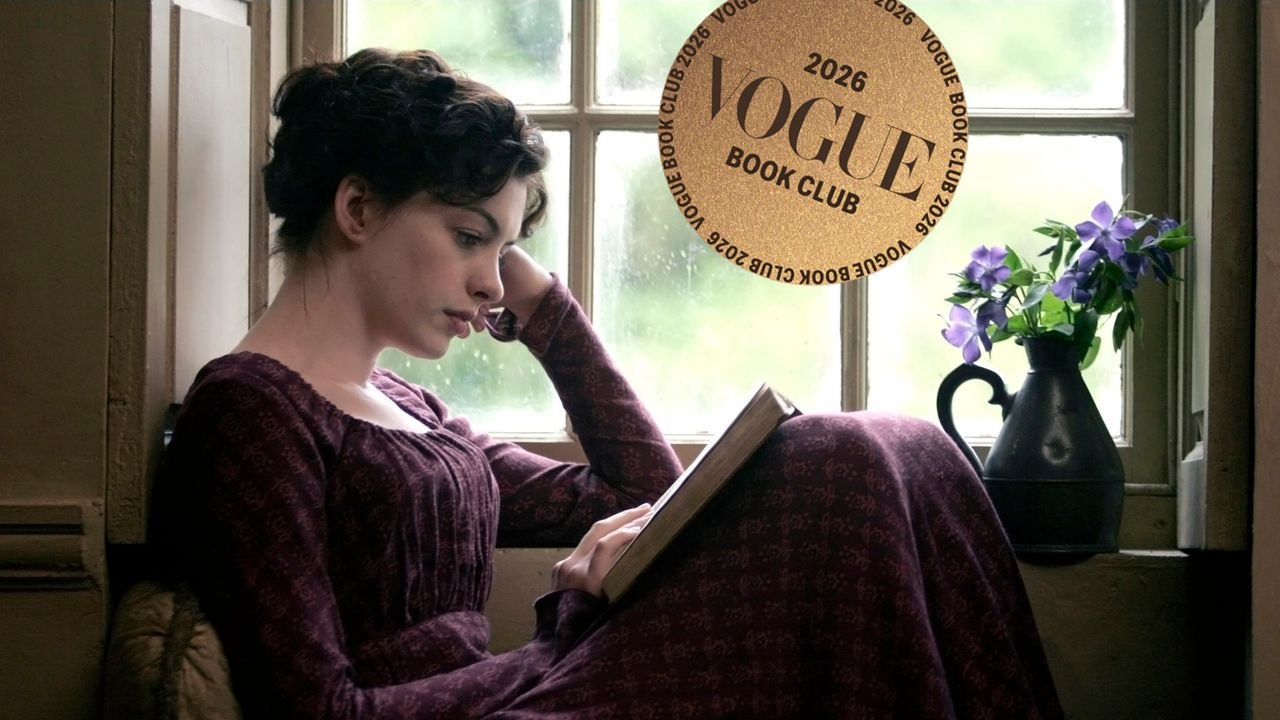
Bilbao-born writer Espido Freire’s 123-page, Spanish-language essay Dos tardes con Jane Austen (Two Afternoons with Jane Austen), published last year by Alianza Editorial, is the third title Freire has devoted to the life and work of the celebrated English novelist, following Querida Jane, Querida Charlotte (Dear Jane, Dear Charlotte) in 2004 and Tras los pasos de Jane Austen (In the Footsteps of Jane Austen) in 2021.
In December, on the occasion of the 250th anniversary of Austen’s birth, Freire spoke to Vogue Spain about Austen’s legacy and the importance of looking beyond the excessive mythologizing and romanticizing that have long shaped both the novelist’s biography and the interpretation of her work. Freire also shared her preferred reading order for Austen’s six major novels—as well as the epistolary work Lady Susan. This is a condensed translation of that interview.
Vogue: Where does your fascination with Jane Austen come from?
Espido Freire: Jane Austen is one of my favorite writers. She isn’t my absolute favorite—that place still belongs to Shakespeare. But in recent years, I’ve been asked to talk about her so often that she has become almost a friend, as well as a writer I return to and look to for inspiration. That is important because Jane Austen is one of the writers who has inspired the biggest fan cultures. There is a group called the Austenites, who not only study her work but also hold gatherings where they recreate aspects of life during the Regency period, particularly in England and the United States. I’m not part of that group, but I do belong to the group of writers who have become interested in Austen and the circumstances of her life. My fascination began at university, when I read Sense and Sensibility, which was the Austen novel we studied.
That first encounter eventually led to your book Querida Jane, Querida Charlotte. What did you discover as you began to unravel the mythology surrounding Austen?
In that book, I followed the paths of both Jane Austen and the Brontë sisters through England. That was when I first visited the places where Austen had lived, and I began to notice that there was something about her that wasn’t quite the way we had been told. Neither the exaggerated romanticism that we often associate with her novels nor the image of her as a hidden, delicate flower really matched what I was seeing in her life. That trip was more than 20 years ago, and I feel that I understand her mindset and the circumstances of her time better and better. That is very important if we want to pay genuine tribute to her work.
You devote your Alianza essay to precisely this reassessment, questioning some of the more romanticized versions of her life. Why do you argue that her life was less epic and more restricted by strict social and cultural conditions than we often like to believe?
There have been significant shifts in the way Jane Austen’s biography has been presented. The earliest biographies came from within her family. Naturally, they were shaped by how her descendants wanted to portray her, as well as the family environment around her. They also emphasized the influence of whichever branch of the family they themselves belonged to. What is striking is that all these versions agree on her shyness, modesty, and propriety. To understand that, we have to remember that these accounts were written in Victorian England, when the ideal of the “angel in the house”—the woman who was perfect in her discretion and domestic virtue—was at its height. Her nephews genuinely believed they were doing Jane a favor by softening what they saw as her faults.
There was also a completely male perspective at work. Her nieces would have told a different story, but the nieces didn’t write. They simply passed their versions on to the men in the family or offered fragments of letters and private testimony. That is one side of it. The more heroic version of Austen came later, when her novels began to be adapted for the screen and other female writers began reclaiming her as an important figure, even as a feminist reference point—although that label doesn’t really fit her literary work as such.
