

With Iranian and Texan roots, Amir Taghi has a foot in two worlds. His Persian culture—his family emigrated in the ’80s—has a strong hold on him. So do the stylish, Neiman Marcus-going Southern swans of Houston he grew up around. Marrying those perspectives, it turns out, makes for thoughtful, focused clothing.
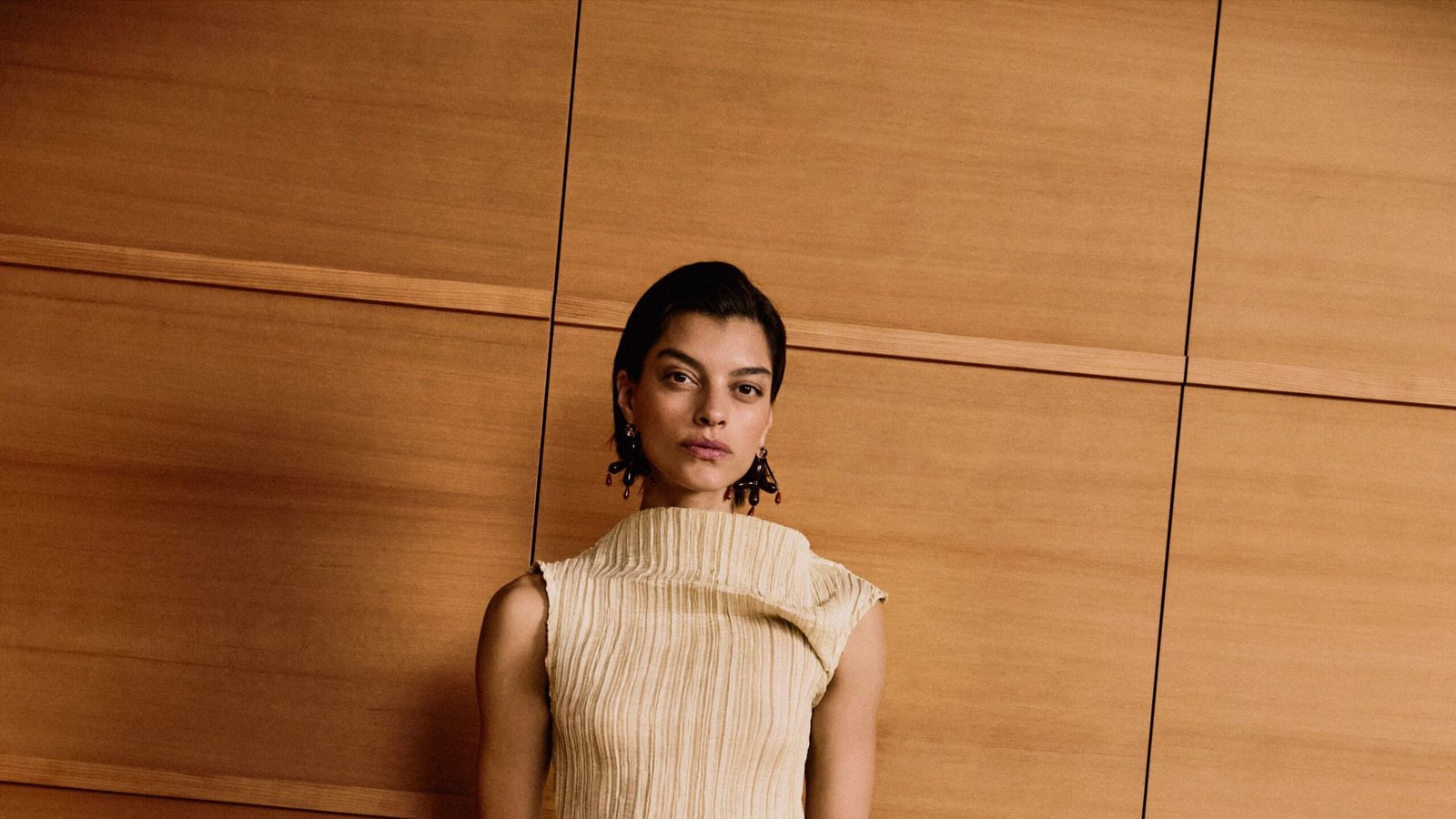
Taghi’s spring 2027 collection drew from a wide breadth of his memories. Wallpaper from homes he visited as a child and flowers from his grandfather’s garden in Fasham were turned into prints on an asymmetric skirt and dress, respectively; the architectural curves of his grandmother’s home informed the neckline of an embellished dress. The reverse side of one of the thousands of Qashqai kilim rugs his grandfather owns became a printed jacket and a beaded top and skirt. Taghi created a military jacket based on those of the old Qajar Court, but instead of precious gems, he used earthy stones including turquoise.
The outbreak of war earlier this year gave his work a new sense of urgency, said Taghi. Both because he worries about what will be destroyed, and that his clients—and people in the West broadly—don’t know much about his culture: “You look at the country and the first thing you think of is the government, but the government is not the people. How can I as an Iranian with a voice show and humanize the people?” he said.
Around 90 percent of Taghi’s sales come from trunk shows in cities including Houston, Palm Beach, Aspen, Dallas, and Nashville. That direct selling model helps Taghi understand his customers’ desires and hone his designs. In a challenging wholesale market, it’s a smart way to build a brand today—inch by inch. But he’s also pushing things a little more this season, trying out a few undone hems, for example, a subtle departure from his brand’s typically precisely finished garments, and a nod to the state of things.
