

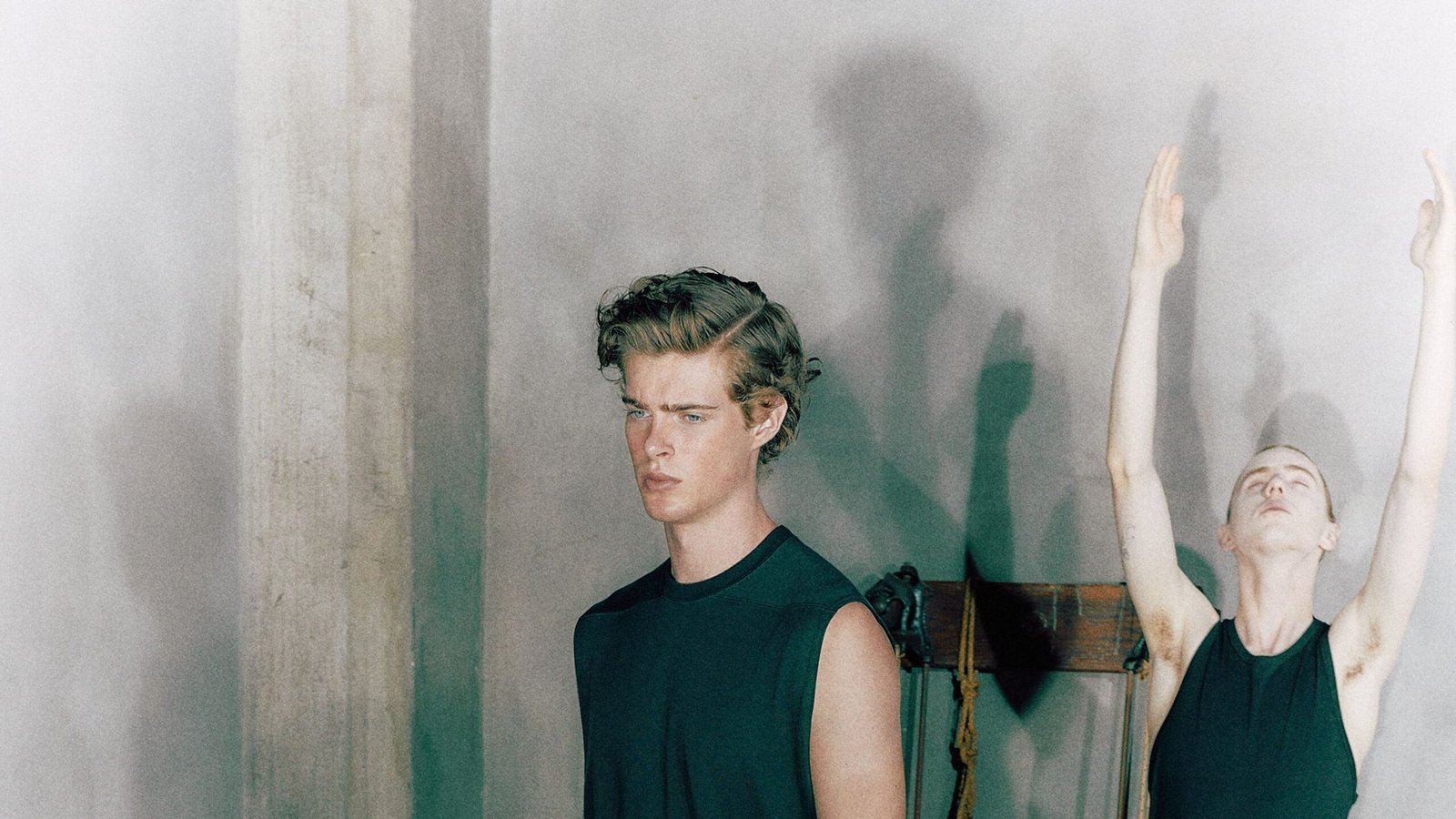
Ivy style, which permeated N.Hoolywood’s evocative spring collection, is central to the history of post-war Japanese fashion and a subject that designer Daisuke Obana, who was a vintage dealer in the ’90s, is conversant in. In Paris, Celine’s Michael Rider has made nouveau prep a talking point, but the impetus for N.Hoolywood to address the subject came from another source, a request for a capsule collection from Brooks Brothers.
Having agreed to that proposal, Obana and team booked tickets to the East and West coasts of the U. S. where they stayed at the Los Angeles and New York Athletic Clubs, and were given access to the archives. As they started digging, Obana made a discovery: “I realized [the younger members of the team] had never experienced that period. Something that existed in my own memory looked completely new to them,” he wrote in an email. “But simply reproducing authentic traditional style would not be interesting for us, so I began talking with my creative team about combining traditional clothing with another foundation of our work: workwear and utility clothing. Inside the team, we started calling it ‘Watora’— our own made-up word combining ‘Work’ and ‘Traditional.’” Examples of this hybrid in the collection included a marinière (standard kit for sailors) with professorial elbow patches, paint-spattered trousers, and a trimmed blazer cut from denim rather than a tailoring fabric.
Both the collection film and lookbook are very emotive and poetic with a cast that could have been pulled from a Merchant-Ivory film—but these boys look willing to break a sweat. Obana, an athlete himself, set the scene by having models show the clothes among a group of actors who are practicing “Physical Culture,” a gymnastic wellness movement of the ’20s based, the show notes read, on “training the body and cultivating refinement.” “We wanted to place contemporary clothing within the physical language of the past,” the designer explained.
The models wear N.Hoolywood’s sort-of classic clothes with an attitude of noblesse oblige and vintage flair. Sweaters are tucked into pants, which are worn high on the waist, and hems of shorts are rolled. There’s a lived-in quality that has less to do with unchanging prep style than, the designer said, with aging that is typical of workwear and workout gear that earns its patina through physical exertion. No pain, no gain.
