
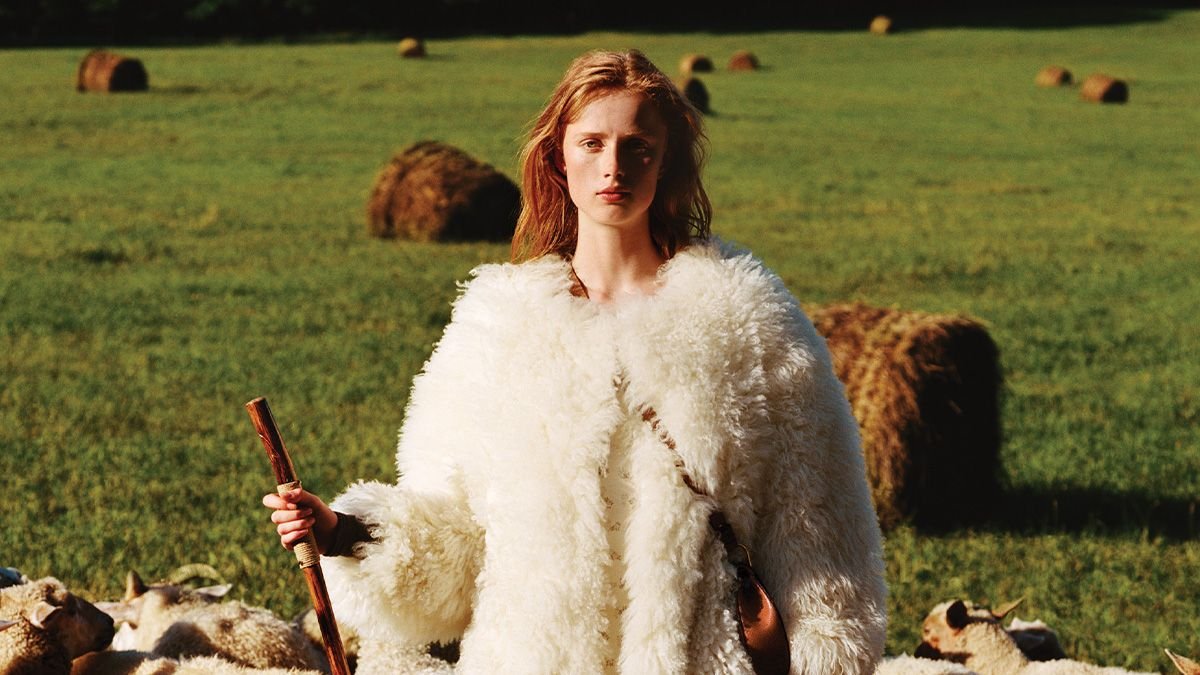
Fashion brands tend to deny the systemic mistreatment, pointing to certification schemes like Nativa and the Responsible Wool Standard (RWS), both of which have been implicated in Peta investigations over the years. When asked about Sunday’s protest, a spokesperson for Cos owner H&M Group told Vogue Business: “We take any allegations of animal welfare breaches very seriously. We are committed to only sourcing animal fibers from certified farms and recycled sources. When it comes to wool, all virgin wool used in our products comes from farms certified to the RWS, a third-party certification system owned and governed by Textile Exchange.
Following the investigations carried out by the certification body into Peta’s allegations related to mohair and wool farms, licenses for one mohair and one wool farm have been suspended, and these farms are no longer permitted to sell certified materials.” (Textile Exchange, for its own part, says the humane handling of animals is a “fundamental requirement” of the RWS certification, and any mistreatment of animals is “unacceptable”.)
According to the latest Materials Market Report by Textile Exchange, sheep wool is the most widely used animal-based fiber in fashion, totaling 1.1 million tonnes globally in 2024 (around 0.9% of total fiber production). Meanwhile, other animal fibers beyond wool — primarily silk, but also including alpaca, cashmere and mohair — made up an additional 0.1% of total fiber production. But wool is a relatively small percentage of fashion’s total fiber basket. For comparison, cotton topped 24.1 million tonnes (19%) in the same period, while polyester led at around 77.7 million tonnes (59%).
That’s part of the reason fashion netizens were so confused when Peta suggested an all-out ban at the Cos show on Sunday. Others felt that fashion had already sufficiently given in to Peta’s demands: while the fur aesthetic continues to enrapture fashion fans, virgin animal fur has been all but wiped off the face of fashion, banned by brands, retailers and fashion councils alike. This season at NYFW was the first since its fur ban — spearheaded by the CFDA — went into effect.
Progress has been slower with leather, which Peta co-founder and principal Ingrid Newkirk calls “hairless fur”. Earlier this year, Kering CEO Luca de Meo instigated a new strategic objective for the French luxury group to reduce its use of virgin animal leather by 30% before 2028, kickstarting new investments in innovative alternatives. And Copenhagen cult brand Ganni phased out all virgin leather in 2024, offering products made from Oleatex (which reformulates olive oil production waste to mimic animal leather) and Pelinova (which recycles leather scraps) instead.
But while some say Peta will always move the goalposts and will never be content with fashion’s efforts on animal welfare, Peta says its end goal has been clear from the start. “Fashion needs to move away from all things animal. We don’t need to deck ourselves out in anything we have stolen off an animal’s back or killed an animal for,” says Newkirk. “There are no ifs, ands, or buts.” Fashion largely pushes back on such black-and-white policies, preferring to pursue incremental reforms rather than limiting creativity.
So where do we go from here? From tightening up the supply chain to investing in scaling alternatives, there are plenty of paths forward. But will fashion and Peta ever see eye to eye?
Wool isn’t just a fiber; it’s an ecosystem
Peta advocates for fashion to phase out animal-derived products in totality, arguing that no amount of audits or certifications can override the convoluted supply chain and the system of incentives that push suppliers at every step to cut corners in a bid to cut costs. But industry insiders say this is unrealistic, and risks swapping an animal welfare crisis for an environmental one (driving up polyester production) or a social one (removing an income stream for already struggling farmers).
