

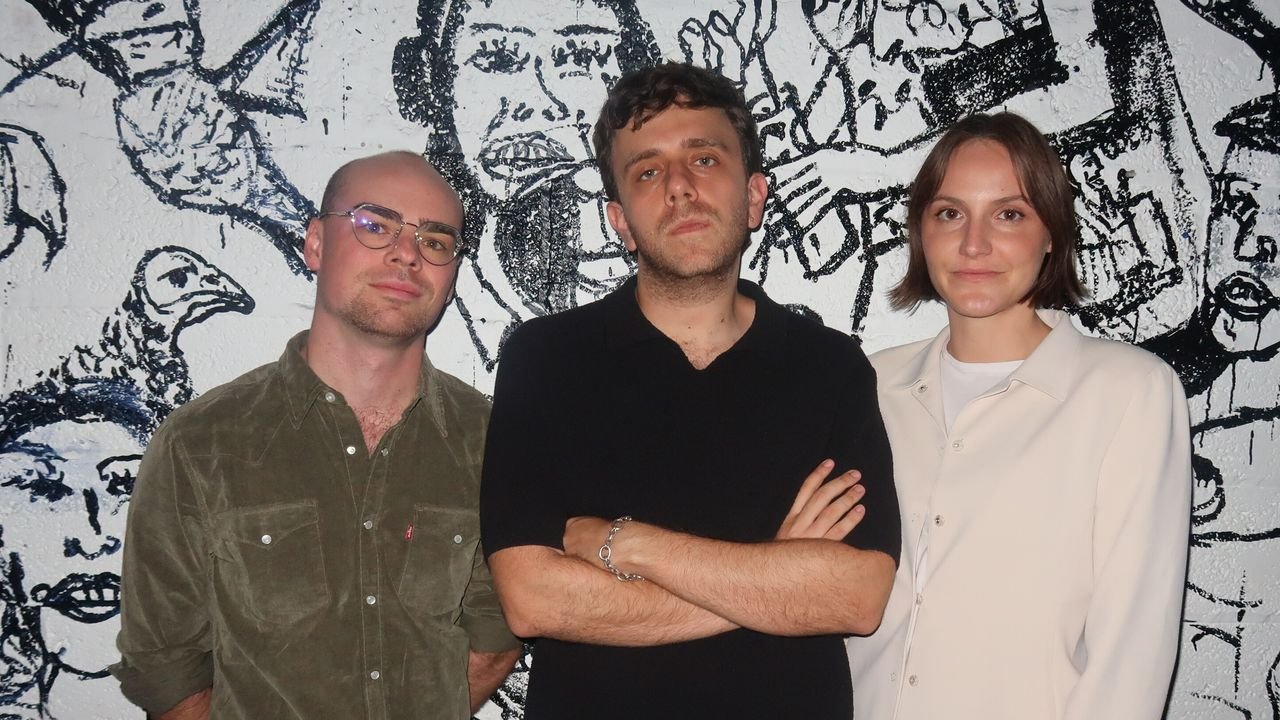
Michael, how do you approach this idea from a gay perspective? I think we can vaguely say there are some goings-on in the backroom of a play called The Holes.
Herwitz: The three of us talk all the time about what the sexuality of these characters is, and it’s a bit of a debate. I’ve been shocked in rehearsal at how much of a sexual undertow is actually flowing through these scenes. I didn’t open the script with the expectation that that’s what I was gonna pull out of it. To me, the play is so much more about faith than it is about sexuality, and I was way more moved and intrigued by this play about four people who are all looking to be saved in some way, who are looking for a place that gives them a sense of purpose. But once you move on from reading and actually start to talk about the way someone is sitting in a chair, or leaning up against a bar, suddenly sex is everywhere. I have done a lot of educating around The Eagle in rehearsal.
Friedlich: Not to me, to be clear. I know more than the other straight guys.
Herwitz: Yeah, Max knows more than the other straight guys from Chelsea.
Hannah, what do you make of all this male carrying-on?
Getts: Something that I inherently provide in all of our work is the female perspective, especially with our female characters. We talked the other day about the manosphere, and obviously people are gonna bring that up when they see this play. But in terms of sex, like with the manosphere, it’s so much more about loneliness in general. I mean, Martha’s a lonely character—she basically lives at the bar, but naturally there are three male characters in this play who can’t just name some of the things that are going on with them, or feelings that they’re having. I’m less interested in the manosphere as a point of conversation and much more interested in our characters’ inner worlds.
Herwitz: There’s the manosphere—the Louis Theroux doc and some of these big figures—and there’s also, from my own gay perspective, Bluesky gooning culture and Twitter Spaces, and I’m like, this is actually all the same. How are these things different from each other? I don’t know. While I think a straight audience is going to latch onto the manosphere thing here, that kind of fraternal, homoerotic, help out your bro thing is extraordinarily gay right now.
I would love to have my most online Twitter gay friends speak to the 14-year-old boys who are following HSTikkyTokky and have a conversation about this. Is this actually the same? Is the wound that attracts you to these things, to this roleplay, to this person, this figure—is that the same wound at its core? I think this play is trying to bring that conversation into focus.
Getts: It’s so much more about wounds to me. Obviously I connect deeply with Martha, who’s a little bit like, what is going on here? She both knows the backroom is an important place, and simultaneously is like, you have lost your mind, I can’t connect to this highfalutin conversation about how amazing this is. I think that is very relatable from a female perspective.
