

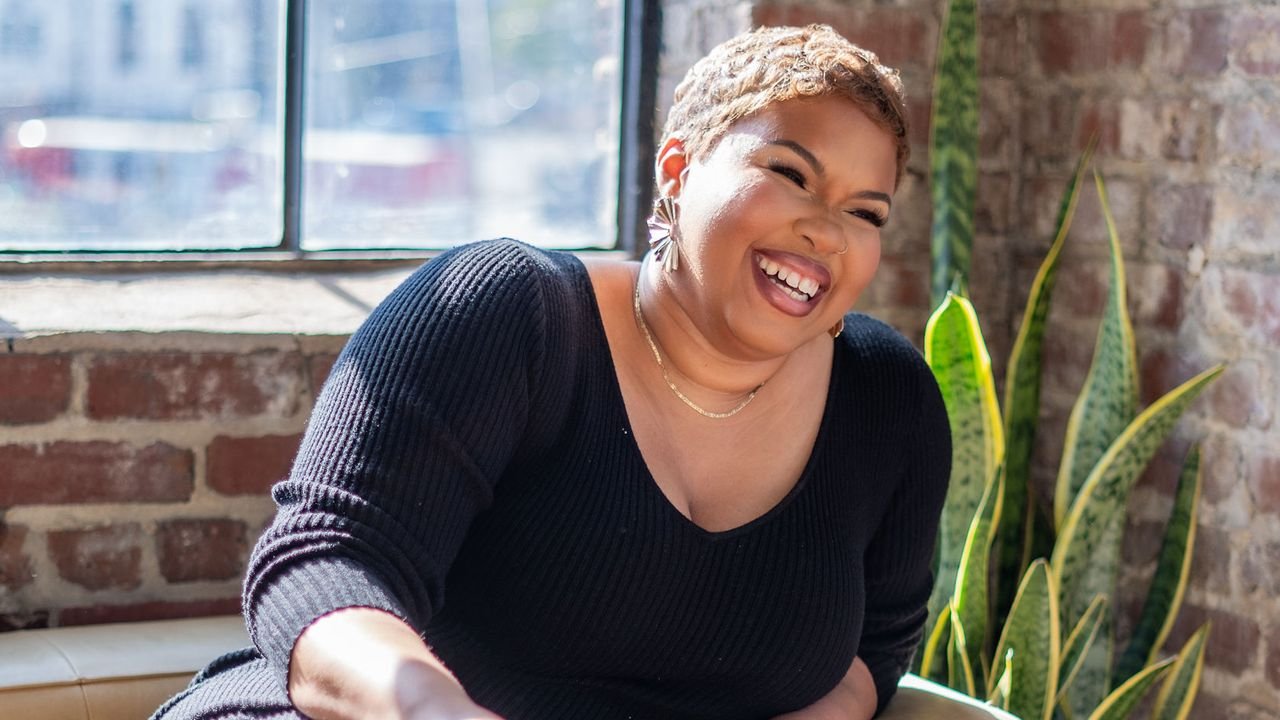
At 36 Ceminthia Graham didn’t have cancer on her radar. But in January 2025 she told her doctor she’d noticed some pain and swelling in her left breast. After getting a mammogram, ultrasound, and biopsy in February, she was diagnosed with stage 3 triple-negative breast cancer. But even after having an allergic reaction during her first round of chemo, the social worker and single mom remained positive—and found silver linings she wouldn’t have experienced without her diagnosis. Here’s her story, as told to health journalist Caitlin Carlson.
Before my first round of chemo, I bought a new Nike outfit to wear because I wanted to feel cute. That was important to me, even if it sounds a little vain. I got to the facility and took the premeds, including steroids, famotidine, and an antihistamine, which made me sleepy. All together these medications are meant to prevent negative reactions to the chemotherapy drug paclitaxel. So I’m in my cute clothes with my AirPods in, leaning back in the chair as my chemo drugs are getting administered, and suddenly I realize I’m having a hard time breathing.
My mother was there, so I took out my AirPods and said to her, very calmly, “Hey, tell the nurses I can’t breathe.” But then I started to get hot and repeated it a little louder. I was so uncomfortable that I even started taking off my clothes. It turns out I was having an allergic reaction to the chemo medication. I knew this was a possible side effect, but for me it was extreme. Thankfully, one of the nurses gave me a high dose of the antihistamine diphenhydramine, which managed the reaction and allowed me to finish that treatment as well as 11 additional chemo sessions.
After my allergic reaction, I had to find a way to keep going
Those other sessions were scary after experiencing such an intense reaction the first time, but I knew I couldn’t let my fears stop me from getting the treatment I needed. I’m a licensed clinical social worker, so to get through my sessions, I decided to think of chemo as a form of prolonged exposure therapy (PE). It’s one of the therapies I use with clients to help them confront trauma. One element of PE is what’s called an in vivo exposure. In vivos involve exposure to a trigger, which can be anything connected to a trauma. In my case it was going to the fusion clinic and getting chemo. A big part of in vivo exposure is just doing it. In therapy it’s progressive, meaning we build up slowly, but you can’t do that with chemo. So I would pray first and then tell myself I was safe and the treatment was necessary for me to fight cancer. I was between a rock and a hard place, but I kept going.
My chemo lasted six months; I finished on August 27, 2025. Then I had a mastectomy on October 6. Three days later I got a call that I was cancer-free, which felt like confirmation of what I already knew. Cancer is just as mental as it is physical, and I knew I would beat it when I was diagnosed.
I continued immunotherapy (which I started in April 2025) until March 2026, and I had my port removed the following month. I got through treatment, and although it was challenging, it wasn’t all bad. I’m so grateful that I had a good team looking after me. The care I received was life-changing. They were honest but encouraging and made it all as easy as possible, even though, of course, cancer is hard.
