
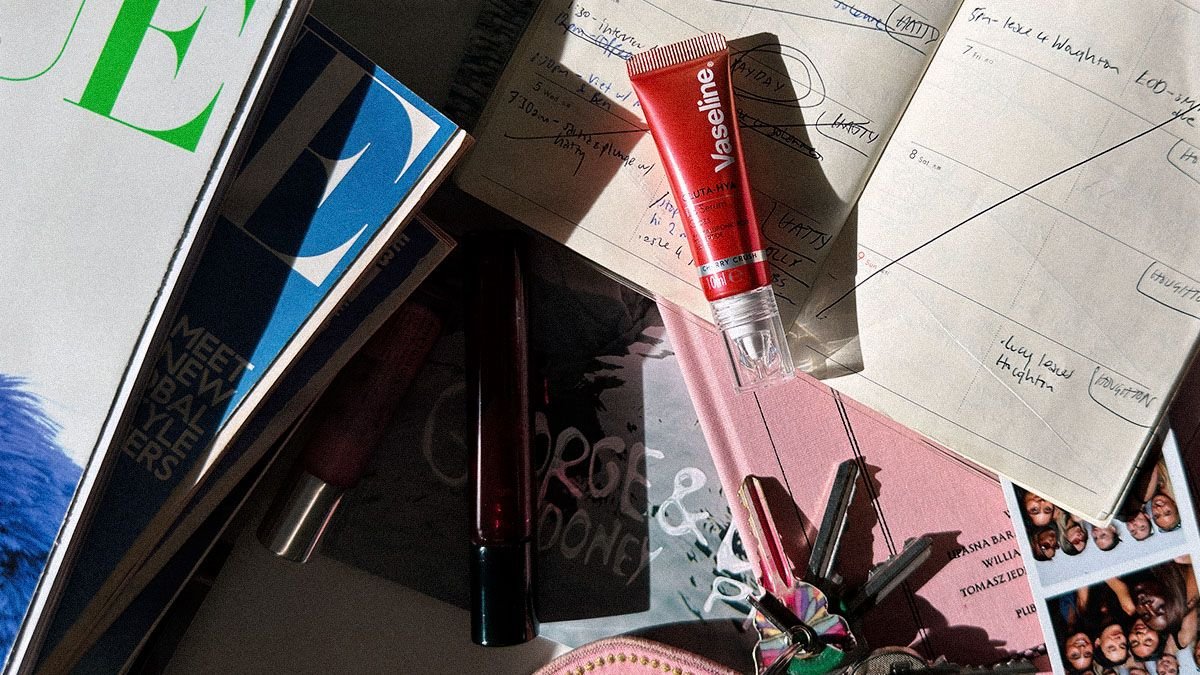
Vaseline has always been a household name, just not a very sexy one. The Unilever-owned brand, known for its petroleum jelly with occlusive healing properties, has 155 years of heritage and brand recognition that startups and indie brands dream of. “This is a brand that is present in half of the households on the planet,” says Nathalia Amadeu, global brand director of Vaseline. “People knew it existed and bought [it] by habit.” But what Vaseline wanted was cultural relevance and desirability, particularly among Gen Z, to drive growth and broaden its appeal.
It’s a challenge most heritage brands face today, one particularly present in beauty, a category that has become overly crowded with newcomers. Micro-trends driven by algorithmic trend cycles explode and fade at warp speed. Challenger brands and digital natives are often catnip for younger consumers, known for their low brand loyalty and desire for discovery. For heritage brands, creating cultural relevance is essential to capturing younger consumers, ensuring continued growth and long-term brand value.
Amadeu joined Vaseline as global brand director from Unilever’s Dove in January 2025, tasked with leading an evolution that was already years underway: grow the brand across generations and expand its relevance in beauty culture. Vaseline was more associated with the medicine cabinet than innovative beauty, particularly among younger generations. But, the team noticed that online, Vaseline was appearing in unexpected contexts and use cases.
From this, the Vaseline Verified campaign was born. Over 3.5 million organic social posts existed online depicting the various uses, or hacks, of Vaseline jelly. These ranged from using the jelly for a better shave and an easier nail polish application, to applying it on a camera lens to create a blurred effect. (Like many things on the internet, some hacks could be harmful if left unchecked, like eating the jelly for better skin or using it to whiten teeth.)
Vaseline Verified turned this into a social-first campaign, with Unilever scientists testing hundreds of viral hacks, awarding Vaseline Verified status to the ones that worked and debunking the ones that didn’t. The campaign garnered over 136 million social views and became one of Unilever’s most awarded campaigns in history — securing nine awards at Cannes Lions International Festival of Creativity, including a Titanium Lion and two Grands Prix.
With the help of this social-first marketing, Vaseline has experienced double-digit growth in the past three consecutive years, and maintained strong momentum in the first half of 2026. It’s now one of Unilever’s Power Brands, the core 30 brands that generate around 75% of Unilever’s turnover.
But for Amadeu, success extends beyond the metrics. “I feel most proud of how we connected with new audiences, with younger generations, by paying attention to culture, and by joining the conversations that were existing there,” she says. The latest YouGov UK data found Vaseline to be the top-growing brand in consideration among younger consumers, as well as the third most-considered personal care brand among Gen Z. Its unprecedented growth shows the impact of its strategy to engineer cultural relevance at scale.
Its success points to the power of heritage brands surrendering control of their narratives. “We stopped thinking, what is the message that the brand wants to tell, and started listening to the message that people were already [telling],” Amadeu says. “We stopped controlling. We understood that controlling was just increasing the risk of irrelevance.”
This ability to listen plays an integral role in building cultural relevance today. “I think we have to stop assuming that the brand has all the answers and start paying attention to the people who use it every day,” she adds. “We don’t know more or better than them.”
