

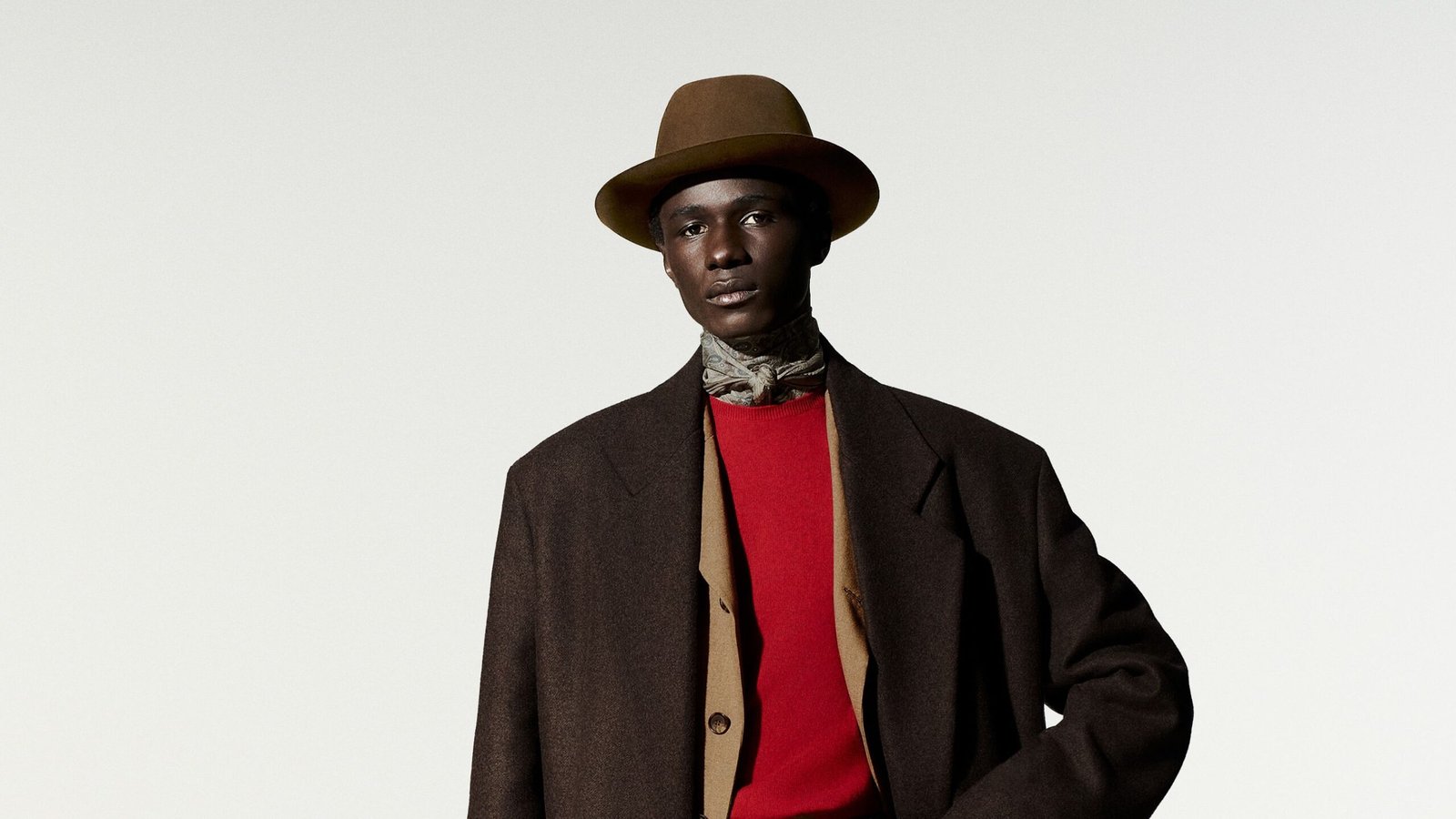
Loro Piana held this presentation amongst the ancient leather-bound tomes of Milan’s Biblioteca Nazionale Braidense, however the category of literature it most reflected was far more contemporary: self-help. Rather than grouping its garments by typology, the house presented them according to the challenges they promised to empower you to overcome.
It’s fair to say these problems were quite first-world. The camel blazer, for instance, was proposed as “a solution for natural authority.” The hunting jacket was “a solution for following your goals,” and the pleated skirt “a solution for natural fluidity.” The field jacket, a little more practically, addressed “adaptation,” while the “summer tailleur” took on the problem of staying unflustered in the heat.
Once you got beyond the titles and looked below the hats, however, there were some serious readings to be taken. Several garments, were they available to withdraw from the Loro Piana library, would be very difficult to return. One was a hunting jacket in burnt orange, layered under an olive-green gilet and built with the full apparatus of utility—hood, drawcords, generous pockets and protective layering—yet executed entirely in Storm System silk, treated to make the natural fiber perform like technical outerwear: just lovely. A “Traveller” field jacket in a heathery silk blend was a softer, more urbane take on the four-pocket field-jacket archetype that looked both polished and practical.
Familiar house codes—soft tailoring, pale neutrals, cashmere, fieldwear and travel clothes—were joined this season by brighter color accents, some Ian Poulter-ish baroque golf references, embroidery, print and a renewed emphasis on the technical treatment of natural fibers. Innovations included banana fiber worked into knitwear in a cricket sweater designed for the golf course, and a cropped version of the house’s Spagna jacket.
There was a display dedicated to scarves, which is usual here, and ties, which is not; a representative said this reflected a detected renewal of consumer appetite for tailoring. Even at its most formal or decorative, however, the collection led you towards the conclusion that these were clothes built to work hard without appearing to. To have them in your own library of attire would be delightful.
