

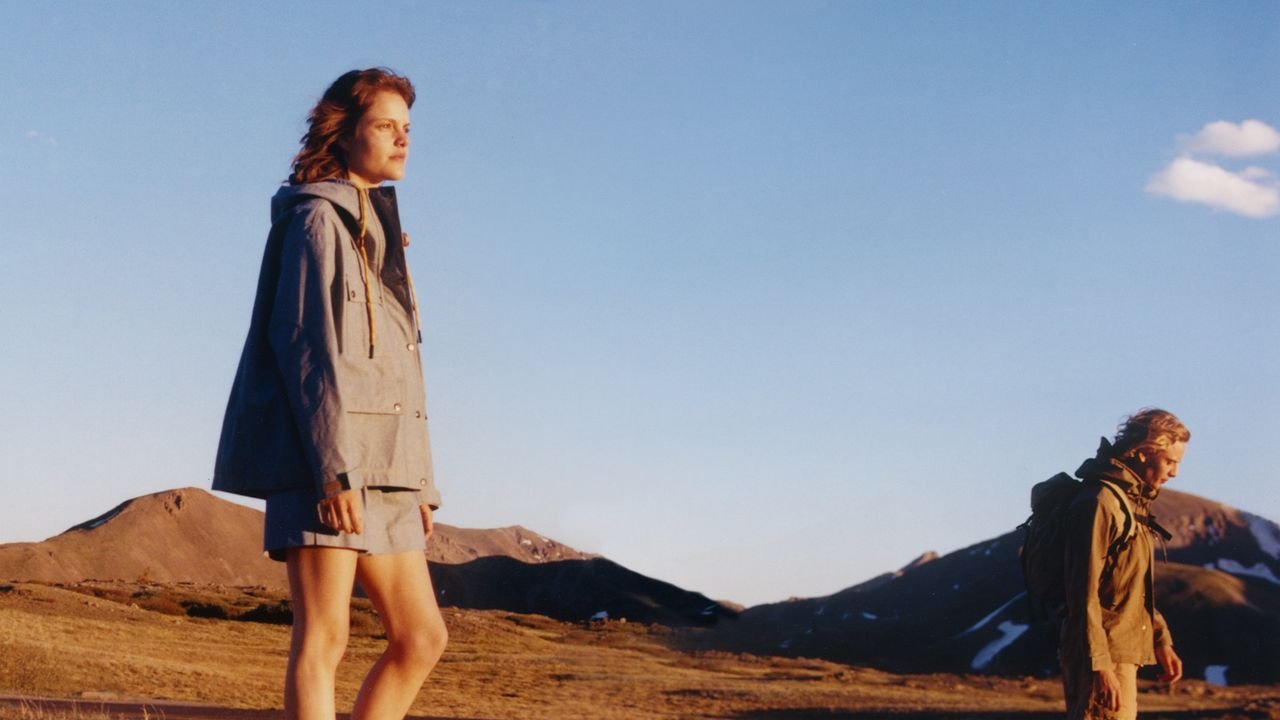
And then, on the appointed day, I suited up in my Moncler Grenoble hiking pants, trail-running shoes, and utility hiking vest. (Didn’t bring your own? You’re in luck: The local boutique is a five-minute walk from the hotel, and they’d be happy to set up a private appointment.) I was served an inspired feast for breakfast at the Jerome—where I was also given my custom Hotel Jerome Treks by Moncler Grenoble kit—limited to 100 editions, or 100 hikes, depending on how you’re measuring this sort of thing—replete with thermos, hat, a field notebook, and some custom patches; and chauffeured from the Jerome a dozen or miles or so into the Castle Creek Valley, where I met Charlie Robinson of ACES.
Charlie made sure I had the usual safety guards in place—water, hat, sunscreen, check check check—offered to tote my water for me (thanks), and offered me a choice: an easy, two-hour hike on the River Run trail, or a fairly grueling but epic five- or six-hour hike, largely uphill, on the renowned Cathedral Lake trail. While my heart was feeling epic, my legs, I feared, were more trained for the River Run (I had also been a bit sleepless, perhaps from the effects of nearly 8,000 feet of altitude—drink lots of water!)… at any rate, off we went.
What followed were a couple of the most amiable, sublime, and well-informed hours I’ve ever spent in the wild. Charlie was an ideal guide—knowing exactly when to unpack some essential information about whatever we were seeing, and when to shut up and let the surroundings speak for themselves. We wandered through the still-standing buildings (an opera house, a saloon, a rooming house) of an abandoned ghost town, Ashcroft, which existed for only a few years during the area’s late 19th century silver and gold mining boom; we wandered through sagebrush and spruce, fir and willows and, of course, aspens.
We spotted a tiny gray bird—North America’s only aquatic songbird, as we soon learned. “It’s called an American Dipper,” Charlie said. “You’ll see them on the rocks in the river, where they live all year long and dive and hunt for fish.”
We passed these tall, crazy, ornate flowering plants called green gentials, or monument flames. “They spend between 20 and 80 years building a big tap root, storing a lot of energy,” Charlie said, “and based on some environmental cue that we don’t really know, they will bloom once in their lifespan and use all of the energy in that bowling ball-size tap root, and they have hundreds of flowers.”
We spotted what turned out to be old piles of mine tailings from the silver and gold rush, which Charlie brought vividly to life. “It’s just unbelievable that with no trails, no modern gear, these miners were packing out mules and literally going up into these alpine zones and looking for their fortune, their future. They didn’t have dynamite, but they had packed powder, and they would pound these little holes in a spiral into the face of the cliff, pack it with powder, blow it up, and then haul the tailings out. Tied in with that story, though, is the forced removal of the Ute people, who were master horsemen, and who would come up here and hunt elk in the summer. And over a span of 10, 20 years, there were basically smear campaigns done by the government, which moved them to places where they didn’t really want to go after broken treaty after broken treaty.”
