
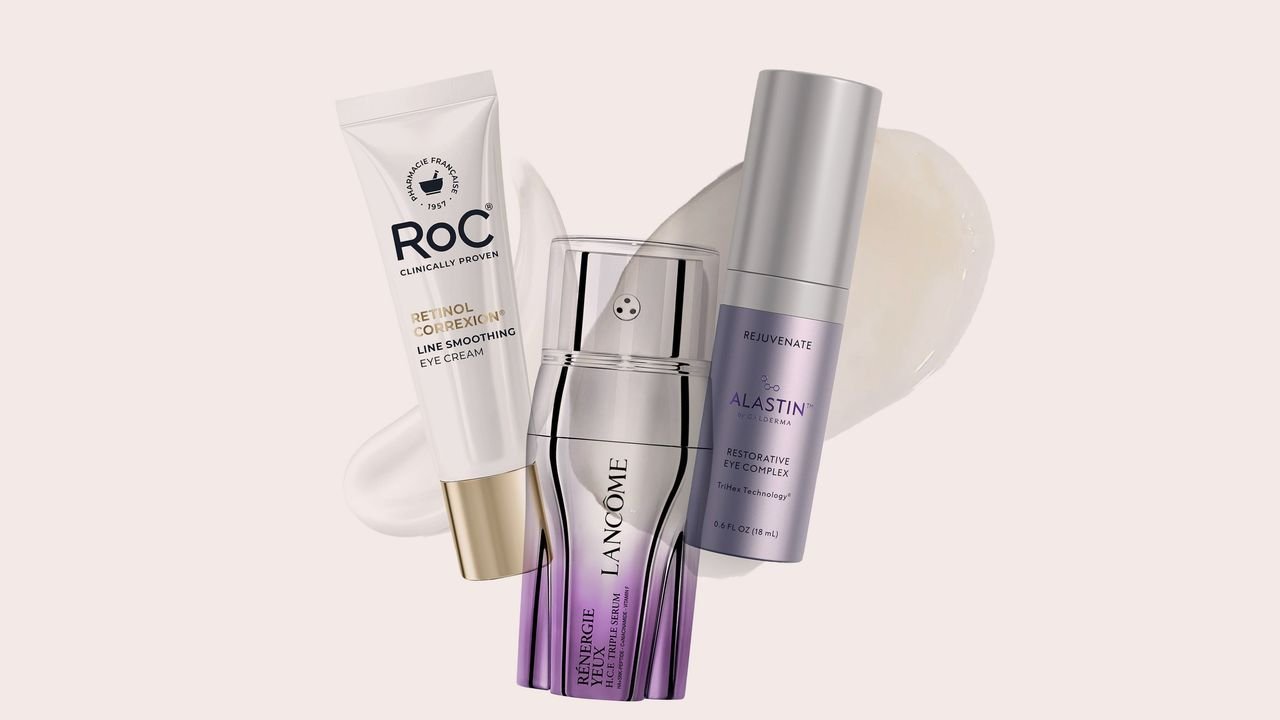
The formula goes beyond hydration, too. “Niacinamide evens out discoloration, while green tea and oak leaf extracts target the look of dark circles,” says Dr. Queller. And since it skips retinol and other potentially irritating actives, it’s an easy one to reach for in the morning with a “lightweight texture that layers beautifully under makeup,” says Dr. Queller.
Frequently Asked Questions
What do I look for in an eye cream for wrinkles?
The key to a great eye cream is what’s in its ingredient list, says Fatima Fahs, MD, a board-certified dermatologist based in Canton, Michigan. For immediate results, consider gentle ingredients that boost skin hydration or prevent its loss—such as hyaluronic acid, squalane, glycerin, and ceramides.
Another top ingredient for targeting fine lines is retinol, says Rachel Nazarian, MD, a board-certified dermatologist based in New York City. The vitamin A derivative increases collagen production to improve the look of fine lines while evening skin tone and reducing signs of hyperpigmentation. However, retinol is an intensive active ingredient that might irritate sensitive skin types. So always patch-test new products before applying them to your entire face—especially your under-eye area—and follow up with sunscreen.
Another ingredient Dr. Fahs shouts out is skin-brightening essential vitamin C, an antioxidant powerhouse that fights free radical damage and helps fade pigmentation concerns; not surprisingly, it’s a mainstay in brightening eye creams. But, really, any antioxidant is a good idea. “Antioxidants are a bonus in eye creams since they protect against environmental damage and help preserve skin from premature aging,” says Dr. Nazarian. “Everyone benefits from that.”
Dehydration can also exacerbate the look of wrinkles, so if you notice dry skin, consider incorporating a hyaluronic acid-infused product into your skin-care regimen. “[Hyaluronic acid] is a humectant that plumps and hydrates the skin to improve the appearance of fine lines,” says Dr. Fahs.
What else? “Peptides can be a great alternative to retinol,” Dr. Liu notes. “Peptides help to signal the skin’s internal production of collagen and have hydrating benefits to improve the appearance of crow’s feet.”
When do I start using an eye cream?
“You can start using eye creams preventatively—and the earlier, the better,” says Dr. Nazarian. While this might not be the case elsewhere on your face (after all, you might not want to sweat future jowls when you’re 20), the eyes are particularly vulnerable to showing wear and tear sooner. “This area of the body is so thin that even a small amount of damage shows dramatically early in life,” she says. She also recommends wearing sunglasses as a preemptive protective measure.
Meet the experts
- Fatima Fahs, MD, a board-certified dermatologist based in Canton, Michigan
- Jenny Liu, MD, a board-certified dermatologist and assistant professor at the University of Minnesota based in Minneapolis
- Kunal Malik, MD, a board-certified dermatologist in New York City
- Rachel Nazarian, MD, a board-certified dermatologist at Schweiger Dermatology based in New York City
- Jenna Queller, MD, a board-certified dermatologist and founder of DermWorks based in Boca Raton, Florida
How we test and review products
When Allure tests a product, our editors look at it from every angle in an effort to best serve you. We review ingredients, scrutinize brand claims, and, when necessary, examine peer-reviewed scientific and medical studies. In addition to testing each and every product that’s included in each and every review, we rely on experts who shape their fields, including dermatology, cosmetic chemistry, and medicine, to help us vet the ingredients and formulas.
For our list of the best eye creams for wrinkles, we considered each product’s performance across five primary categories: product ingredients and efficacy, packaging, fragrance, texture, and product wear. Every product was determined to have excelled in each category by our editorial team, which is composed of in-house writers and editors as well as contributors—along with special consideration from dermatologists. To learn more information on our reporting and testing processes, read our complete reviews process and methodology page.
Our staff and testers
A beauty product is a personal purchase. You might be searching for a face cream to address persistent dryness or a new nail product to add to your Sunday self-care routine; you may simply be browsing around for the latest launches to hit the hair market. No matter what you seek or your individual needs and concerns, Allure wants to ensure that you love anything we recommend in our stories. We believe that having a diverse team of writers and editors—in addition to the wide range of outside testers and industry experts we regularly call upon—is essential to reaching that goal.
After all, can we really say a skin-care product is the “best” for people over 50 if the only testers we’ve solicited opinions from folks who have yet to hit 30? Can we honestly deem a high-end diffuser worthy of your hard-earned cash if it’s never been tested on curls? We’re proud that our staff spans a wide range of ages, skin tones, hair textures, genders, and backgrounds, which means that we are able to fairly assess any beauty product that comes into the beauty closet.
