

When used in fashion discourse, “commercial” was once the polite way of saying dull. At best, it meant a collection that’s easy on the eyes and astutely merchandized, offering just the right amount of cash-cow designs to translate across markets while ticking off different price points. At worst, a lack of vision on behalf of the creative director or an overbearing executive team.
Recently, that’s changed. Spring/Summer 2027 has been defined by shows that feel at once shoppable and creatively nuanced, generating cult-like covetability and a clear wardrobe proposition. The goal, it seems, is to build immediate consumer appetite and the kind of in-store momentum that results in waiting lists and snaking queues.
Getting it right is hard. But there is a common denominator: the ability to preserve a strong creative signature while giving people a clear reason to buy.
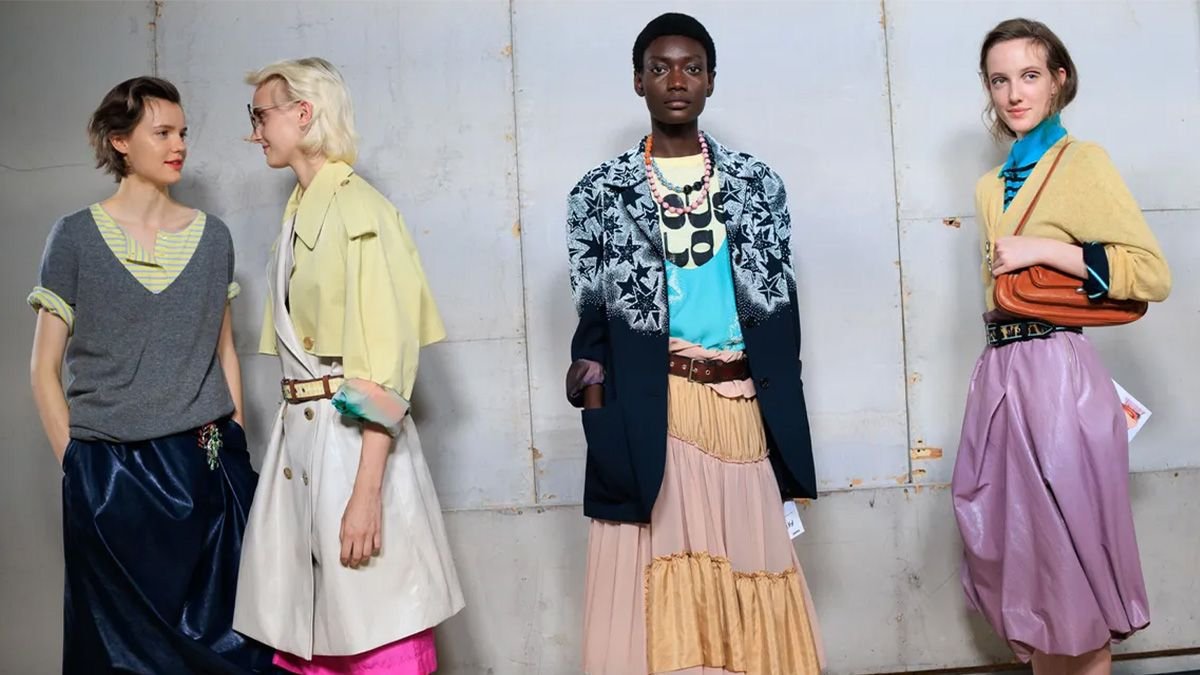
For Julian Klausner’s Dries Van Noten, this manifested in a kooky-but-bijou SS27 collection comprising jeweled and brooched sheer skirts with vintage movie poster prints layered beneath, cropped mini trenchcoats, clashing florals, polos, dress shirts, and — as we’ve seen across the season — a whole lot of skirts.
Demna’s Gucci SS27 collection was held inside a modeled store.
Photo: Getty Images
Elsewhere, typically experimental designer Duran Lantink pared back his characteristically whackadoodle approach to design for a smarter compromise this season. “There’s a bit more wearability in it,” he told Vogue Business of his SS27 collection. “That’s slowly where I want to go with the prêt-à-porter.” Meanwhile, Demna staged his latest show in the simulacrum of Gucci store — a move that was read by some industry bods as a nod to his commercial KPIs. (Gucci is Kering’s biggest brand, but has faced consecutive annual losses since 2022.)
Glenn Martens admitted that this Maison Margiela collection was his most commercial yet, leaning on everyday pieces like jeans, trench coats and denim jackets, while reinterpreting the templates with trompe-l’oeil folding illusions or intentional stonewash misplacements. From afar, they appeared prosaic; up close, they were avant-garde. “I’m trying to really figure out how we can bring a strong concept in and be really consistent with it across every garment, without being also scary,” said Martens. “You have to speak to a much broader clientele than Martin [Margiela, the brand’s founder] used to have. We have to speak to the world, so it’s a bit difficult to go as hard on concepts.”
