

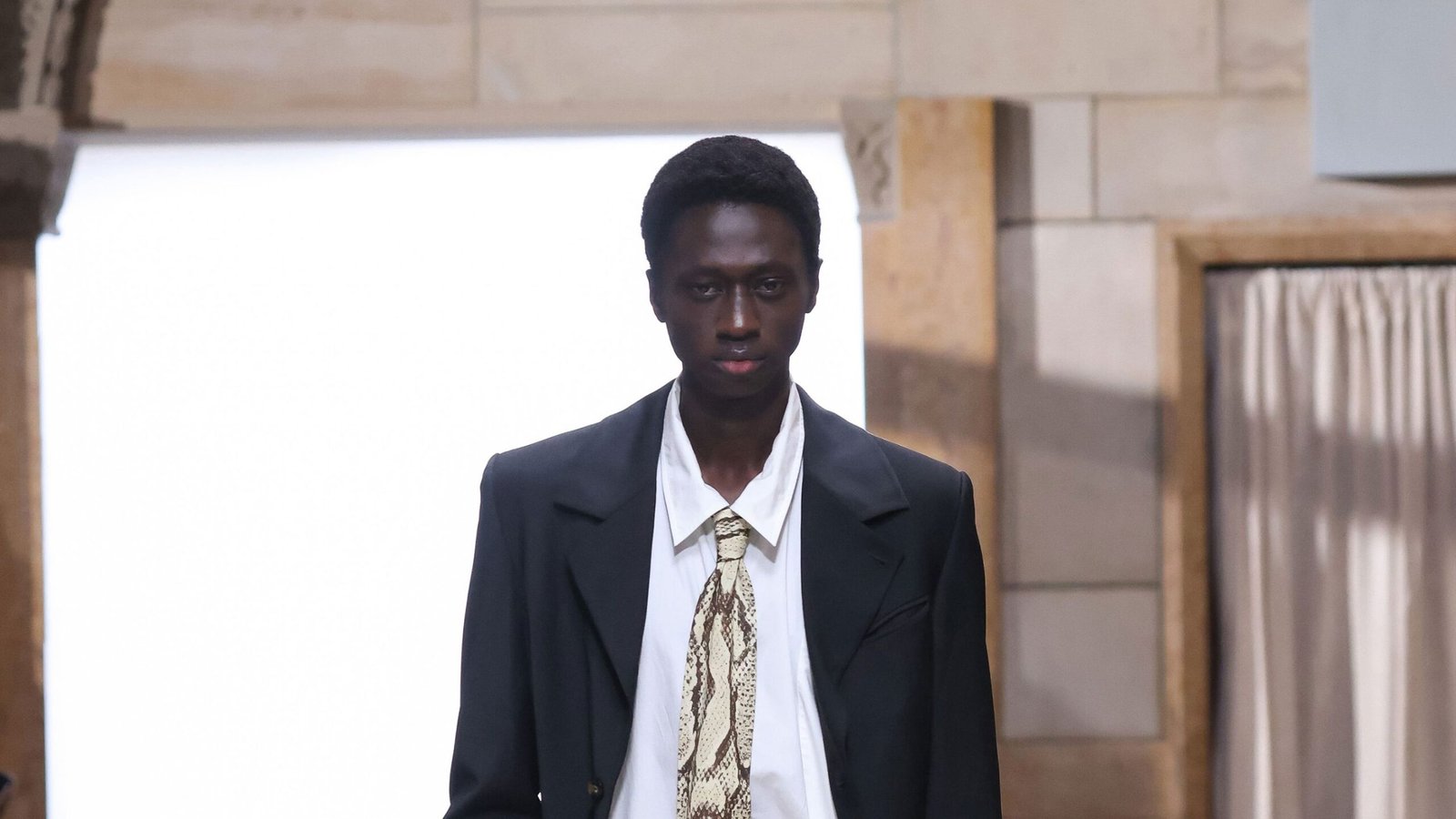
The idea for Telfar Clemens’s spring 2027 show was pitched as follows: a live runway show would take place in Paris on the last day of fashion week while being simultaneously livestreamed back to New York inside the soaring, ornate lobby of a former bank building, where the designer would also be hosting a sample sale. Walking up to the space in New York, the lines of shoppers had long since formed—calm, for now—and inside, there was, in fact, a catwalk set up, directly adjacent to rows of racks filled with Clemens’s funky sportswear and riot-inducing bags. Guests were told to sit down, and after the usual wait, a show did, in fact, take place. Surprise! The concept was actually flipped, with both the runway show and sale happening in New York and being beamed remotely back to a crowd back in Paris. This fact became clear when Clemens himself took his bow at the end of the show (in front of a DJ board and among friends who were providing quippy commentary on the show in real time).
The night before, Clemens and his longtime creative partner, Babak Radboy, played up the gag, saying they were Zooming in late from Paris, exhausted from a long day. “It’s a twist,” Clemens said of the collection. “It’s like if you squint in a metropolitan city, you’ll see this look—it’s red wine at six in the morning.” The designer said he wanted to focus on his ready-to-wear offerings, because he is most known for his beloved shopper bag, which has become part of the firmament of downtown New York. Indeed, Clemens seemed a bit defiant during the talk, emphasizing that his brand is much more than its hit carryall—he’s been in business for 21 years, survived a financial crisis, a pandemic, and much more. He’s remained independent, is still at the helm, doesn’t really follow the fashion calendar, and recently opened his own flagship on the far edge of Chinatown. That’s certainly an accomplishment for any designer working today.
He was excited, he said, to present a more “mature” vision of his brand, and that came through most visibly in the opening section of suits. But this is Telfar, and after the first few looks of straightforward, slim-cut tailoring, it evolved into something pleasantly stranger, with that alternative funk and subversion. Things were deconstructed and reworked, becoming looser, longer, more relaxed, sometimes made to look as if they were worn inside out, like long shorts with the silk jacquard linings exposed; or chopped up into new pieces, like a column skirt in gray wool. Elsewhere, jackets were shown with draped shorts, reminiscent of Tudor-era breeches.
Snakeskin and cheetah spots were another organizing principle, manipulated during the scanning process and cut as saucy, skimpy dresses (one in red with a hood had a certain mid-century glamour) and draped tops. Clemens also indulged in his signature jersey, here quilted in designs that evoked motorcycle jackets, or turned inside out with the interior fleece combed out. To finish, he presented streamlined black dresses and tank tops, their curvy hems lined in chains, a reference to bag handles. As for bags themselves, Clemens presented many, including demure shoulder bags, large shoppers that vaguely looked like Birkins, and even fox tails that zipped to reveal they were actually furry pouches.
After Gucci’s “Store Show” a few weeks back, Clemens and Radboy’s decision to have a show that directly dovetails into a sample sale was quite funny, a meta-commentary on the way the fashion system works, and the broken nature of it all. Telfar shows are often conceptual and have an arch message behind them—Clemens has long worked outside the traditional system and seems to have bent it to his will. This show concept demonstrated just how directly people connect to his work; it was baldly apparent as increasingly frenzied swarms started to paw through the racks, building armfuls of denim and jersey sportswear. It was a reminder that Paris may be the capital of fashion, but here in the US, capitalism still reigns supreme.
