

Frequently asked questions
What do barrier repair creams do?
Barrier repair creams restore the skin’s protective lipid layer using emollients and occlusives that prevent moisture loss and reduce irritation, says Corey Hartman, MD, a board-certified dermatologist in Alabama. Consider your skin barrier the gateway to your skin health. When you’re dealing with any sort of irritation or inflammation—including acne or eczema—your skin barrier is most likely compromised.
Do barrier repair creams actually work?
Yes, according to the dermatologists we spoke with, but like anything, keep expectations realistic. “A good barrier cream can absolutely help restore hydration and replenish some of the lipids that are important for normal barrier function, but the key is consistency,” says Jenna Queller, MD, a board-certified dermatologist based in Boca Raton, Florida. She says that your skin barrier isn’t a light switch that goes from “broken” to “fixed” overnight. “If you remove the trigger and give the skin the right environment to repair itself, most mild barrier disruption improves quite quickly,” she says. A barrier repair cream can help with this, but it often requires further investigation with a dermatologist to explore what it is that’s triggering a compromised skin barrier.
How are barrier repair creams different from regular moisturizers?
Despite both being creams, barrier repair creams and your everyday moisturizer function a bit differently. “Barrier repair creams are typically thicker and specially formulated to simultaneously add moisture and maintain the health of the skin barrier,” Dr. Hartman says. “Whereas a regular moisturizer typically just adds moisture to the skin.” Think of barrier repair creams like a nourishing Band-Aid that repairs any cracks in your skin’s foundation to maintain a healthy skin barrier and keep it functioning properly.
How can I tell if my skin barrier is damaged?
Signs include persistent redness, stinging when applying products, flaking, tightness, and increased sensitivity. Whenever your skin doesn’t look refreshed, hydrated, and supple, there’s a good chance your skin barrier is compromised. If you experience cracked, very dry, inflamed, itchy, flaky, and/or all-around uncomfortable skin, you should start using a barrier repair cream and consult with your dermatologist.
What do dermatologists recommend for a damaged skin barrier?
The most effective treatment for a damaged skin barrier focuses on restoring the skin’s natural lipid matrix, according to Dr. Engelman. The ceramides, fatty acids, and cholesterol in your skin act like mortar holding skin cells together. “Using a ceramide-rich barrier repair cream helps reinforce these lipids, improve moisture retention, and reduce irritation and redness. And pairing that with gentle, non-stripping cleanser gives the barrier space to recover,” she says. Supporting hydration with humectants such as hyaluronic acid and panthenol can also help draw water into skin without causing further stress. Follow with sunscreen during the day to protect skin.
How often should I use a barrier repair cream?
If you’re dealing with dry, flaky, or irritated skin, our experts recommend adding a barrier cream to your skincare routine twice daily—once in the morning and once in the evening. That said, because barrier creams tend to be richer and thicker than your daily moisturizer, they can sometimes feel a bit too heavy for daytime wear. In this case, it’s totally fine to apply it once a day before bed. You’ll still experience the benefits from a once-daily application.
Should everyone use a barrier repair cream?
“Not everyone needs to use a barrier repair cream, but I find that most people would benefit from using one, especially in the winter months when environmental factors like cold, dry air and wind lead to an increase in moisture loss in the skin,” says Dr. Hartman. “Protecting the skin barrier and keeping it intact and healthy can help shield skin from harsh environmental conditions.” Nava Greenfield, MD, a board-certified dermatologist at Schweiger Dermatology Group adds that, aside from seasonal needs, it’s a good idea for those with dry and eczema-prone skin to keep a barrier repair cream on hand year-round for when they experience flare-ups.
How we evaluated barrier repair creams
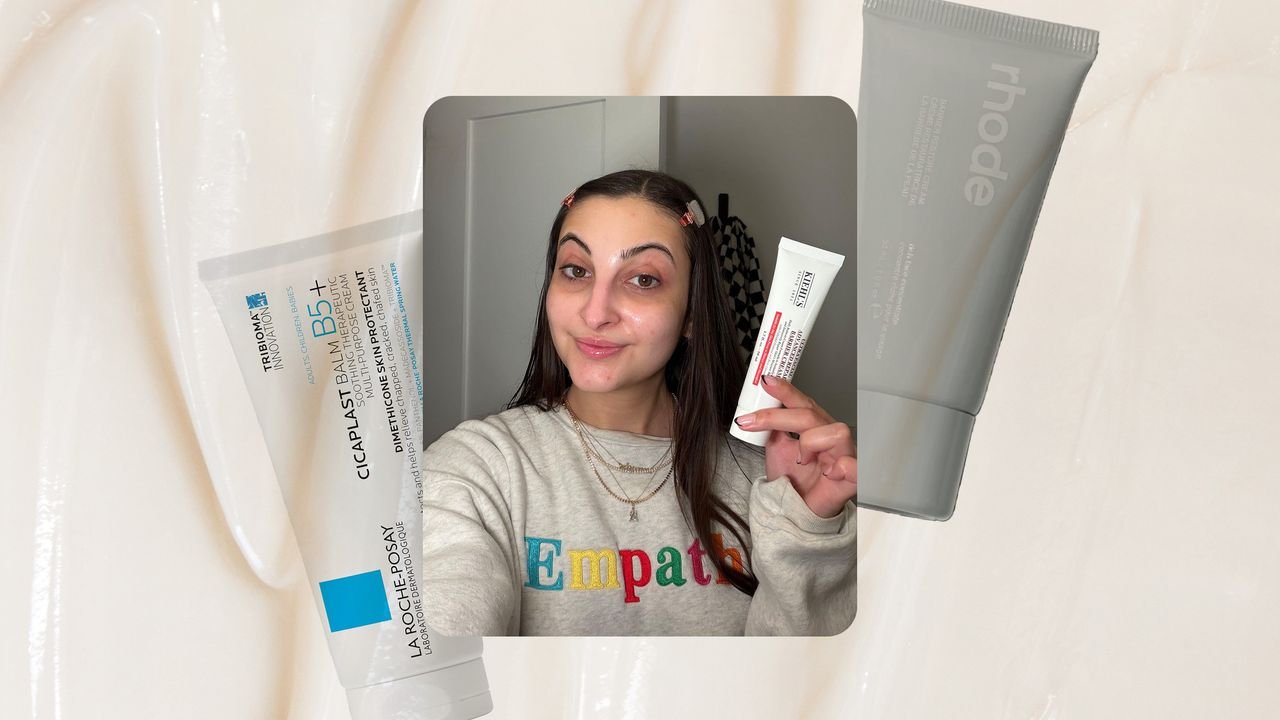
We tested barrier creams on a wide range of skin types, including eczema-prone, oily, very dry, and reactive. The best ones had powerful humectant ingredients like hyaluronic acid and ceramides and also did a great job at calming redness with niacinamide, colloidal oatmeal, and more. The best barrier repair products that made the cut left lightweight veils of moisture on our skin that weren’t too greasy or heavy and did a great job of evening out rough texture, leaving our skin feeling smooth and fresh.
- Alicia Zalka, MD, board-certified dermatologist and associate clinical professor of dermatology at Yale University
- Corey L. Hartman, MD, board-certified dermatologist and founder of Skin Wellness Dermatology
- Nava Greenfield, MD, board-certified dermatologist at Schweiger Dermatology Group
- David Kim, MD, dermatologist at New York Dermatology Group
- Dendy Engelman, MD, board-certified dermatologist based in NYC
- Jenna Queller, MD, a board-certified dermatologist based in Boca Raton, Florida
