

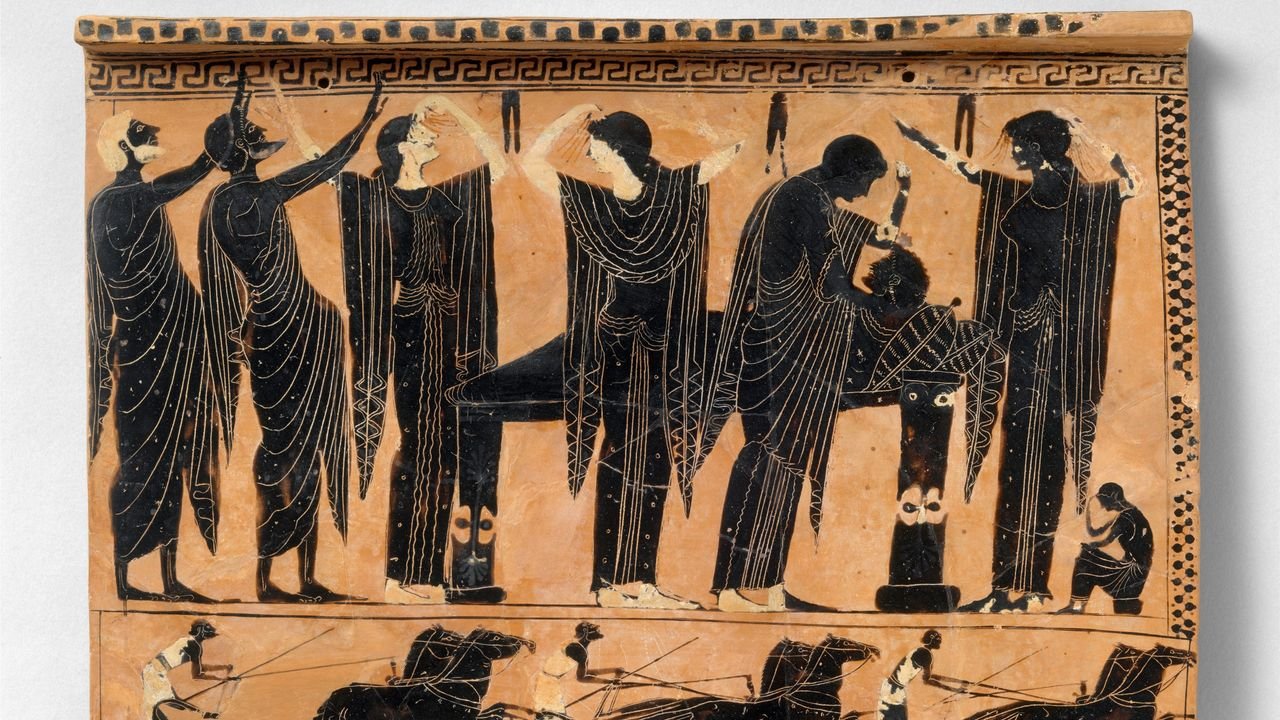
Across cultures, textiles have played a role in navigating the passage between life and death. While researching textiles and identity among the Hupacasath people of Vancouver Island, Green encountered traditions in which the deceased’s clothing was burned to release their ties to the physical world, allowing them to journey beyond the horizon. Meanwhile, among the Toraja people of Indonesia, the dead are traditionally wrapped in layers of patterned funerary textiles, while ceremonial cloth banners symbolize a pathway for the soul into the afterlife. In Ghana, the Asante people have historically worn adinkra mourning cloths, large fabric wrappers stamped with symbolic patterns using carved gourds and natural dyes to convey ancestral connection.
Beyond funerary rituals, death can also transform the significance of the garments we leave behind. “I love how even in contemporary traditions, death can change the object biography of clothing, where somebody’s ratty T-shirt that they wore every weekend then becomes the most prized possession for their grandkids or loved ones after they pass away,” says fashion researcher Sephra Lamothe, whose doctoral research at Cornell examines fashion and death.
In Western societies, clothing developed an elaborate visual language of mourning, communicating grief through colors, fabrics, and accessories. Ancient Romans wore dark wool togas known as togae pullae to mourn, while medieval Europe developed a rich visual culture surrounding death, including the danse macabre, an allegory depicting Death leading people from all walks of life, and memento mori, symbolic reminders of mortality often featuring skulls and skeletons. By the Renaissance, black mourning garments, veils, and headdresses distinguished grieving European aristocrats. As the merchant and middle classes expanded during the 18th century, mourning fashions once reserved for the upper classes became increasingly widespread.
By the Victorian era, particularly following Prince Albert’s death in 1861 and Queen Victoria’s subsequent four decades in mourning, bereavement had evolved into an elaborate system of social etiquette. “Wearing the clothes was a way of saying that to people visually. It was a material, symbolic speech act that’s telling everyone, ‘This is where I’m at,’” Green explains. Widows initially wore matte black crepe, concealing gowns, and heavily veiled bonnets before gradually transitioning to silk, lace, jet jewelry, and muted shades of gray, mauve, and lilac. Mourning jewelry could even incorporate the deceased’s hair; Lamothe recalls researching Victorian hair chokers, pieces that allowed their wearers to feel “the last vestiges of the body of the deceased against your skin.” Yet these conventions could be as restrictive as they were expressive, particularly for women, who were expected to publicly perform bereavement according to prescribed social rules.
