

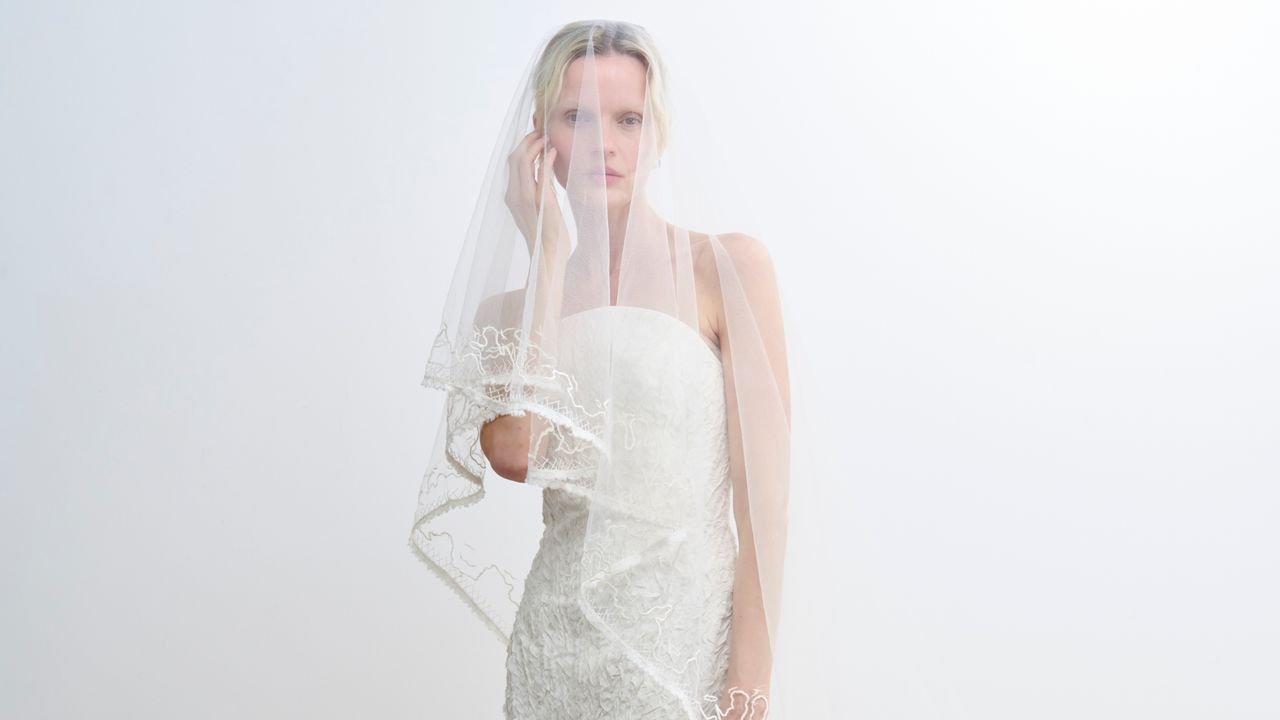
Texture is no stranger to a bridal salon—but new takes on traditional, tactile materials are coming. Wedding dresses have followed a similar formula for the last few decades, using dynamic lace patterns, rhinestone embellishments, sumptuous silks, and voluminous tulle to bring visual interest to the couture-level gowns brides wear as they exchange vows. And by no means are these materials going anywhere. Yet when we previewed new collections for fall 2027 at New York Bridal Fashion Week, we were surprised to find so many unfamiliar appliqués and fabrics that we were constantly asking the models if we could touch their outfits.
While we are seeing a trend of more traditional bridal silhouettes in recent seasons, designers are also finding ways to reinvent the wheel in a market that can often feel repetitive. From choosing unique adornments to manipulating fabric into new material states to dynamic weaving and placement of more traditional toiles, these pieces feel creative, boundary-breaking, and perfect for the bride who wants to wear a true piece of art on their wedding day.
Ahead, we asked bridal designers with show-stopping, textural wedding dresses this season to break down the inspiration and technical processes behind their creations.
Lein
Photo: Katherine Goguen for Lein
Photo: Katherine Goguen for Lein
“With the Daniela Dress, I wanted to explore the relationship between simplicity and ornamentation,” says Lein founder and designer Meredith Stoecklein. “The silhouette is intentionally simple and relaxed, allowing the texture and movement of the embellishment to become the focus. Inspired by the irregular surfaces and organic formations found in nature, silver faceted beads are worked into layers of delicate tulle and bobbinet, creating a texture that feels almost mineral-like.”
“I loved the idea of taking something traditionally precious and giving it a raw, imperfect quality,” she continues. “The beading follows the lines of the body, framing the draped open back and extending beyond the hem, creating movement and an unexpected sense of fluidity against the structure of the crepe.”
Marmar Halim
Photo: Courtesy of Marmar Halim
Photo: Courtesy of Marmar Halim
