
Organic skincare. Clean beauty. One-hundred percent natural. The labels certainly blur together fast; and if you’ve ever shopped for a beauty product, you may, like me, have been puzzled by trying to understand them. In 2026, while consumer desire for transparency and sustainability is at an all time high, the organic skincare search is striking a particular intrigue.
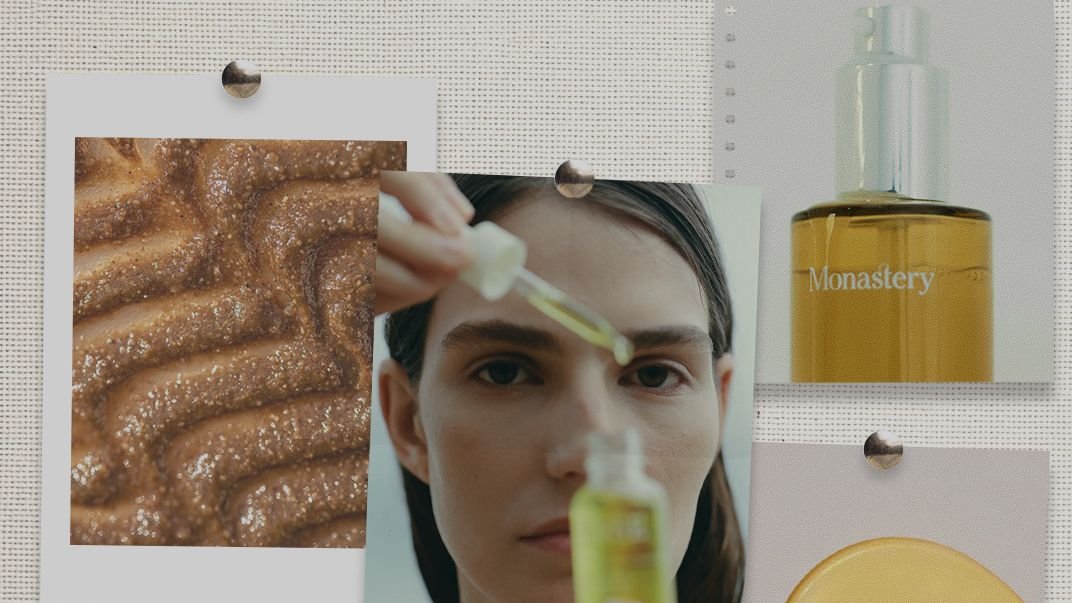
“In the early years, organic felt like a discovery, a reason to look more closely at what we were putting on our skin,” says esthetician and founder of Monastery, Athena Hewett. “Today, it’s an invitation to look at a product a bit more closely. How was it extracted? What is it actually doing in the formula? Organic is meaningful, but it doesn’t tell the entire story of a product.”
Organic skincare is defined as products formulated with agricultural ingredients grown without synthetic pesticides, chemical fertilizers, or genetically modified organisms (GMOs). “There’s a big misconception still that natural is better, and organic can be a band-aid to that,” says Christina Ross, head of science and impact at Credo Beauty. “But organic has always been about how agricultural ingredients are grown and how they’re processed—it’s not talking about safety or efficacy of the product.”
Vogue’s Favorite Organic Skincare Products:
Organic is not as simple as plucking some flowers and putting them on your face. “Many of the ingredients in beauty aren’t grown, processed, and put right in the jar—they go through some processing system and could be combined with synthetic biology or other ingredients to create emulsions before arriving at the final product,” adds Ross.
The additional layer of confusion is that some products may contain a few ingredients that are “certified organic,” as opposed to the entire finished formula. The important thing to keep in mind here is that obtaining and up-keeping the certifications necessary can be time intensive and expensive; so it’s not as feasible for small, independent brands, regardless of how organic their practices may be. “Some brands know they’re getting their raw materials from an organic farm so organic certification may matter less to them because they can still do marketing around the farm being organic,” says Ross. “And some may be close to the threshold—say 94% organic—where they won’t meet the requirement for the top label so it’s not as worth it because it may devalue the work they’re doing.”
All this said, a formula carrying an organic label doesn’t necessarily make it more efficacious or better than one without it. “It used to be about what was left out,” says founder and CEO of Furtuna Skin, Agatha Relota Luczo. “Now it’s about performance and provenance: whether a product works, and where its ingredients come from.”
