
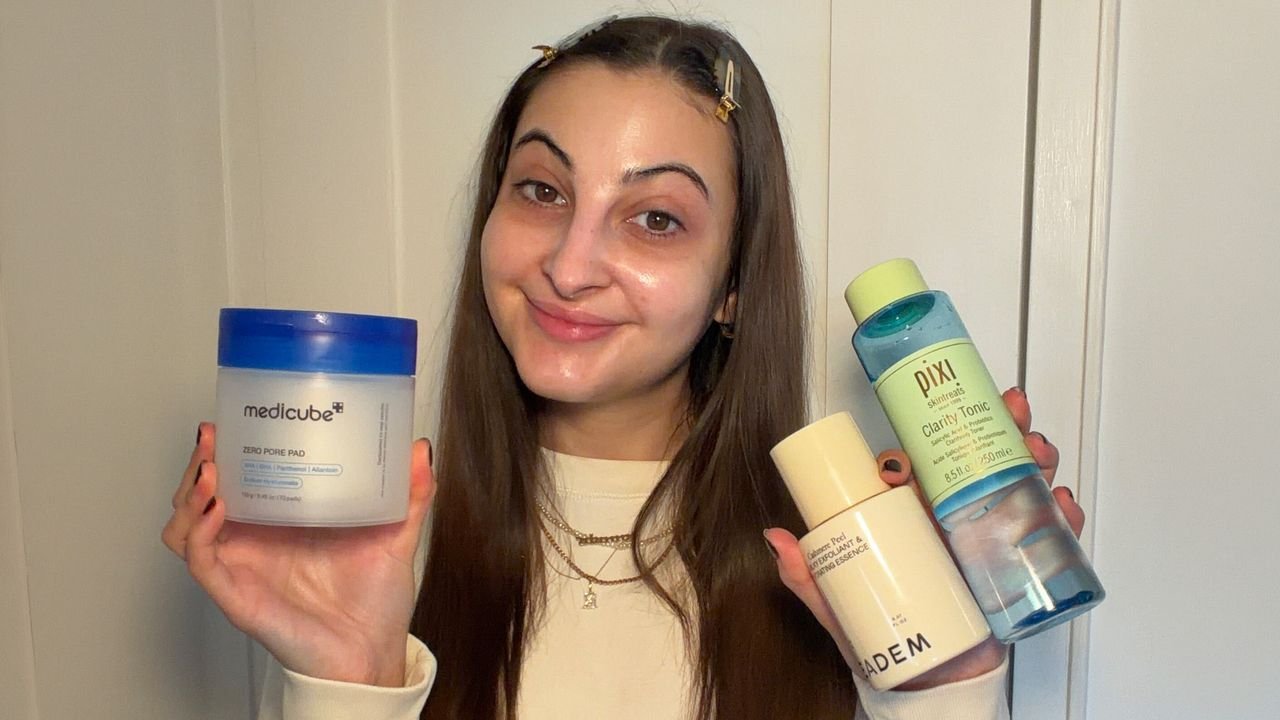
Hot take: exfoliating toners don’t have to be just for acne. When my skin looks particularly dull, this is my glow-boosting pick to make my skin more radiant. The two other toners work best when I’m dealing with active breakouts, so this alternative option is one I can use when my skin is clearer but needs a glow boost.
This milky exfoliating toner from Eadem also contains AHAs, but with the addition of poly-hydroxy acids (PHA), which exfoliate are gentler than other exfoliating acids because they only work on the outermost layer of the skin due to their large molecular size. This pick actually includes PHA, too—short for poly-hydroxy-acids—which are a large exfoliating molecules that work on the surface of the skin to gently resurface, making them much less irritating than AHAs like glycolic acid. This pick also has rice water and colloidal oatmeal to leave skin super hydrated, soft, and refreshed. A few swipes of this and my skin looks radiant and feels more hydrated. I like to switch off to this one when I’m not having an active breakout, but I make sure to incorporate it into my routine at least once a week to help give me major glow.
Frequently asked questions that I had–which you might have, too:
What ingredients should you look for in a toner for acne-prone skin?
When choosing a toner for acne-prone skin, it’s best to look for exfoliating ingredients like BHAs and AHAs: salicylic acid, glycolic acid, and lactic acid to name a few, says Dr. Garshick. These ingredients will help exfoliate away dead skin cells, dirt and grime from makeup to help improve overall skin texture—AHAs work on the surface to smooth fine lines and clear away dead skin, while BHAs seeps into skin to dislodge gunk. She also says to look for niacinamide and witch hazel, which can help calm inflammation and support the skin barrier. “For those who are acne-prone but are also sensitive, it can help to look for ingredients like glycerin, hyaluronic acid, and aloe vera to help provide hydration without stripping the skin,” she adds.
Do toners shrink pores? Do they address clogged pores?
Toners don’t permanently shrink pores, according to Hope Mitchell, MD, a board-certified dermatologist based in Ohio. There’s actually no way to change the actual size of your pores. “They can make them less noticeable, though,” she says. Ingredients like salicylic acid can help clear excess oil and dead skin cells from the pores, which can improve the appearance of congestion. “Keeping the skin hydrated also helps improve its overall texture,” she adds.
Does toner pull out blackheads?
While toners don’t physically pull blackheads out of the skin, exfoliating acids like AHA (which is water-soluble and works on the surface of the skin) and BHA (which is oil-soluble and gets into the pores to clear away sebum) can help dissolve and loosen the buildup of oil and dead skin cells that contribute to formation of acne. ”With consistent use, salicylic acid can help reduce existing blackheads and prevent new ones from developing,” says Dr. Garshick.
Can toners cause breakouts?
Ironically, toners can actually contribute to breakouts, but not in the way you might think. “Some toners can irritate the skin, especially if they contain harsh ingredients or are used too frequently. If your skin becomes red, itchy, or starts breaking out after introducing a toner, stop using it and see how your skin responds,” says Dr. Mitchell.
Dr. Garshick says to avoid toners with high concentrations of acids or fragrance, which might disrupt the skin barrier, and can make it harder to treat breakouts. The product should be labeled non-comedogenic (read: won’t clog pores) and alcohol-free, as well. “Using toners in combination with other anti-acne products can sometimes cause additional irritation,” she says. This is why my dermatologist recommended switching every other night for me: one night toner, next night retinol, and so forth.
Start by washing the skin with a gentle cleanser. Next, apply your toner according to the product instructions. “You can use a cotton round or square pad for the application. There’s no need to rub the skin aggressively—just one or two passes across the treatment area(s) of the face,” says Dr. Mitchell. Next, either apply a rich night cream if you’re incorporating the toner into your PM regimen, or a moisturizer and SPF in the morning if you apply it in the AM.
What should you avoid doing when you are using toner?
“One of the biggest mistakes people make is overusing toner, especially when it contains exfoliating ingredients,” says Dr. Garshick. Stick to two to three times a week and incorporate them into your routine gradually, increasing frequency as tolerated. “Avoid layering multiple exfoliating products or introducing an exfoliating toner at the same time as other potentially irritating ingredients, such as retinoids or benzoyl peroxide, as this can increase the risk of dryness, redness, and irritation. It is also important to avoid applying exfoliating toners to broken or irritated skin,” she says.
Dr. Mitchell also advises introducing one new product at a time so you can tell what’s actually helping your skin. And, if you’re not seeing any improvement after a few months of dedicated care, it’s time to bring in the pros. “If you’re dealing with persistent acne or painful breakouts that leave scars, see a dermatologist. You may need a treatment that goes beyond skin care products,” she adds.
How I evaluated these toners
I’ve been testing toners for around seven years now, and found my tried and true in the Pixi formula, which doesn’t irritate my skin or leave me red and dry. Although my breakouts lessened in size, I opted for the Medicube pads when I needed clarity overnight. Finally, with clearer skin on my face and more confidence in my beauty routine, the Eadem toner was the cherry on top for keeping my complexion looking glowy and fresh.
