
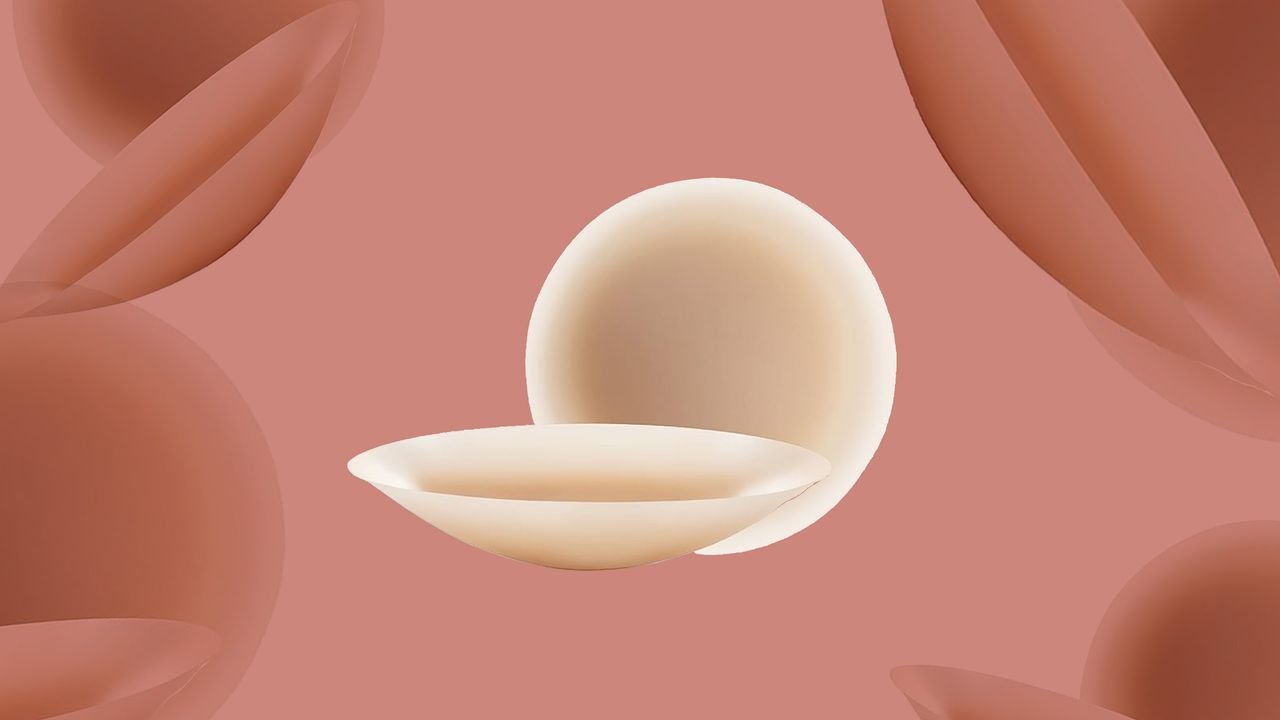
Why it’s worth it: ICYMI: Your nipples can chafe just like any other part of your body. If your current pair is causing more friction than protection, we suggest switching to Thirdlove’s Breathable Nipple Covers. While they might look like traditional pasties at first glance, you’ll quickly notice they have micro-perforations around the edges to help with airflow and reduce moisture buildup, keeping breasts comfortable underneath heavy layers or on a humid summer day. The covers are also made with medical-grade adhesive and feature a nonstick center for seamless, fuss-free removal.
Frequently Asked Questions
What are the different types of nipple covers?
The good news: There aren’t too many types of nipple covers to keep track of. Most are made with silicone and have an adhesive back that keeps them in place. What makes each nipple cover different, though, is the different size options and number of shades available, says Phoebe Kunitomi, former founder and CEO of intimates brand OKKO. Beyond the basics, it’s worth looking at any extra features, like medical-grade silicone for sensitive nips or added lift and coverage for large breasts. There are also nipple products for breastfeeding mothers—though these are more commonly referred to as nipple shields rather than nipple covers— that can help provide some relief if the mother’s nipples are sore or cracked.
What features should you consider when you’re shopping for nipple covers?
Kunitomi points out that you’ll want to find one that matches your skin tone as closely as possible, especially if you’re wearing a sheer or lacy top. “I personally prefer nipple covers that are made from a matte medical-grade silicone with tapered edges,” Kunitomi shares. “This material is super smooth and seamlessly lays flat on the skin—a.k.a. no crazy bumps showing through.” Another feature she suggests looking for is a waterproof adhesive, especially if you’re wearing your nipple covers to an event like a wedding or party where you’ll be dancing and sweating. Size also matters, especially if you have larger breasts or nipples, for a more seamless fit.
How do you wash nipple covers?
“You don’t have to clean your nipple covers after each use,” says Kunitomi. “But if they start to get gross, run them under warm water in the sink, using a gentle soap if needed. Let them air-dry, adhesive side up.” She also suggests putting the plastic film back on the sticky side of the cover after each use to protect the adhesive. Also, pay attention to how many wears your nipple cover can last (brands usually list estimates) to avoid compromising its stickiness.
Who should avoid nipple covers?
“Most nipple covers use adhesive, silicone, or both; if you are allergic to either adhesive or silicone, these should be avoided,” shares Geeta Yadav, MD, a board-certified dermatologist based in Toronto, Ontario. Some options for people with sensitive skin use hypoallergenic materials or are adhesive-free, like the Grippy Cakes. If you have skin conditions like eczema or psoriasis, Dr. Yadav says infrequent use of nipple covers should be okay, but it really depends on your triggers.
Meet the experts
- Geeta Yadav, MD, a board-certified dermatologist and founder of FACET Dermatology in Toronto
- Phoebe Kunitomi, the former founder and CEO of intimates brand Okko
How we test and review products
When Allure tests a product, our editors look at it from every angle in an effort to best serve you. We review ingredients, scrutinize brand claims, and, when necessary, examine peer-reviewed scientific and medical studies. In addition to testing each and every product that’s included in each and every review, we rely on experts who shape their fields, including dermatology, cosmetic chemistry, and medicine, to help us vet the ingredients and formulas.
For our list of the best nipple covers, we considered each product’s performance across five primary categories: product ingredients and efficacy, packaging, fragrance, texture, and product wear. Every product was determined to have excelled in each category by our editorial team of in-house writers and editors, as well as contributors, along with special consideration from dermatologists. To learn more about our reporting and testing processes, read our complete reviews process and methodology page.
Our staff and testers
A beauty product is a personal purchase. You might be searching for a face cream to address persistent dryness or a new nail product to add to your Sunday self-care routine; you may simply be browsing around for the latest launches to hit the hair market. No matter what you seek or your individual needs and concerns, Allure wants to ensure that you love anything we recommend in our stories. We believe that having a diverse team of writers and editors—in addition to the wide range of outside testers and industry experts we regularly call upon—is essential to reaching that goal.
After all, can we really say a skin-care product is the “best” for people over 50 if the only testers we’ve solicited opinions from are folks who have yet to hit 30? Can we honestly deem a high-end diffuser worthy of your hard-earned cash if it’s never been tested on curls? We’re proud that our staff spans a wide range of ages, skin tones, hair textures, genders, and backgrounds, which means that we are able to fairly assess any beauty product that comes into the beauty closet.
