
Still, there are common best practices and principles that apply across the board. For Smith, these are: keeping soil covered and protected; supporting and increasing biodiversity below and above ground; and reducing disturbance events like over-tillage or the over-application of chemicals. For the Regenerative Fund for Nature, the key principles are slightly different: soil health, biodiversity, climate, water, livelihoods and animal welfare. “We set the principles, and then individual projects get to set the metrics that make sense for their landscapes and communities,” says Conservation International’s senior director of global fashion and nature initiatives, Virginia Keesee, who oversees the fund.
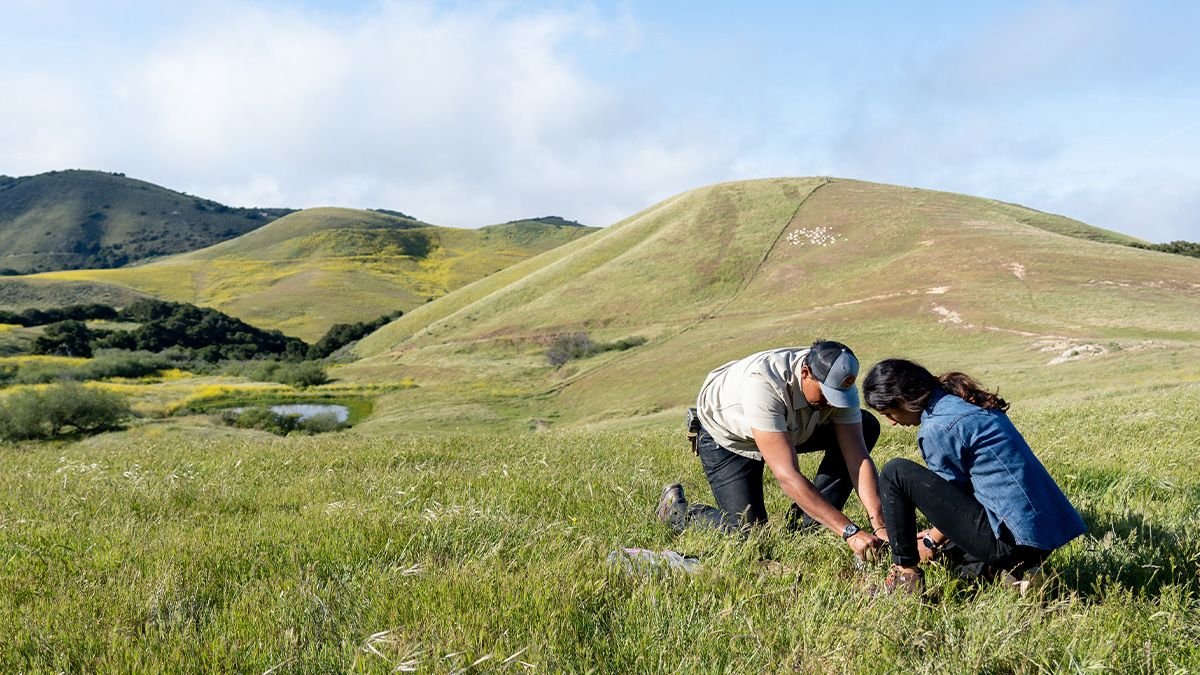
Even within a single plot of land, impact metrics can vary wildly. That’s a major challenge for fashion brands, which tend to operate on a global scale. “Planet Earth is one ecosystem,” explains Smith, “but within that, we have different eco regions and ecological sites.” He operates within the Central California coastal eco-region, but his land spans multiple ecological sites, including coastal sage scrub, annual grasslands, riparian corridor buffers, oak woodlands, oak savannahs, and managed agroforestry like orchards and vineyards. “Each site has its own unique matrix of plants, animals, topography and geology. So in each site, I need to measure different indicators.”
Who should pay for impact monitoring?
Best practice is for brands to support farmers financially with data monitoring, especially where the metrics in question matter more to the brand than the farmer, says Birker. “Farmers don’t usually have the cash flow to pay for these things. Our training is not expensive — between €1,000 and €2,000 — but farmers often ask to pay in installments, or after they sell their harvest. So we always ask corporate partners to shoulder the cost of new projects, because they’re the ones benefitting from the data.”
Aggregators and bridge organizations like CottonConnect can help brands access farm-level data, says CEO Alison Ward, and they can also fund the process. “We have team members working hand-in-glove with farmers who speak not just the local language, but the local dialect. They’re delivering training, but they’re also monitoring impact at the same time,” she explains. “We shouldn’t be doing anything that loses farmers money.”
