

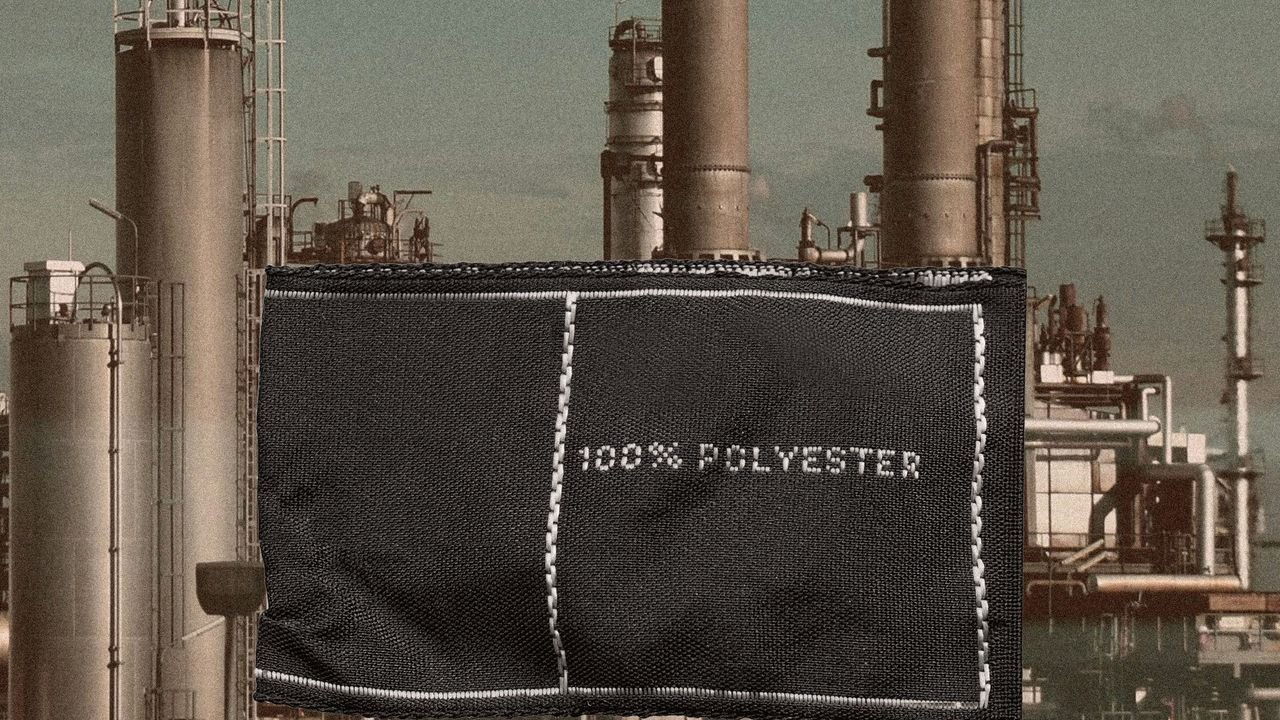
Fashion’s reliance on cheap synthetic fibers is becoming an increasingly expensive gamble as oil prices soar.
For more than half a century, virgin polyester has been the bedrock of clothing production. But conflict in the Middle East is exposing the vulnerability of this business model that previously took advantage of relatively stable polyester prices. Now, ongoing disruption in the global energy market has shaken the industry. Brent crude averaged $124 a barrel in October, its highest level since July 2022, when prices averaged $127 a barrel in inflation-adjusted terms, according to the US Energy Information Administration (EIA). Meanwhile, shipping disruptions in the Strait of Hormuz have also hit supplies of naphtha, an upstream feedstock for polyester production, and monoethylene glycol (MEG), an essential ingredient for the fiber. Imports of MEG into major Asian markets (where the vast majority of polyester is produced) fell by roughly 50% in the five months following the disruption, compared with the same period a year earlier, according to oil market analysts OPIS.
The effects are already being felt further down the supply chain. Polyester staple fiber prices in China rose by 22% in the third quarter of 2026 and by 34% since the start of the year, according to Lenzing, the Austrian fiber manufacturer behind Tencel and Ecovero. In April, the Japanese textile manufacturer Teijin Frontier, a supplier to Uniqlo parent Fast Retailing, said that it would be raising prices for polyester fibers and spun yarns by 20% or more in an emergency price revision.
According to Textile Exchange, polyester accounts for 59% of global fiber production, and despite incremental gains in the total amount of recycled polyester produced (from 9.3 million tonnes in 2024 to 9.7 million tonnes in 2025), its overall market share is shrinking compared to virgin. “Polyester has fueled the exponential rise in the amount of textiles that has happened over the last few decades, especially in hyper-fast fashion,” says Katelyn Toth-Fejel, senior lecturer in fashion and sustainability at London College of Fashion. “Any business built on polyester is going to [feel] every oil shock.”
Nike is one of several major retailers to flag the risk in its 2026 annual report, warning that volatility in commodity and raw-material prices, including petroleum derivatives, “has had and could have a material adverse effect on our costs, gross margins and profitability”. Earlier this year, Next also warned that persistent fuel and fabric cost spikes could hike retail prices by up to 10%, depending on the extent of permanent damage to global energy infrastructure.
Rising polyester prices and instability come as many customers have turned against the fabric, becoming wary of synthetics replacing natural fibers throughout their wardrobes. Toth-Fejel says shoppers are more aware of the harms of microplastics. Global volatility is now adding to that consumer pressure, she says, pushing fashion to reduce its overreliance on polyester, whether virgin or recycled.
