

Brands must also contend with changing beauty standards. While a fair, youthful and highly filtered look — coined by locals as 网红脸 wang hong lian, or “influencer face” — has long been the dominant beauty aesthetic, experts say this ideal is declining in favor of natural body types, healthy complexion and “no makeup” makeup. “I think beauty standards are becoming more diverse,” says Rao, attributing the shift to the influx of K-pop and American culture on apps like Xiaohongshu. “There are now women who want to have sun-kissed skin or draw on freckles. They want to look healthy and natural.”
Amid shifting consumer sentiment and intensifying local competition, domestic brands are also looking to offline retail channels, including overseas, for new pockets of growth. This indicates their ambition to compete on sustainable new customer acquisition and retention, rather than aggressive discounting via major local shopping events like Double 11 (also known as Singles’ Day), 520, Golden Week, and Qixi. Instead of chasing one-time bargain hunters, the focus now is on converting buyers into high-value repeat customers through prestige counters and mainstream retail partnerships.
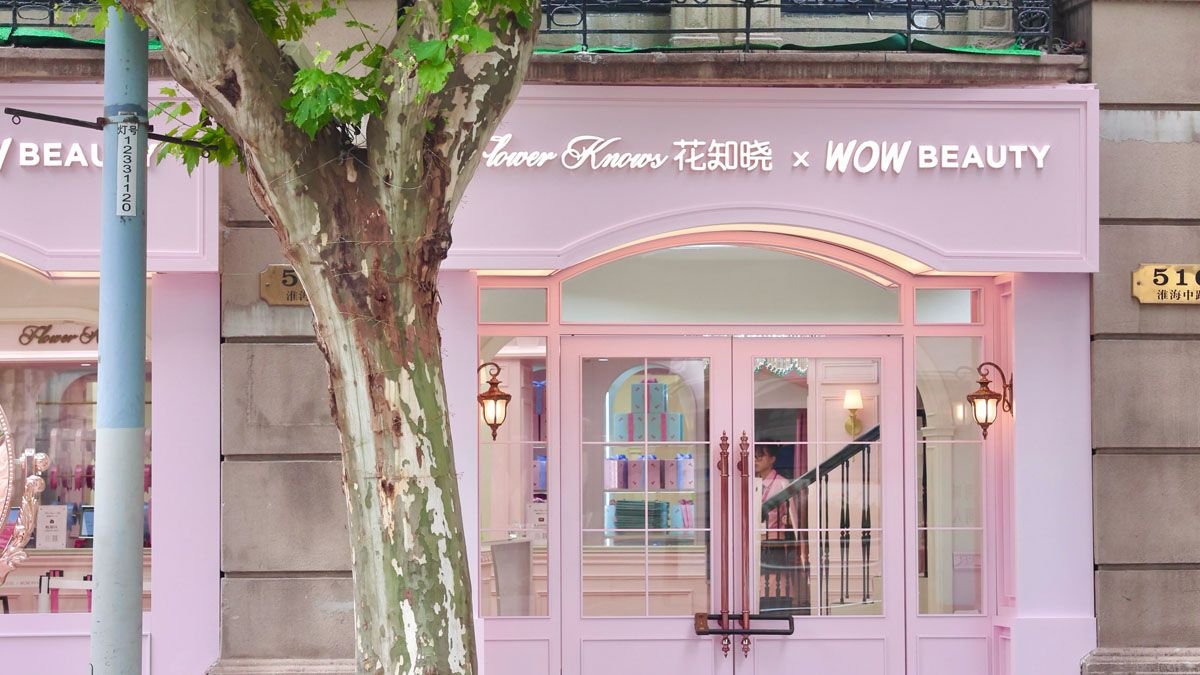
Florasis opened its first flagship in Hangzhou in 2022 and its first overseas store in Tokyo in 2025. Today, it is stocked by retailers in over 110 countries and regions, including Samaritaine Paris Pont Neuf in Paris, Skin Cupid in London, and Mall of the Emirates in Dubai. Meanwhile, Flower Knows expanded to Boots in the UK this March and physical Ulta stores in the US as of September. At home, it has entered specialty retailers such as Wow Colour (China’s answer to Sephora) and, in October, opened its first global flagship store on Huaihai Middle Road in Shanghai. China remains Flower Knows’s largest market overall, but the US has become its biggest internationally, Fang says.
Whether C-beauty can build lasting recognition outside of its home country remains to be seen.
But ultimately, the industry’s glow-up points to a bigger change, one where China is no longer a low-cost manufacturer and imitator, but a global powerhouse driven by original science, intricate design and innovation. See, for example, adjacent consumer industries like automobiles: China now leads the global EV industry, producing a majority of the world’s electric cars and even collaborating with top European fashion figures like Kim Jones.
“The idea is that the Chinese population should be creating things that are our own instead of mimicking trends in Korea or elsewhere, whether it’s politics or culture,” says Rao. “I see a shift where China has gone from being the world’s factory to becoming the world’s lab.”
