

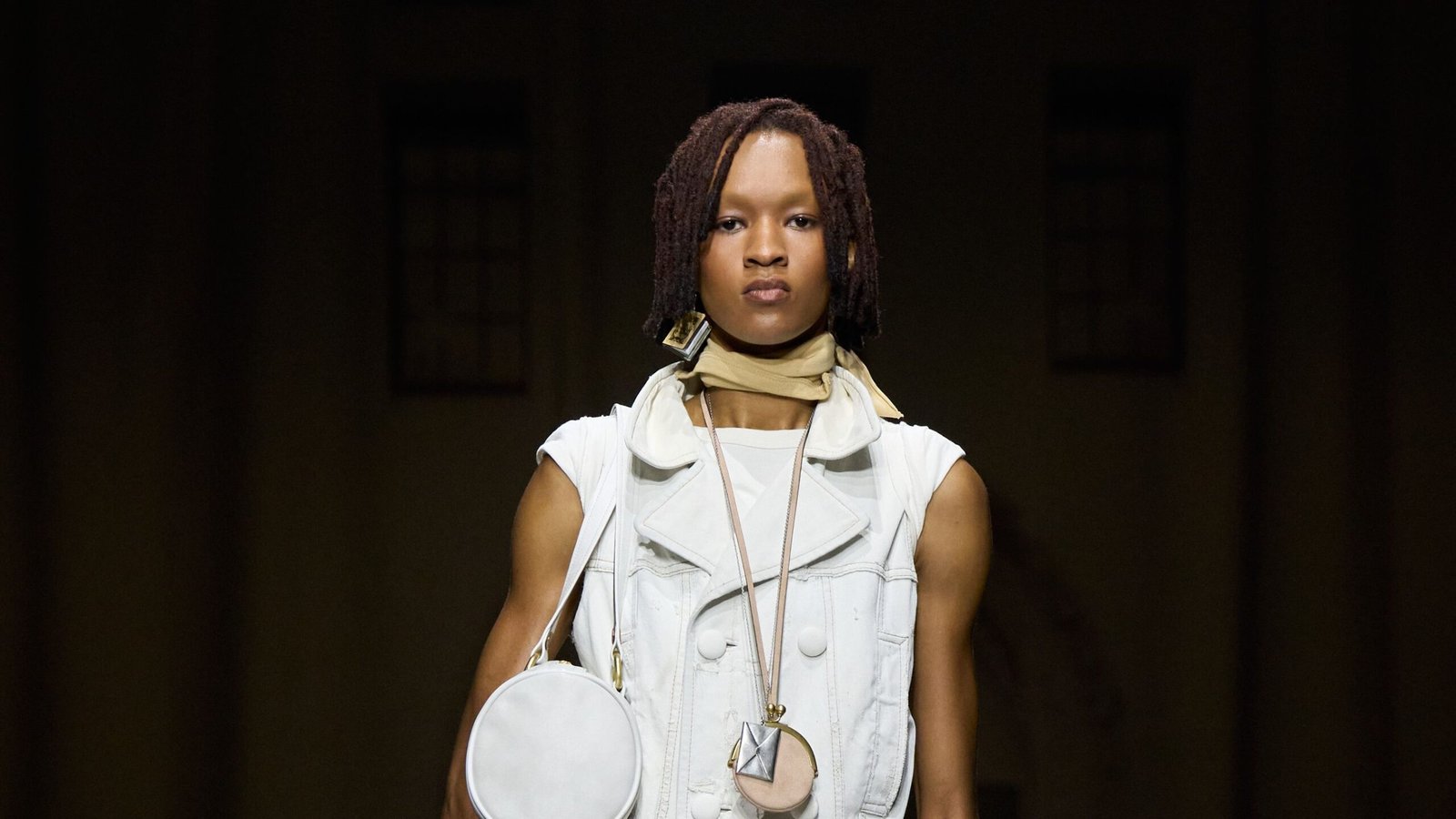
It’s a new dawn, it’s a new day, it’s a new life, it’s a new… Coach? Well, kind of. Ish. Stuart Vevers’s terrific spring 2026 collection was a cross-gender optimism-loaded ode to weathered leathers, patchworked check tailoring, second skin dresses and tees with the skylines of New York and Seattle photo printed onto them, and upcycled messed up workwear pants, all adorned with multiple pendant necklaces, as well as those all important bags (a cylindrical duffel shape dubbed the Kisslock to nestle under the arm, a hobo-ish bag with a purse clasp on its side). At a preview of a few days earlier, he said he was feeling for two things. The magic we can all experience at the beginning of each and every day, that sense of promise, a sensation somehow never more cinematic than in New York City, and a more… glossy vibe for his Coach.
When it comes to the AM hours of New York, Vevers mentioned he loves the emptied out feeling of a city morning, and the quality of light at that time. To put us in the mood, his show space featured images of a just before the rush Manhattan projected onto the walls. “The set is a full-on fantasy of the city, and it’s got that blazing early sun you sometimes get here,” Vevers said. “And that sun made us think about our color palette, the whites, the creams, and the sunlight-faded colors. They feel very Coach-y to me, but it’s a fresher version.” There was certainly an intense, saturated chalkiness to his cabans, which looked like they’d been given a lick of paint, the shrunken jean jackets, the fraying edged pants which trailed along the floor (and which were given an update not with the more expected clompy boots, but delicate, almost balletic sandals). Yet the bigger message was this sense of, he said, “a bit more polish, some shine—and balance that with the grit of the city. But it was also,” he added, “about having this sense of wanting to evolve what we do; to challenge ourselves to move forward. We’ve had a great response to fall, so you don’t want to leave it entirely behind, but at the same time, you don’t want to repeat yourself.”
Vevers can rest assured he didn’t do that. He has taken Coach into the stratosphere by creating a universe for the brand which feels as American as a Stephen Shore image and just as evocative; a mix of heartland US of A with a grungy/groovy ’70s-meets-’90s counter cultural vibe. So, the weathered and worn look that’s so much part of his Coach was still very present and correct, what with the upcycled, almost goth-y black leather long sleeveless coats and vests, the roughed-up denim, and the scuffed boots. But amidst all of that were almost preppy-ish checked blazers, or small-shouldered biker jackets in raw tan suede. The idea, Vevers said, was to keep everything neat and controlled on top, and then let the volume go crazy below. (Few do a slouchier than slouchy pant or jean better than Vevers.)
What his collection also had in spades was how it could feel intensely personal, always a testament to the strength of his vision for a brand which essentially has to be so many things to so many people, right around the globe. Those pendants, for instance: Vevers had stripped the charms off the bags for next spring, and instead strung his coin purses and heart lockets and silver tags inscribed with messages like My Love and Forever Yours around the models’ necks. The idea, he said, came from the way you can collect so much from New York’s stoop sales. “Half of the books on our bedside tables come from those sales,” he said, “and our kids love them because they’ll find stuffed animals.” Two things about that. Any true New Yorker—and Vevers is definitely one of those—is primed to get up early to scour them to get the good stuff, and if you have young kids, as Vevers and his husband do, rising at the crack of dawn is likely all you’ll ever know.
