

Frequently asked questions
What causes hyperpigmentation?
“Hyperpigmentation is triggered by an overproduction of melanin in the skin,” says Deanne Robinson, MD, a board-certified dermatologist in Westport, Connecticut, and there are a few ways it can appear. “Melanin production might be triggered into overdrive via sun exposure, hormonal changes, age, skin injury, and inflammation,” she notes. This results in post-inflammatory hyperpigmentation (PIH), which is the dark spots that pop up after a breakout, and melasma, which is driven by hormones and worsens with sun exposure. Anyone can experience hyperpigmentation, but it’s this overproduction of melanin that explains why people of color are most prone to it.
Do hyperpigmentation serums actually work?
Yes, they do work, according to Dr. Rambhia. However, they require consistency and rigorous sun protection. “Ingredients like tranexamic acid, niacinamide, vitamin C, azelaic acid, and retinoids have real evidence behind them: they suppress excess melanin production, block pigment transfer into skin cells, and speed up cell turnover, so cells shed faster,” she says. If you have deeper dermal pigmentation, it will be tougher to treat with an OTC product, so you may need a prescription from your doctor for something stronger, like tretinoin.
How quickly can I fade hyperpigmentation or remove dark spots?
This can take anywhere from weeks to months to several years, Dr. Robinson says, depending on the products you’re using—and the cause of the hyperpigmentation. “An over-the-counter product won’t have much, if any, impact if the trigger is hormonal shifts that haven’t stabilized, or if you’re still lying in the sun without SPF protection.”
Dr. Rambhia agrees that you should level your expectations. “Skin cell turnover alone takes about 4-6 weeks, so the earliest you’ll see genuine fading is around the 4–8-week mark, with meaningful improvement typically at 3–6 months of consistent use,” she says. Fresh, superficial marks fade fastest; older spots and melasma are slower.
What ingredients should you look out for in a hyperpigmentation product?
There are three primary groups of hyperpigmentation-zapping ingredients:
The first are those that halt pigment production: “This can occur by blocking tyrosinase, an enzyme responsible for melanin production,” says Erum Ilyas, MD, board-certified dermatologist at Schweiger Dermatology Group in King of Prussia, Pennsylvania. These ingredients include azelaic acid, vitamin C, kojic acid, and alpha-arbutin. (There’s also hydroquinone, which, due to its potentially hazardous effects, is usually excluded not just in clean beauty products but largely across the board these days.)
Next are those that increase cell turnover: Ingredients like retinol, AHAs (alpha-hydroxy acids), like mandelic and glycolic acids, BHAs (beta-hydroxy acid) like salicylic acid, and kojic acid, increase the rate of exfoliation. “The goal is to accelerate how quickly the excess pigment present in the skin can be removed,” Dr. Ilyas says. An exfoliating treatment or a face scrub can help, but only in moderation, she says: “Exfoliation can play a role in managing hyperpigmentation, but there is a need to strike a balance, as excess exfoliation can also contribute to excess pigmentation.”
Finally, some ingredients, such as tranexamic acid and niacinamide, block the transfer of pigment from the pigment-producing cells to your skin cells. “By reducing how much melanin is transferred, the hope is that less melanin will spread through the skin cells,” says Dr. Ilyas.
It’s also important to check the formulation and bottle, she notes, as the best hyperpigmentation products should ideally be gentle enough for daily use and packaged in a way that protects sensitive ingredients from light and air.
Does vitamin C help with hyperpigmentation? What about retinol? Or niacinamide?
Both vitamin C and retinol do help with hyperpigmentation, says Dr. Mitchell. “Vitamin C helps break up pigment and brightens the skin while also protecting it from environmental damage,” she notes. Retinol and retinoids, on the other hand, speed up cell turnover by helping fade dark spots and smoothing out skin texture over time. “Together, they can be a powerhouse duo (for hyperpigmentation)—but make sure to start slow to minimize irritation.” She also mentions that sunscreen is non-negotiable every day if you want to minimize the appearance of dark spots.
As for niacinamide, it interrupts the transfer of melanosomes (a.k.a packets of pigment) from melanocytes (the cells that produce melanin in your epidermis) into the surrounding skin cells. “Niacinamide also strengthens the skin barrier and reduces inflammation, which is significant given that inflammation itself is a major driver of discoloration,” says Dr. Rambhia.
How can you address hyperpigmentation on dark skin tones at home?
“Consistency and gentle care are key. Use a targeted serum or cream with brightening agents, avoid picking or scratching the skin, and apply broad-spectrum SPF daily—even on cloudy days,” says Dr. Mitchell. She also recommends opting for cleansers with AHA/BHAs or salicylic acid. Use a vitamin C and niacinamide every day, and apply a prescription (or nonprescription) product that aids in cellular turnover or lightening in the evening. “Be patient—results can take 8 to 12 weeks or longer, but with the right routine, they’ll come,” she says.
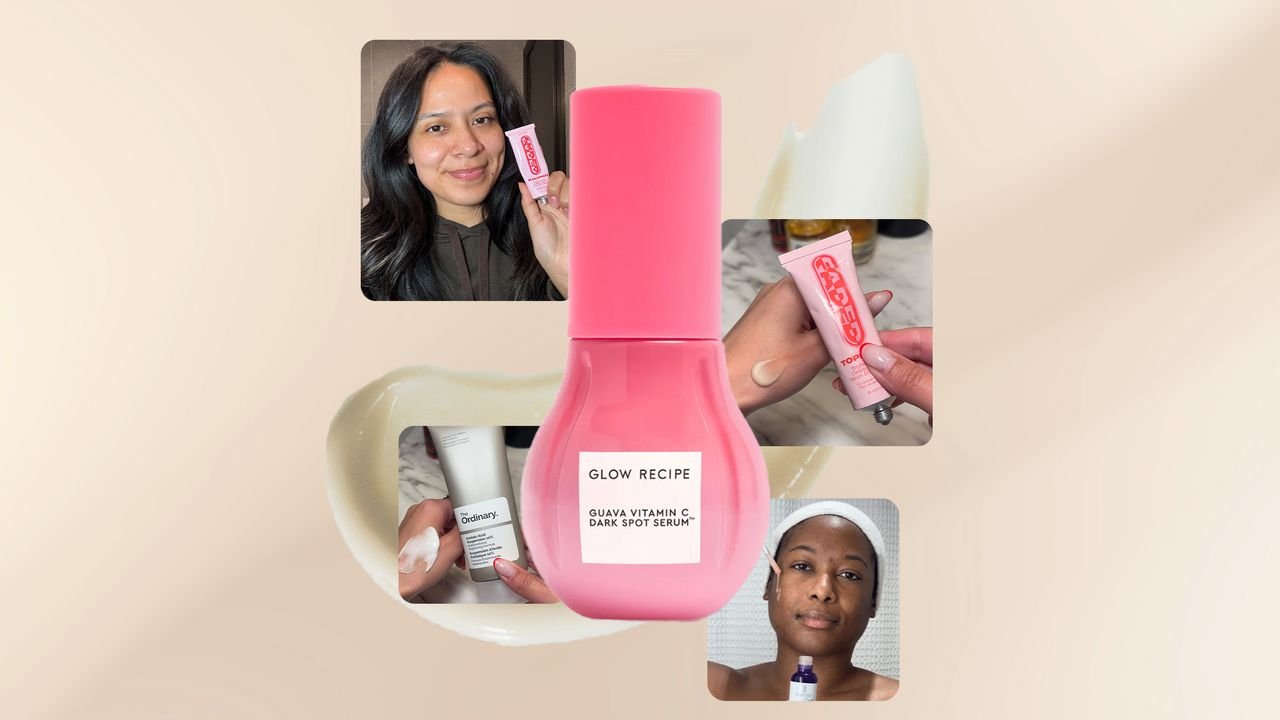
We tested hyperpigmentation products by evaluating ingredients, texture, absorbancy, and whether they caused any irritation. The best hyperpigmentation products contained skin-texturizing exfoliants (like AHAs, BHAs, and PHAs), soothing antioxidants like niacinamide, and brightening ingredients like vitamin C. They also came in a variety of formats, from creams to serums, played well with our other skin care products, and dried down with no pilling. After a month of testing, these were the ones that made a noticeable difference in our skin, with reduced dark spots and patches.
