

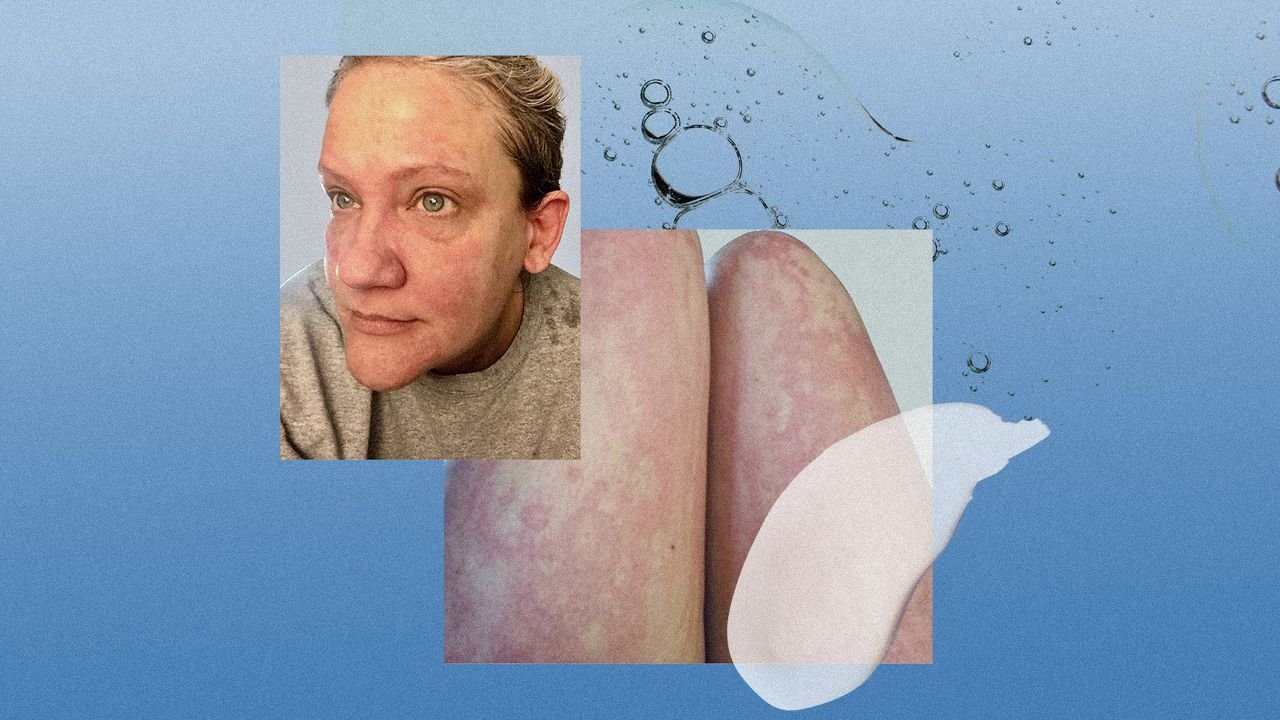
In my 20s, an unexpected reaction to laundry detergent left me with my first case of hives. I saw a doctor, who gave me steroid medications and antihistamines, and sent me home. I thought it was a one-off situation—I couldn’t have been more wrong.
For the next few decades, it was always the same story. I would get these raised welts that would, strangely, move around my body. If I went to sleep with hives in one spot, they would be somewhere different when I woke up. Sometimes I would get swelling that made my fingers look like sausages.
The hives didn’t just itch—they were excruciating. The pain and relentless irritation made it hard to sleep, focus, or even drive. Every few years I would have a bout of hives that lasted for two weeks. During those two weeks, I wouldn’t be able to function. Once they cleared, I tried to forget they had ever happened.
In my 40s, the hives started lingering even longer—at least six weeks after each flare-up. At that point, I had been to an allergist off and on for years. I’d done allergy testing, and it showed that I wasn’t allergic to anything, really. I worked with different doctors who would say that they didn’t know what was causing my hives and send me on my way.
Finally, I learned about chronic spontaneous urticaria. I went to an allergist armed with the information I had found, along with photos of my hives, and told my doctor that I was pretty sure I knew what was causing my misery—finally.
Eventually things improved
After hearing my story, seeing my photos, and running some tests, the allergist agreed that I had chronic spontaneous urticaria. As I learned, the hallmark of the condition is red, itchy skin welts that last more than six weeks. Unfortunately, the cause of chronic hives isn’t usually known.
I felt very empowered by having a diagnosis. It felt like I finally had an answer that could bring me relief from the torment. I was very lucky to have a good allergist who knew what to do.
I was put on an injectable biologic medication, but it was six months until my hives were fully gone. In the beginning, I was still miserable. I remember researching the qualifications for disability leave in the US because I wasn’t sure I could continue working. Eventually, I started to feel better, but it took time.
I still have hives sometimes, but I’ve figured out some of my triggers
While chronic spontaneous urticaria usually has no identifiable cause, people can have triggers. I remember thinking for a while that Old Bay seasoning led to a bout of hives. There were moments when I was just desperate to figure out my triggers so that I could avoid future flares. I now know that, for me, caffeine, mold, dust, hot showers, and spicy foods can trigger a flare or worsen existing hives. I’ve also avoided using Tide detergent since my original flare. It seems likely it would only make things worse, and I’ve never wanted to find out.
After receiving treatment and understanding my triggers, my condition has improved a lot. Right now, I’m in remission, though I don’t expect it to last forever. My skin is still reactive. But if I get hives, they’re not as bad as they once were and they don’t linger nearly as long. Usually, they’ll go away when I take an antihistamine. A cool, wet washcloth may soothe my skin a bit, too. I have confidence now that I can handle things when I get a flare.
