

At first, I thought it was stress. Or maybe hairstyles like tight ponytails. I was seeing more hair in the shower drain, more scalp peeking through my part, but I figured it was temporary. I was wrong. Hair loss doesn’t come in loud—it creeps in. By the time it’s visible, it’s already settled in like a long-term tenant.
My dermatologist diagnosed me with androgenetic alopecia—a fancy way of saying “your hair is genetically programmed to peace out early.” (It’s different from alopecia areata, which is an autoimmune disease that causes baldness, as well as frontal fibrosing alopecia, a rare new form of alopecia that can occur during menopause.) Even though androgenetic alopecia is known as male-pattern baldness, it’s not just a guy’s issue. This type of hair loss is the most common type of hair-loss in women, according to the American Academy of Dermatology—which isn’t surprising once you factor in iron deficiency, vitamin D deficiency, stress, and hormonal changes. Lucky me, I had all of the above.
My Hair-Loss Routine
I thought I could reverse my female-pattern hair loss with over-the-counter supplements or less heat styling. Turns out, that’s like trying to fix a broken bone with a Band-Aid. Hair loss is a medical condition. And if you’re dealing with it, you’re not curing it. You’re managing it—daily—for the long haul.
There are a lot of treatment options for hair loss out there, from the painful (like platelet-rich plasma, or PRP, to the drastic (see: hair transplants). These days, my hair-loss treatments are somewhere between clinical protocol and beauty ritual. Each morning starts with popping pills that I call hair candy, and they carry hormonal weight. I take OTC vitamin D3 and iron supplements every morning. Bloodwork revealed I had a nutritional deficiency in both—classic causes of hair loss. I also take spironolactone 50mg daily, a prescription medication that blocks androgens (the hormones responsible for miniaturizing hair follicles, which include dihydrotestosterone, or DHT). Think of it as HRT for your scalp. Then there’s oral minoxidil, essentially the oral version of Rogaine. It’s off-label for women (meaning it’s not FDA-approved for this purpose), but game-changing. Hello, fluffy new hair growth on my temples.
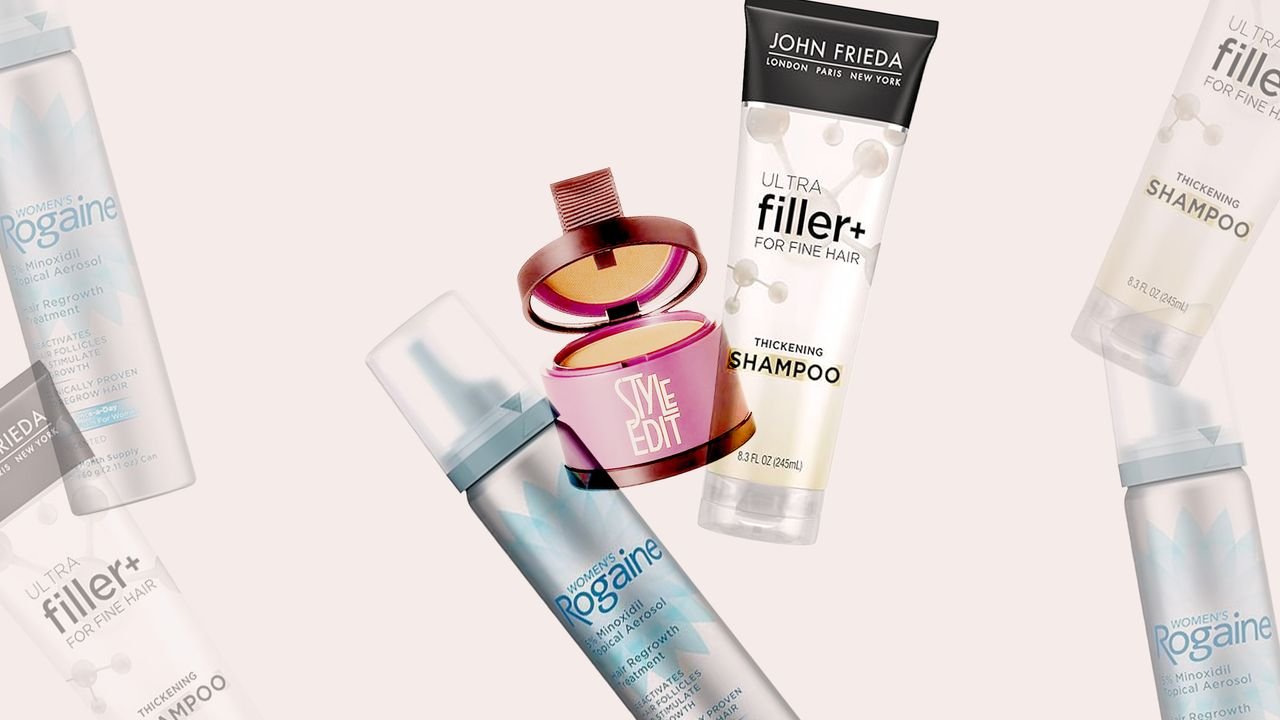
Then there’s the minoxidil foam, which fizzes into my scalp like it’s doing something profound. My shampoo is vaguely medicinal, and I apply it only to my scalp, as directed by a dermatologist with a hair-loss specialty. I also wear a red-light therapy helmet that makes me look like I’m training for space camp. It’s a process. But it’s working. Here’s what goes into my routine.
Blitzer before and after starting her hair-growth routine.
Courtesy of subject
