

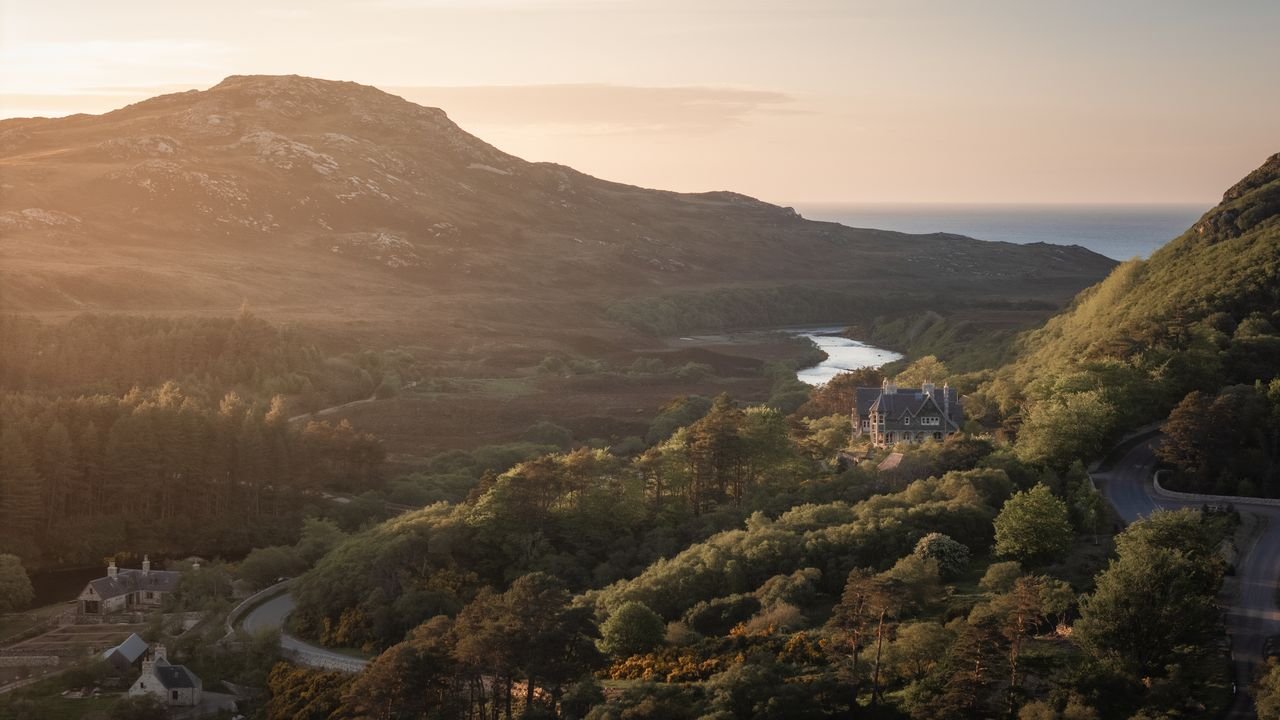
Like so many quirks of British culture, Highlands tourism owes a debt to the royals. In the dead of winter 1848, Queen Victoria and Prince Albert, taken with the “wild loveliness” of Aberdeenshire, signed a lease on Balmoral, and suddenly the furthest reaches of Bonnie Scotland—or the tartan-draped version of them depicted in Sir Walter Scott’s Waverley—were in fashion with the Debrett’s set. Bagpipes were trotted out, ceilidhs given, drams of whisky poured, and, rather more permanently, heathered swaths of Caledonia repurposed as sporting estates. By the 20th century, summer excursions to the Highlands were a fixture of the aristocratic calendar, with transatlantic visitors soon joining the English to shoot, fish, and feign indifference to horizontal rain. “The charm of Scotland in August and September draws an influx of sportsmen from all over the world,” Vogue reported in 1930. “For two months, she is invaded…and herself left entirely unmoved by so much frenzied activity.”
Except, of course, that wasn’t entirely true; already, by then, Scotland’s fragile landscape was under threat from ecological degradation. Nearly a century on, it ranks among the most nature-depleted countries in the world, with land mismanagement across grouse moors and deer parks a contributing factor. As one laird I speak to puts it: “That Romantic vision that everyone has from Landseer paintings—the endless heaths, the rolling glens—really, that’s a biodiversity disaster captured in real time.”
Photo: Nick Law
It’s a crisis WildLand is hoping to remedy with a 200-year vision. Established in 2006 by Danish businessman Anders Holch Povlsen—the largest private landowner in Scotland—the conservation group’s holdings now encompass more than 222,000 acres, with a hospitality arm that immerses guests in rewilded landscapes. (More than six million trees have been hand-planted by Wildland in the last 12 years alone.) Aldourie Castle, a turreted pile on the shores of Loch Ness, and Killiehuntly Farmhouse, a slate-roofed retreat nestled in the granite peaks of the Cairngorms, are among its flagship properties—but its latest opening on the northwest coast might pip them both to become the standout.
